
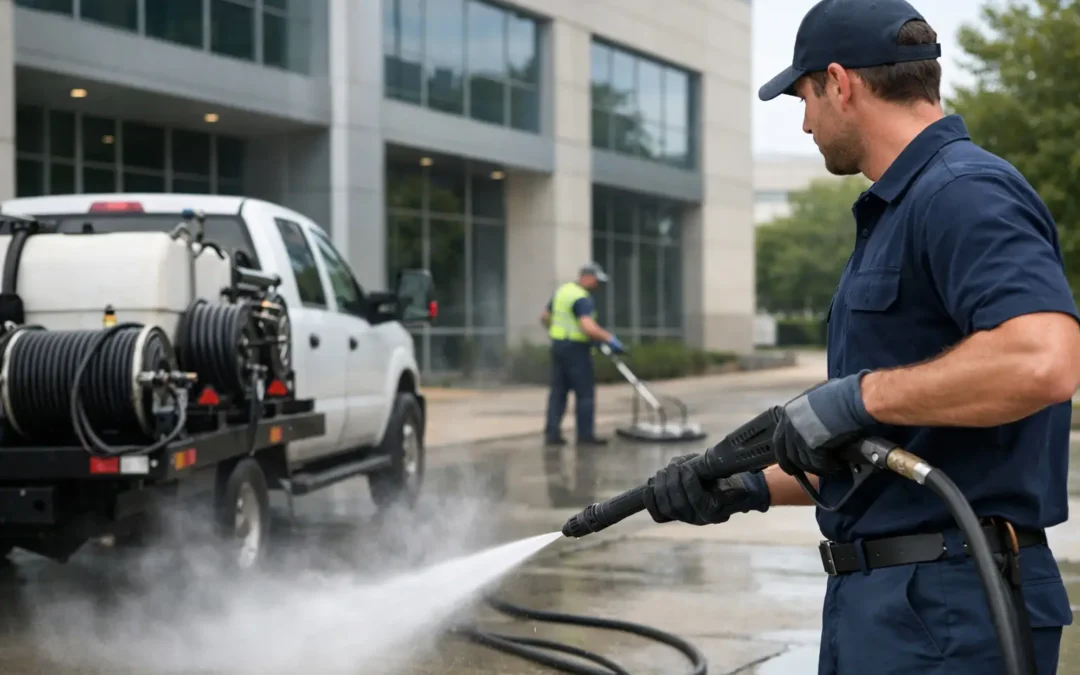
A stained storefront, greasy walkway, or weather-worn entryway can affect how customers, tenants, and visitors view a property before they ever walk inside. The right commercial pressure washing company does more than make concrete look clean for the day. It helps protect surfaces, reduce slip concerns, support a well-kept image, and keep small exterior maintenance issues from becoming larger ones.
For property managers and business owners, the decision should not come down to the lowest estimate alone. Commercial cleaning requires the right equipment, trained crews, safe work practices, and a clear understanding of which cleaning method fits each surface. A dependable provider should make that process straightforward from the first quote through recurring service.
What Commercial Pressure Washing Should Accomplish
Pressure washing is often associated with removing visible dirt, but commercial properties have more at stake. Parking areas, sidewalks, loading zones, dumpster pads, building facades, patios, and entrances all collect contaminants that can be difficult to remove with routine sweeping or rinsing.
A properly planned service can address buildup from vehicle traffic, food and beverage spills, gum, algae, mildew, pollen, construction dust, road grime, and oil. In Utah, weather adds another layer of concern. Winter de-icing materials, spring runoff, dry summer dust, and seasonal storms can leave exterior surfaces looking neglected and may contribute to premature wear.
The goal is not to use the highest possible pressure on every surface. The goal is to select the safest effective process. Concrete may require a different approach than painted siding, masonry, stucco, decorative stone, awnings, or exterior glass. Good workmanship protects the property while delivering a noticeable result.
How to Evaluate a Commercial Pressure Washing Company
A company should be able to explain what it plans to clean, how it will clean it, and what results are realistic for the condition of the surface. That conversation matters because not all stains are equal. Some discoloration is removable buildup, while other marks may be permanent wear, etching, oxidation, or damage that cleaning alone cannot correct.
Look for surface-specific cleaning methods
High-pressure water has its place, especially for durable concrete and hardscape areas. However, using excessive pressure on the wrong material can strip paint, damage mortar, force water behind siding, scar softer surfaces, or harm landscaping. A qualified crew understands when to use pressure, heated water, detergents, degreasers, surface cleaners, or lower-pressure washing methods.
Ask how the provider handles the particular materials on your property. A restaurant patio with grease buildup, for example, calls for a different process than a medical office entrance with delicate landscaping. The answer should be clear and practical, not a one-size-fits-all promise.
Confirm safety practices before work begins
Commercial pressure washing involves wet walking surfaces, hoses, equipment, cleaning products, vehicle traffic, and public access. Safety should be part of the work plan, not an afterthought.
A professional provider should identify how crews will manage pedestrian routes, mark or block off active work areas, protect nearby doors and windows, and keep equipment organized. For multi-tenant properties, schools, retail centers, offices, and healthcare facilities, scheduling is equally important. Early morning, evening, or low-traffic service may reduce disruption, but it depends on the property and the scope of work.
It is also reasonable to ask about insurance coverage, employee training, OSHA-aware safety practices, and how the company handles jobsite hazards. These details help protect tenants, customers, employees, and the property owner.
Ask about water, runoff, and surrounding areas
Pressure washing creates runoff, especially when cleaning large concrete areas or treating grease and stains. A responsible service plan considers where water will go and how nearby drains, landscaping, exterior finishes, and parked vehicles will be protected.
This is particularly relevant around dumpster pads, drive-thrus, garages, loading docks, and food-service areas. The right process may include pre-treatment, containment, recovery equipment, or adjusted cleaning methods based on the site. A company that walks the property before quoting can spot these concerns early rather than reacting after work has started.
Choose a provider that can work around your operations
Commercial properties do not stop operating because exterior cleaning is scheduled. Tenants need access, deliveries arrive, customers park, and staff need clear paths to enter the building. A dependable provider plans for those realities.
Before approving service, discuss access points, water availability, parking restrictions, tenant notifications, sensitive areas, and preferred service times. If the work includes multiple buildings or a large property, ask whether the company can complete it in phases. Clear coordination prevents avoidable interruptions and helps the finished work meet expectations.
The Value of a Detailed Site Visit and Quote
An accurate quote should be based on more than square footage. Surface condition, stain type, access, water supply, elevation, drainage, business hours, and the need for specialized products all affect the scope of work.
A site visit also gives the contractor an opportunity to identify related maintenance needs. Overflowing gutters can leave dark streaks on siding and sidewalks. Dirty windows may stand out once surrounding concrete is cleaned. Dryer vents, exterior drains, and building entries may need attention at the same time. Working with one full-service property care provider can reduce scheduling headaches and help keep maintenance from becoming fragmented across several vendors.
A clear quote should state what areas are included, what cleaning method is expected, and whether there are limitations. It should also distinguish between routine cleaning and restoration work. Transparency helps prevent surprises and gives property decision-makers a useful record for budgeting and approvals.
When Recurring Commercial Pressure Washing Makes Sense
One-time cleaning is useful before a grand opening, inspection, event, tenant turnover, or property sale. However, many commercial properties benefit more from a recurring maintenance plan. Regular service keeps buildup from becoming deeply embedded, which can make future cleaning more difficult and more expensive.
The right frequency depends on the property. A busy retail center, restaurant, fuel station, apartment community, or medical facility may need high-traffic areas cleaned more often than a professional office building. Dumpster pads, sidewalks near entrances, breezeways, and parking garage areas often require a separate schedule from building exteriors.
Rather than choosing a calendar interval without a plan, consider the property’s traffic, exposure, appearance standards, and maintenance budget. Seasonal service may be enough for some sites. Others may need monthly attention in specific zones and less frequent cleaning elsewhere. A company that offers flexible recurring maintenance can build a schedule around what the property actually needs.
Signs Your Property Is Ready for Service
Visible dirt is an obvious reason to schedule cleaning, but there are other signs worth addressing sooner. Dark algae or mildew on walkways can create a slick surface when wet. Oil spots in parking areas can spread and become harder to treat. Gum, food spills, and dumpster-area residue can create unpleasant odors and leave a poor impression on visitors.
Watch for salt residue after winter, dust accumulation during dry periods, staining below gutters, and buildup around entrances. These areas are highly visible and often receive the most foot traffic. Addressing them on a routine basis helps maintain curb appeal without waiting until the entire property looks neglected.
Questions Worth Asking Before You Hire
Before selecting a commercial pressure washing company, ask whether it has experience with properties like yours and whether it can provide a scope that matches your priorities. Confirm how crews protect surfaces, pedestrians, landscaping, and nearby operations. Discuss scheduling, site access, runoff concerns, and whether the provider can coordinate additional exterior maintenance when it makes sense.
It is also helpful to ask what preparation the property team needs to complete before service. Moving vehicles, clearing furniture, notifying tenants, securing doors and windows, and identifying problem areas in advance can make the appointment more efficient. A reliable contractor will help set those expectations clearly.
A clean exterior is one of the most visible ways to show customers and tenants that a property is cared for. When the work is planned safely, performed correctly, and maintained consistently, it supports the appearance and long-term condition of the building. Wadley Services can provide a straightforward quote and dependable commercial property care for businesses throughout Utah.
Recent Comments