
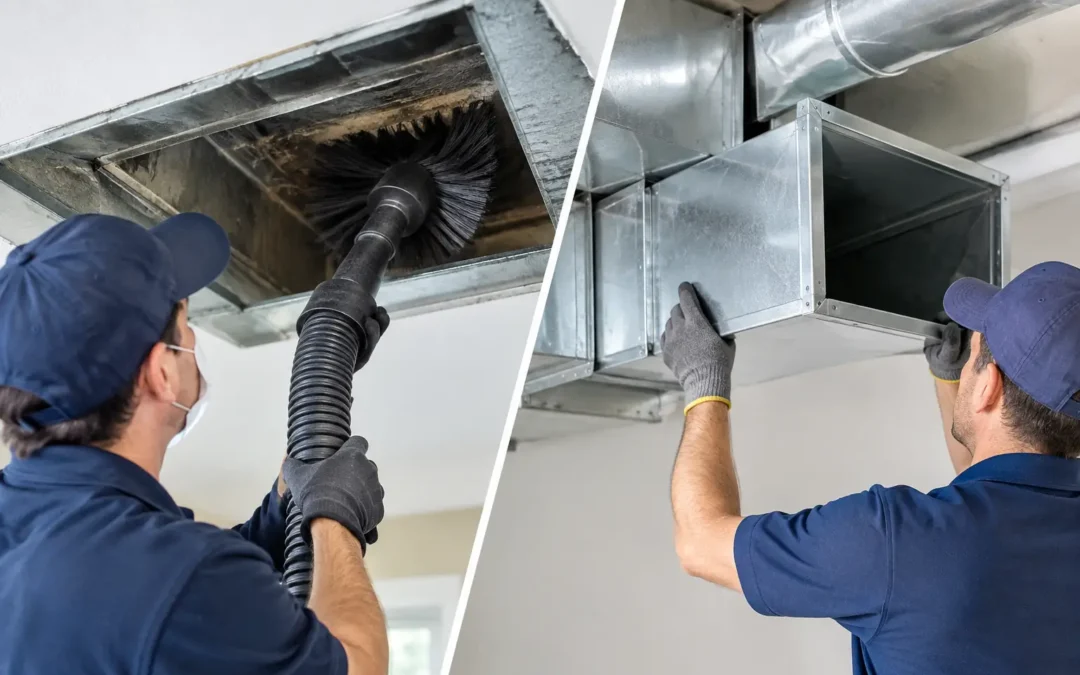
A layer of dust around a vent cover is one thing. A musty smell every time the heat turns on, rooms that never reach the set temperature, or insulation fibers blowing from supply vents point to a larger question: air duct cleaning vs replacement. The right choice depends on the condition of the ductwork itself, not simply how dirty it looks from the register.
For Utah homeowners, property managers, and facility teams, ductwork is easy to overlook because it is hidden behind ceilings, walls, and mechanical rooms. Yet it affects indoor comfort, HVAC efficiency, cleanliness, and the long-term condition of the heating and cooling system. A qualified inspection can separate a duct system that needs thorough cleaning from one that has reached the point where repairs or replacement are the responsible investment.
When Air Duct Cleaning Is the Right Call
Professional air duct cleaning is designed to remove accumulated dust, construction debris, pet hair, pollen, and other loose contaminants from accessible ductwork. It can be a practical service when the duct system is structurally sound and airflow problems are caused by buildup rather than damage.
Cleaning is often a good fit after a remodeling project, especially when drywall dust, sawdust, or other fine debris may have entered the system. It is also helpful in homes with shedding pets, after a move into a previously occupied home, or in commercial spaces where regular use produces noticeable dust around vents and returns.
A cleaning service should address more than the visible registers. The work should include the supply and return ducts, grilles, registers, and key HVAC components that can collect debris. Video inspection provides an added level of accountability by showing the condition inside the ductwork before work begins and confirming the results afterward.
In some situations, antimicrobial treatment may be appropriate after cleaning. This is most useful when a professional identifies conditions that support microbial growth or when odors remain after the source of moisture has been corrected. Treatment is not a substitute for repairing a leak, drainage issue, or other moisture problem. The cause must be handled first.
Signs Cleaning May Solve the Problem
Cleaning is generally the more sensible option when ducts are intact, reasonably sealed, and free of significant moisture damage. Dust blows from vents shortly after the system starts, air registers look visibly dirty, or indoor air feels stale after construction or long periods without maintenance.
It can also help improve system cleanliness when a property has had several occupants, pets, or a long gap in maintenance. For multi-unit properties and commercial facilities, scheduled duct cleaning can support a more consistent maintenance standard across occupied spaces.
Cleaning cannot repair collapsed flex duct, crushed metal runs, disconnected joints, or ducts that were poorly designed from the start. When those conditions are present, removing dust may improve cleanliness, but it will not solve the comfort or efficiency issue.
When Duct Replacement Makes More Sense
Duct replacement becomes the stronger option when the system is physically damaged, poorly installed, contaminated beyond reasonable restoration, or unable to deliver air effectively. Replacement costs more upfront, but repeatedly cleaning failing ductwork is rarely a good use of a property owner’s maintenance budget.
Older duct systems may have deteriorated insulation, rust, loose internal liner material, or failing tape and connections. In attics, crawl spaces, and other unconditioned areas, poorly sealed ducts can pull in dust, insulation fibers, odors, and extreme temperatures. That means the HVAC equipment works harder while conditioned air leaks out before it reaches the rooms where people need it.
Water damage is another serious concern. If duct insulation has been soaked, mold growth is widespread, or the duct material itself has deteriorated, replacement may be safer and more reliable than attempting to clean around the damage. A professional should identify the moisture source before new ductwork is installed. Otherwise, the same condition can affect the replacement system.
Conditions That Usually Point to Replacement
Replacement should be considered when inspection reveals disconnected or crushed duct runs, major gaps at joints, significant corrosion, damaged insulation, or materials that are breaking down inside the system. It may also be necessary when ducts are undersized or poorly routed, creating persistent hot and cold spots even though the HVAC equipment is operating properly.
Strong odors that return after cleaning can be another warning sign. The odor may come from contamination inside deteriorated duct materials, pest activity, a moisture problem, or an issue elsewhere in the HVAC system. The answer is not always full replacement, but it does require investigation rather than a surface-level fix.
For commercial properties, replacement may be justified when aging ductwork creates repeated tenant comfort complaints, high maintenance demands, or uneven airflow across suites. Addressing the system properly can prevent recurring service calls and protect the reliability of the building’s HVAC investment.
Air Duct Cleaning vs Replacement: Compare the Real Cost
The lower price of cleaning can make it appealing, and for a sound duct system, it is often the correct decision. But cost should be measured against the problem being solved. Cleaning removes debris. Replacement corrects failing materials, leaks, poor layout, and structural damage.
If the system is leaking heavily in an attic, cleaning the inside of those ducts will not stop energy loss. If a return duct is pulling dusty air from a crawl space, cleaning may provide a short-term improvement, but the duct needs to be sealed, repaired, or replaced to keep the problem from returning.
On the other hand, replacing ductwork simply because it is dusty is unnecessary. Most duct systems collect dust over time. A careful inspection protects property owners from paying for replacement when professional cleaning and targeted repairs would restore acceptable performance.
The best estimate should clearly explain what was found, what service is recommended, and why. It should distinguish between cleaning, minor repair, sealing, and full replacement rather than treating every duct concern as the same job.
Start With a Professional Inspection
The decision should not be made from a photograph of a dirty register or a quick look at one vent. Ductwork needs to be assessed where problems often begin: at connections, turns, insulated sections, returns, and runs located in attics, crawl spaces, and mechanical areas.
A dependable provider will look for debris, loose or damaged duct material, moisture concerns, disconnected sections, signs of pests, and airflow restrictions. Video inspection is especially valuable because it gives homeowners and property managers a clearer view of conditions that cannot be seen from the living space.
Ask direct questions during the assessment. Is the ductwork structurally sound? Is the issue limited to dust and debris? Are there air leaks or damaged sections? Is there a moisture source that must be corrected? Clear answers make it easier to choose the appropriate service and avoid paying for work that does not address the root cause.
Protect the System After the Work Is Done
Whether you choose cleaning or replacement, ongoing HVAC care helps protect the result. Change filters on the schedule recommended for your system and property conditions. Keep return vents clear of furniture and storage. Address roof leaks, plumbing leaks, condensation, and pest entry points before they affect hidden areas of the building.
For properties with high occupancy, pets, regular renovations, or demanding commercial use, recurring maintenance is often more cost-effective than waiting until dust, odors, or comfort complaints become disruptive. Coordinating air duct service with dryer vent cleaning and other property care needs can also simplify maintenance planning.
Wadley Services approaches duct work with the same standard applied to every property service: inspect carefully, explain the condition honestly, and recommend the work that fits the building. If your ductwork needs cleaning, it should be cleaned thoroughly. If it needs repair or replacement, you deserve to know why before making that investment.
A clear inspection is the best next step when airflow, cleanliness, or indoor comfort is in question. It gives you a practical path forward and helps keep a small hidden issue from becoming a larger property problem.
Recent Comments