
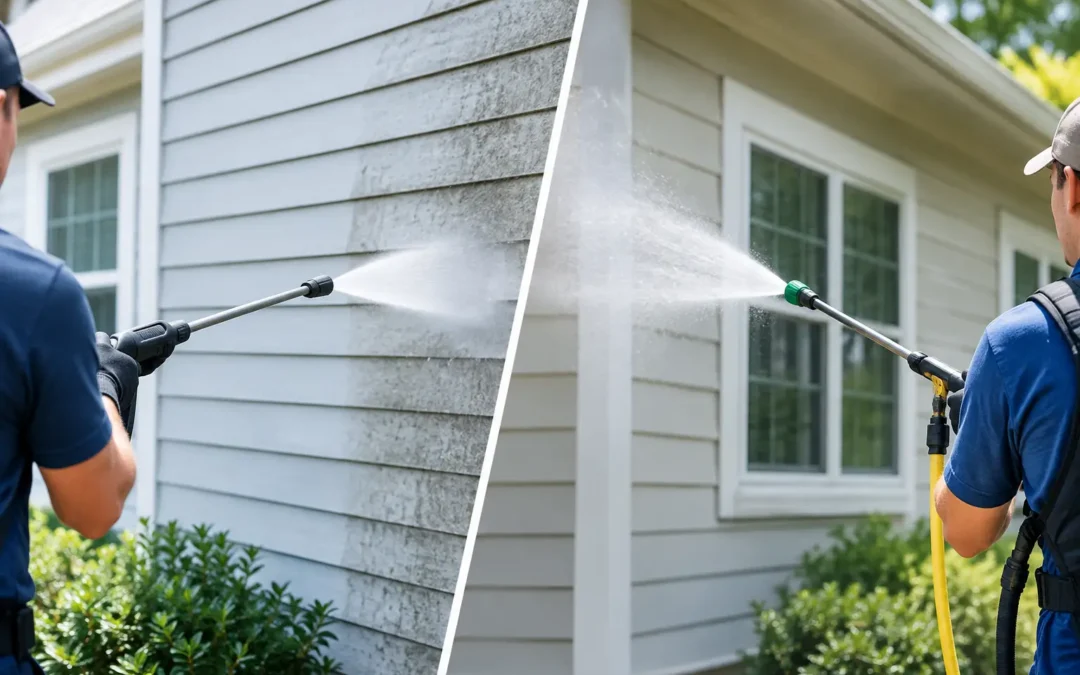
A clean exterior does more than improve curb appeal. It protects the surfaces you have invested in, helps prevent premature wear, and keeps a home or commercial property looking cared for. When comparing pressure washing vs softwashing, the right choice is not about which method is stronger. It is about using the proper method for the material, the type of buildup, and the condition of the property.
Utah properties face a demanding mix of dust, hard water residue, snow, wind, sun exposure, pollen, algae, and seasonal debris. A cleaning method that works well on a concrete walkway can cause costly damage to a roof, painted siding, or delicate exterior trim. Professional exterior cleaning starts with that distinction.
What Is Pressure Washing?
Pressure washing uses a high-pressure stream of water to break apart and rinse away surface buildup. The equipment can be adjusted for different surfaces, but its purpose remains the same: use water force to remove tough, attached debris.
It is a highly effective option for durable materials that can safely handle pressure. Concrete driveways, sidewalks, parking areas, retaining walls, brick, stone, and certain heavy-duty commercial surfaces are common examples. Pressure washing can remove tracked-in dirt, mud, tire marks, loose peeling paint, salt residue, and grime that ordinary rinsing will not touch.
The value of pressure washing is its ability to produce visible improvement quickly. A stained walkway or neglected dumpster pad may look permanently discolored until the right equipment and technique are applied. However, pressure alone is not a cure-all. Using too much force, the wrong nozzle, or poor spray distance can etch concrete, scar wood, force water behind siding, or damage mortar joints.
That is why experienced technicians assess both the surface and the contamination before starting. Good pressure washing is controlled work, not simply turning equipment to its highest setting.
What Is Softwashing?
Softwashing is a low-pressure cleaning process designed for materials that should not be blasted with high-pressure water. It relies on carefully selected cleaning solutions to treat organic growth and other buildup, followed by a gentle rinse.
This method is commonly used for roofs, vinyl siding, painted surfaces, stucco, exterior trim, gutters, screens, and other more delicate areas. Rather than trying to physically force algae, mildew, moss, or dark staining off a surface, softwashing treats the source of the growth so it can be safely rinsed away.
For example, black roof streaks are often caused by organic growth, not just dirt. High pressure may remove some visible staining while also loosening granules, damaging shingles, or shortening the roof’s service life. Softwashing addresses the staining without the aggressive force that roofing materials cannot tolerate.
A proper softwash process includes more than applying a solution. Nearby landscaping should be protected, solutions should be mixed appropriately for the surface, and runoff should be managed responsibly. The goal is a clean result without putting the property, plants, people, or building materials at risk.
Pressure Washing vs Softwashing: The Key Differences
The most significant difference is pressure. Pressure washing uses force to remove buildup. Softwashing uses low pressure and cleaning solutions to lift and treat buildup on sensitive surfaces.
The second difference is the type of problem each method solves best. Pressure washing is generally suited to durable, non-delicate surfaces with ground-in grime or heavy debris. Softwashing is better for organic staining, biological growth, and materials that can be damaged by high pressure.
The third difference is longevity. When algae, mold, mildew, or similar growth is present, simply washing the surface may not fully address what caused the staining. A softwash treatment can provide a more thorough result because it treats the growth rather than only removing the visible layer.
Neither method is automatically better. A commercial property may need pressure washing on its sidewalks and loading areas, softwashing on its exterior walls, and gutter cleaning to remove debris that is contributing to overflow. The right maintenance plan often uses more than one method.
Where Pressure Washing Works Best
Pressure washing is usually the right choice when the material is hard, stable, and built to withstand controlled water force. Concrete is one of the most common examples. Driveways, walkways, patios, pool decks, curbs, and parking lots can collect dirt, vehicle residue, mineral deposits, chewing gum, and slippery buildup over time.
It is also useful for masonry surfaces, although brick and mortar require careful technique. Older brick, deteriorating mortar, and certain stone surfaces may need a gentler approach. Wood decks are another surface that calls for judgment. Some can be cleaned with reduced pressure, while weathered, splintered, or previously damaged wood may be better served by a lower-pressure treatment.
For property managers, regularly cleaned walkways and common areas help maintain a professional appearance and may reduce slip hazards caused by algae or grime. The cleaning plan should be based on traffic, shade, irrigation overspray, and the specific use of the space.
Where Softwashing Is the Better Choice
Softwashing is generally the safer choice for a roof. Asphalt shingles, tile, metal roofing, and many other roof materials should not be cleaned with high-pressure equipment. The risk is not worth a short-term cosmetic improvement.
It is also well suited for siding. Vinyl, painted wood, fiber cement, stucco, and composite materials can show dramatic improvement with a properly applied softwash. Gentle cleaning protects caulking, paint, window seals, vents, and trim while removing the dull film that builds up over time.
Gutters and fascia are another common application. These areas often collect streaks, oxidation, cobwebs, and overflow staining. Cleaning them properly can improve appearance while helping reveal maintenance issues such as loose sections, clogged downspouts, or water damage.
Softwashing can be especially valuable on shaded sides of buildings, where moisture and limited sunlight create ideal conditions for organic growth. A property may look clean from the street but still have developing algae or mildew on the north-facing walls, under eaves, or around irrigation zones.
Why the Wrong Method Can Cost More
Exterior cleaning is one of those services where an inexpensive shortcut can become an expensive repair. Too much pressure on shingles can remove protective granules. Too much force on siding can drive water behind panels or leave permanent marks. A cleaning solution used incorrectly can discolor materials or harm nearby landscaping.
There is also a safety concern. Roof work, elevated exterior cleaning, and commercial surfaces near public traffic require planning, proper equipment, and trained technicians. Ladders, wet surfaces, electrical fixtures, landscaping, and runoff all need attention.
A trustworthy provider should inspect the property, explain the recommended approach, and be willing to say when a surface needs a different service or repair before cleaning. For example, cleaning cannot correct failed caulking, rotted wood, loose gutters, or damaged roofing. Identifying those conditions protects the customer from unrealistic expectations and helps prevent further problems.
How Often Should Exterior Surfaces Be Cleaned?
There is no single schedule that fits every Utah property. A home in a dry, open area may need exterior cleaning less often than a property near mature trees, irrigation overspray, construction activity, or heavy traffic. Commercial sites with regular customer traffic often benefit from more frequent service because entrances, sidewalks, and common areas influence how visitors perceive the business.
Many homeowners choose annual or every-other-year exterior cleaning, with roof and siding needs determined by visible staining and exposure. Gutters often need attention more frequently, particularly where trees shed leaves, needles, and seed pods. The best approach is preventive maintenance rather than waiting until buildup becomes severe.
Bundling related services can also make maintenance simpler. Window cleaning, gutter cleaning, pressure washing, and exterior softwashing are often most efficient when planned together. Wadley Services helps property owners coordinate those needs with a clear scope of work and the same commitment to safe, dependable workmanship.
Choosing the Right Cleaning Plan for Your Property
Before scheduling service, look beyond the surface stain. Consider what the material is made of, whether the issue is dirt or organic growth, how old the surface is, and whether there are drainage or repair concerns contributing to the problem. Those details determine whether pressure washing, softwashing, or a combination of services will deliver the safest result.
The best exterior cleaning leaves a property looking better without creating damage that was not there before. A careful evaluation, appropriate equipment, and technicians who respect the condition of the property make all the difference. If you are unsure which method your home, multi-unit property, or commercial facility needs, request a professional assessment before any high-pressure cleaning begins.
Recent Comments