
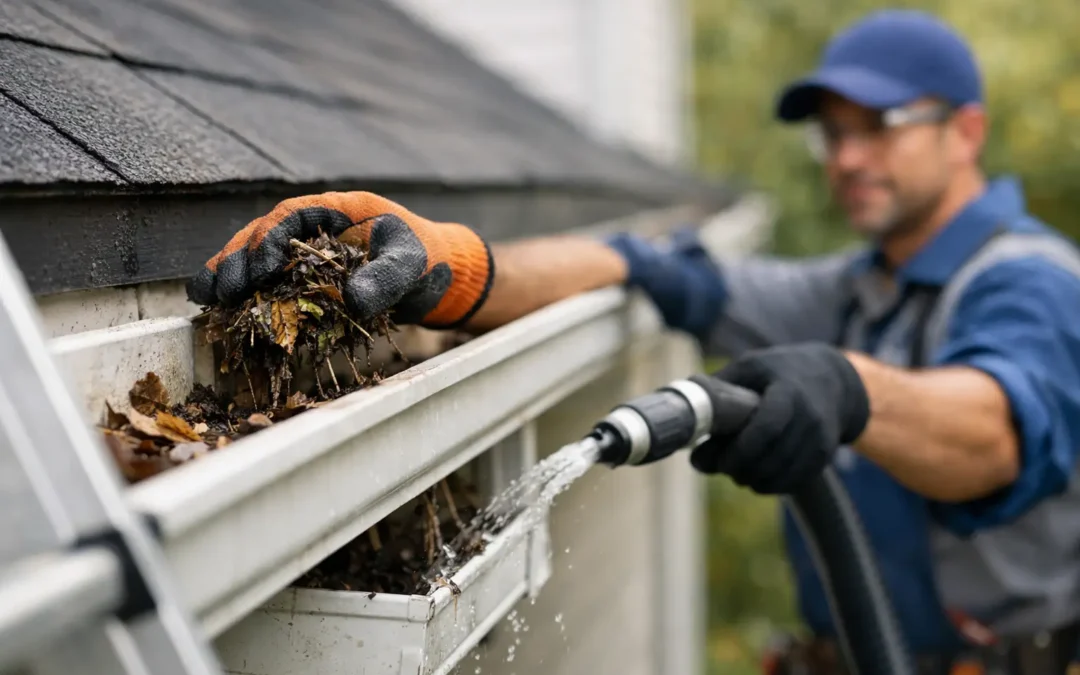
A gutter can look like a minor detail until the first heavy rain sends water over the edge, down exterior walls, and toward the foundation. Gutter cleaning and repair is one of the most practical ways to protect a home, commercial building, or multi-unit property from preventable water damage. When gutters are clear, properly pitched, and securely attached, they direct water where it belongs instead of allowing a small maintenance issue to become an expensive repair.
For Utah property owners, the work is especially valuable. Wind, spring runoff, summer storms, falling leaves, pine needles, and winter snow can all leave gutters clogged, strained, or damaged. A dependable maintenance plan helps keep the system working through every season.
What Clean, Working Gutters Protect
Gutters do more than keep rain from pouring over a roofline. They manage water at the edge of the roof and move it away from the building through properly placed downspouts. When that flow is interrupted, water takes the easiest available path – often behind siding, into soffits, across walkways, or alongside the foundation.
Overflowing gutters can stain exterior surfaces, wash away landscaping, and create slippery areas near entrances. On residential properties, they may contribute to basement moisture, damaged fascia boards, and deterioration around doors and windows. At commercial sites and multi-unit properties, neglected gutters can affect curb appeal, tenant comfort, pedestrian safety, and the condition of larger roof drainage systems.
The visible debris is only part of the concern. A clogged gutter holds standing water and wet organic material. That added weight can pull fasteners loose, cause sections to sag, and place unnecessary strain on fascia boards. In colder weather, trapped water can freeze, adding more weight and creating ice-related problems along the roof edge.
When Gutter Cleaning and Repair Is Needed
Most gutter issues provide warning signs before they cause major damage. The key is addressing them while the solution is still straightforward. Water spilling over the sides during rain is an obvious signal, but it is not the only one.
Look for streaks or dirt lines beneath gutters, peeling paint near the roofline, sagging sections, loose hangers, or downspouts that drain slowly. Plants growing from the gutter channel are a clear sign that debris has been sitting long enough to break down. Puddling near a foundation after a storm may also point to a clogged downspout, an extension that is missing or poorly positioned, or a drainage route that needs attention.
Inside the building, musty odors, wall stains, or unexplained moisture near exterior walls can sometimes be connected to water entering where it should not. Gutters are not always the cause, but they should be inspected as part of a responsible exterior maintenance review.
Cleaning Alone Does Not Solve Every Problem
Removing leaves, sediment, and roof debris is essential, but a clean gutter is not automatically a sound gutter. During service, the system should also be checked for loose connections, separated seams, damaged end caps, improper slope, bent sections, and downspouts that are blocked or disconnected.
A gutter that holds water after cleaning may be pitched incorrectly. One that repeatedly overflows in the same place may have an undersized or obstructed downspout. If water is leaking from a seam, cleaning the channel will not stop the leak. Repair work may involve resecuring sections, sealing joints, replacing damaged components, correcting drainage flow, or addressing areas where water is bypassing the system.
This is why gutter service should be approached as maintenance, not just debris removal. The goal is dependable water control at the property, not simply a cleaner-looking roofline.
How Often Should Gutters Be Serviced?
For many Utah homes, gutter cleaning twice a year is a sensible starting point: once after spring debris and once after fall leaf drop. Properties with mature trees, pine needles, heavy roof runoff, or frequent windblown debris may need more frequent attention. A building with little nearby tree cover may need less, but it still benefits from periodic inspection.
Commercial and multi-unit properties often need a scheduled approach rather than a seasonal reminder. Larger roof areas move more water, and one blocked drain point can affect a substantial section of the building. Property managers also have to consider public-facing entrances, parking areas, sidewalks, and tenant spaces where overflowing water creates a safety or appearance concern.
Winter adds another consideration. Snow and freeze-thaw cycles can expose weak fasteners, poor drainage, and areas where water is not moving through the system as intended. Cleaning should be performed when conditions are safe, while repairs may need to be scheduled around weather, roof access, and the condition of the existing gutters.
Why Professional Service Is the Safer Choice
Gutter work often involves ladders, roof edges, uneven ground, and wet or unstable debris. For a homeowner, the risk is not worth taking lightly. For businesses and managed properties, safety, insurance, and consistent workmanship matter even more.
A professional crew has the equipment and training to work safely around elevated exterior areas. They can remove debris thoroughly, flush downspouts where appropriate, identify damage that may not be visible from the ground, and leave the work area clean. Just as important, experienced technicians know when a gutter problem is part of a larger issue involving roof runoff, fascia deterioration, drainage placement, or exterior water intrusion.
There is also a practical value in having one trusted maintenance partner review the condition of a property over time. Recurring service creates a record of what is changing, where debris collects, and which areas need additional attention. That makes it easier to plan repairs before weather exposes the problem.
What Quality Gutter Service Should Include
A thorough service is more than a quick pass with a leaf blower. Debris should be removed from gutter channels and downspout openings, then disposed of appropriately. Downspouts should be checked for clogs and drainage performance. The crew should also inspect visible gutter sections, hangers, seams, end caps, and the connection points where the system meets the building.
For repairs, clear communication matters. Property owners should understand what is damaged, why it matters, and whether the repair is urgent or can be planned as part of routine maintenance. Not every issue requires replacement. A loose section may only need to be refastened, while a leaking joint may need sealing. However, severely bent, corroded, or repeatedly failing sections may be better replaced than patched.
The right recommendation depends on the age and condition of the system, the building’s drainage needs, and the source of the problem. Quality work means choosing the repair that protects the property for the long term, not simply applying the fastest temporary fix.
Gutter Maintenance for Homes, Businesses, and Managed Properties
Homeowners often schedule gutter service after noticing overflow, but preventive appointments are usually less stressful and more cost-effective. Keeping gutters clean before storm season helps protect landscaping, siding, walkways, and the foundation around the home.
For commercial properties, clean gutters support a professional appearance and reduce the chance of water affecting customer entrances or employee access areas. They are also a practical part of preserving the building exterior and avoiding disruptions caused by unexpected leaks.
Property managers benefit from planned service across multiple buildings or units. Consistent inspections help identify recurring trouble spots and reduce last-minute maintenance calls after storms. Bundling exterior services can also make scheduling easier when windows, pressure washing, and property maintenance need attention during the same season.
Wadley Services approaches gutter work with the same standard applied to every property care service: show up prepared, work safely, and take pride in a job done correctly. Whether the need is routine cleaning, a targeted repair, or recurring maintenance across a portfolio, dependable service protects both the building and the people who rely on it.
Don’t Wait for Water to Show You the Problem
A gutter system rarely fails all at once. More often, it begins with a small clog, a loose hanger, a leaking seam, or a downspout that no longer directs water away from the building. Addressing those details early can prevent damage that is far more disruptive than the original repair.
If gutters have not been inspected recently, scheduling service before the next heavy weather cycle is a smart step. A clean, secure, properly draining gutter system helps your property stand up to Utah weather with fewer surprises and greater confidence.
Recent Comments