
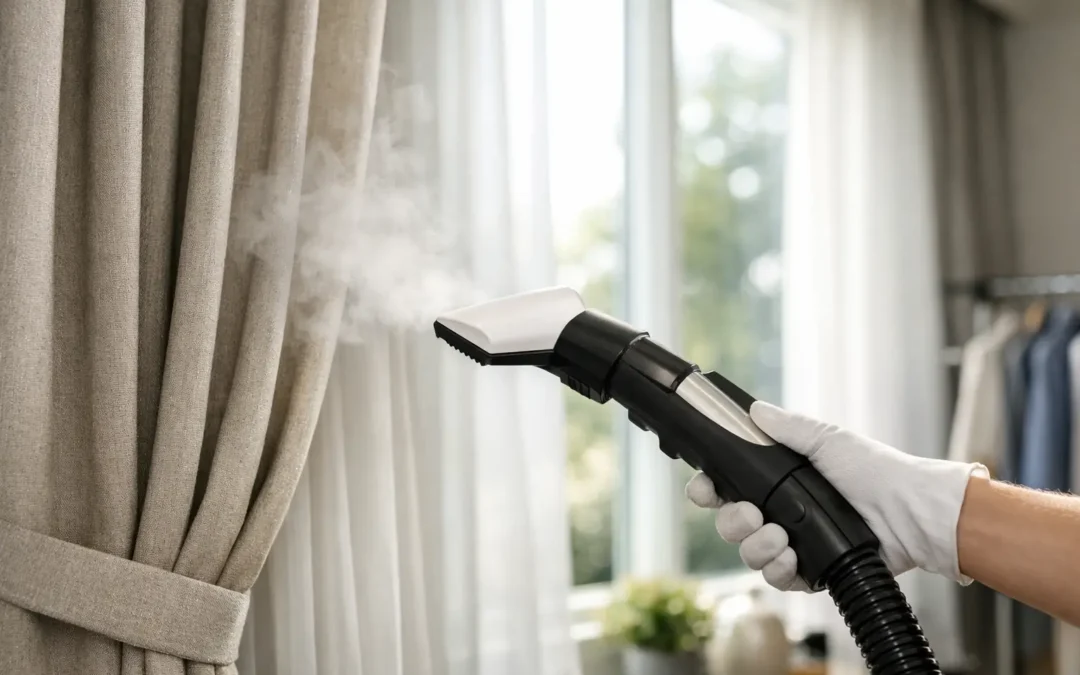
Your drapes can look clean from across the room while holding months of dust, pollen, pet dander, cooking residue, and odors deep in the fabric. Fabricare cleaning for drapes is designed to address that buildup without the disruption, shrinkage risk, or awkward handling that can come with taking window treatments down and sending them away.
For homeowners, property managers, and commercial facilities, drapery cleaning is more than a cosmetic service. Clean drapes support a better-looking room, help reduce settled allergens, and protect an investment that may have been custom made for the space. The right process matters because drapes are not all made from the same materials, and a method that works well on one fabric can damage another.
What Is Fabricare Cleaning for Drapes?
Fabricare cleaning is a specialized process for refreshing draperies and other fine fabrics using low-moisture cleaning methods appropriate for the material. Instead of soaking the fabric or treating every drape as machine washable, a trained technician evaluates the textile, lining, trim, pleats, and construction before selecting the safest cleaning approach.
This is especially useful for drapes that are difficult to remove, very large, heavily pleated, lined, or made from delicate materials. Many window treatments are installed high above floors, behind furniture, or across wide commercial windows. On-site fabricare cleaning can often restore their appearance where they hang, saving time and reducing the chance of damage during removal and reinstallation.
The goal is not to promise that every old stain will disappear. Some discoloration has permanently changed the fibers, particularly from sun exposure, water damage, smoke, or oxidation. A professional cleaning process focuses on safely lifting surface soil, reducing odors, and improving the overall freshness and appearance of the fabric without taking unnecessary risks.
Why Drapes Need More Than Vacuuming
Regular vacuuming with a soft brush attachment is helpful, but it only reaches loose debris near the surface. Fabrics around windows collect fine dust, outdoor pollutants, and seasonal allergens over time. In kitchens, dining areas, and commercial spaces, drapes can also absorb airborne grease and odors.
Drapery fabric has folds, pleats, seams, headers, and linings that trap soil where a vacuum cannot fully reach. Light-colored materials often show dullness first, while darker fabrics can hold substantial dust without obvious visual clues. Either way, buildup can make a room feel less clean and can gradually wear on fibers when left in place for years.
Fabricare cleaning is also a practical option after a renovation, during a move-in or move-out, following smoke or odor concerns, or before preparing a property for sale or occupancy. For multi-unit housing and business properties, it can help maintain a consistent, cared-for appearance without replacing otherwise serviceable window treatments.
The Right Method Depends on the Fabric
A dependable drapery cleaning service begins with inspection, not assumptions. Cotton, linen, silk, velvet, wool, synthetic blends, blackout linings, and decorative trims all respond differently to moisture, heat, agitation, and cleaning solutions.
Delicate fabrics and specialty details
Silk, wool, antique textiles, hand-stitched trim, and certain embroidered fabrics require particular caution. These materials may be vulnerable to water rings, color bleeding, texture changes, or shrinkage. In some cases, a technician may recommend limited cleaning, testing in an inconspicuous area, or off-site specialty care if the fabric cannot be safely treated in place.
That recommendation is a sign of professional judgment, not a lack of service. A quality provider protects the drape first and avoids aggressive methods simply to produce a dramatic but short-lived result.
Linings and blackout drapes
Drapery linings can be the deciding factor in how cleaning is performed. Older linings may be brittle, weakened by sunlight, or prone to deterioration. Blackout-backed drapes and thermal linings can also react differently than the face fabric. Cleaning the front beautifully does not help if the backing is damaged in the process.
A proper inspection identifies those risks before work begins. It also sets clear expectations about existing fading, weak seams, sun damage, and stains that may remain after cleaning.
What to Expect From Professional Drapery Cleaning
The process should be orderly, careful, and respectful of your home or facility. After examining the drapes, the technician identifies visible concerns and tests when necessary. Dust and loose debris are removed before the cleaning step, because grinding dry soil into fabric is counterproductive.
Next, the selected fabricare method is applied with controlled moisture and equipment suited to drapery. The fabric is cleaned methodically from top to bottom, with attention to pleats and edges where soil tends to gather. Proper ventilation and drying time are part of the service, especially when drapes are dense or lined.
Professional service is not just about the equipment. It is also about protecting nearby floors, furnishings, walls, and window hardware. Technicians should work carefully around the room and leave the area clean when the job is complete.
For larger properties, scheduling can be planned around occupancy, office hours, common-area traffic, and tenant needs. That flexibility is valuable for property managers who need maintenance completed without creating unnecessary disruption.
When to Schedule Drapery Cleaning
Most residential drapes benefit from professional cleaning every two to three years. Homes with pets, smokers, allergy concerns, frequent cooking, nearby construction, or high seasonal pollen may need service more often. If the drapes look dull, carry an odor, shed visible dust when moved, or have not been cleaned since installation, it is worth requesting an evaluation.
Commercial schedules vary based on the environment. Hospitality spaces, offices, healthcare-adjacent facilities, event venues, and multi-unit common areas may benefit from recurring maintenance. Regular service helps prevent heavy buildup, which is usually easier and safer to remove before it becomes embedded.
Do not wait until drapes are visibly stained to take action. By that point, some soil may have already bonded with the fibers or been altered by sunlight and time. Preventive cleaning is often the better value because it supports the life and appearance of the existing window treatments.
Preparing Your Space for On-Site Service
A little preparation makes drapery cleaning more efficient. Clear small furniture, décor, and breakable items away from the work area when possible. Let the service team know about fragile hardware, loose hems, prior water damage, or known stain sources. If a drape has been exposed to smoke, pets, cooking grease, or a leak, that information helps guide the inspection.
There is usually no need to take drapes down yourself unless a technician specifically recommends it. Removing large or layered window treatments without the right handling can create extra wrinkles, damage hardware, or mix up panels that were designed to hang in a certain order.
Protect the Drapes You Already Have
Quality window treatments add comfort, privacy, color, and insulation to a property. Replacing them can be expensive, especially when they are custom sized, lined, or installed throughout a large building. Specialized cleaning is a practical way to maintain that investment while improving the feel of the room.
Wadley Services provides careful specialty cleaning for Utah properties that need more than a standard surface clean. A trained team can assess your drapes, explain the appropriate process, and provide straightforward expectations before work begins. Request a free quote and give your window treatments the professional care they were made to receive.
Recent Comments