
How often to clean air ducts is not a one-size-fits-all question. A newer home with no pets, no smoking, and a well-maintained HVAC system may go years without needing service. A busy household with shedding pets, allergy concerns, recent remodeling, or visible dust blowing from vents may need attention much sooner. The goal is not to clean ducts on a calendar just for the sake of it. It is to address buildup that affects your indoor environment, airflow, and confidence in the system serving your property.
For Utah homeowners and property managers, dry conditions, seasonal temperature swings, construction dust, and wildfire smoke can all change the equation. A professional inspection helps determine whether duct cleaning is warranted and what work should be done.
How Often Should You Clean Air Ducts?
For most homes, professional air duct cleaning every three to five years is a reasonable starting point. That range works well when the HVAC system is properly maintained, filters are changed on schedule, and there are no unusual indoor air-quality concerns.
Commercial properties and multi-unit buildings may need a different maintenance plan. High occupancy, frequent turnover, tenant pets, cooking odors, renovation work, and extended operating hours can put more material into a building’s air-handling system. Offices, retail spaces, property common areas, and facilities with sensitive equipment should be evaluated according to use, not just age.
The three-to-five-year guideline is not a substitute for paying attention to what your building is telling you. If there is visible debris, persistent dust, reduced airflow, or a musty odor when the system runs, waiting for the next scheduled interval may not make sense.
Situations That Call for Cleaning Sooner
Certain events can make air duct cleaning a practical next step, even if the ducts were cleaned recently. Remodeling is a common example. Drywall dust, sawdust, insulation fibers, and other fine particles can travel through return vents during construction. Even careful contractors cannot eliminate every airborne particle, especially when the HVAC system remains in use.
A move into a previously occupied home is another good time to consider an inspection. You may not know whether prior occupants smoked indoors, kept several pets, skipped filter changes, or completed work that filled the system with dust. Cleaning ducts can provide a cleaner starting point alongside other move-in maintenance.
Households with pets, smokers, or residents who experience allergies or respiratory sensitivities may also benefit from more frequent service. Duct cleaning is not a cure for allergies, and it should not be presented that way. Still, removing accumulated dust, pet hair, dander, and debris can reduce one potential source of airborne particles in the home.
Consider scheduling an evaluation sooner when you notice four or more of these conditions:
- Dust quickly returns to furniture after normal cleaning.
- Supply vents release visible dust or debris when the system starts.
- Rooms have weak or uneven airflow despite clean filters.
- There is a stale, musty, smoky, or unexplained odor from vents.
- You have recently completed construction, restoration, or major repairs.
- Pest activity, water damage, or mold-like growth has affected ductwork or nearby mechanical areas.
These signs do not always mean the ducts are the cause. Restricted airflow can also come from a clogged filter, closed dampers, damaged ductwork, or HVAC equipment that needs repair. A thorough provider should look at the full situation rather than selling the same service for every concern.
What Professional Duct Cleaning Should Address
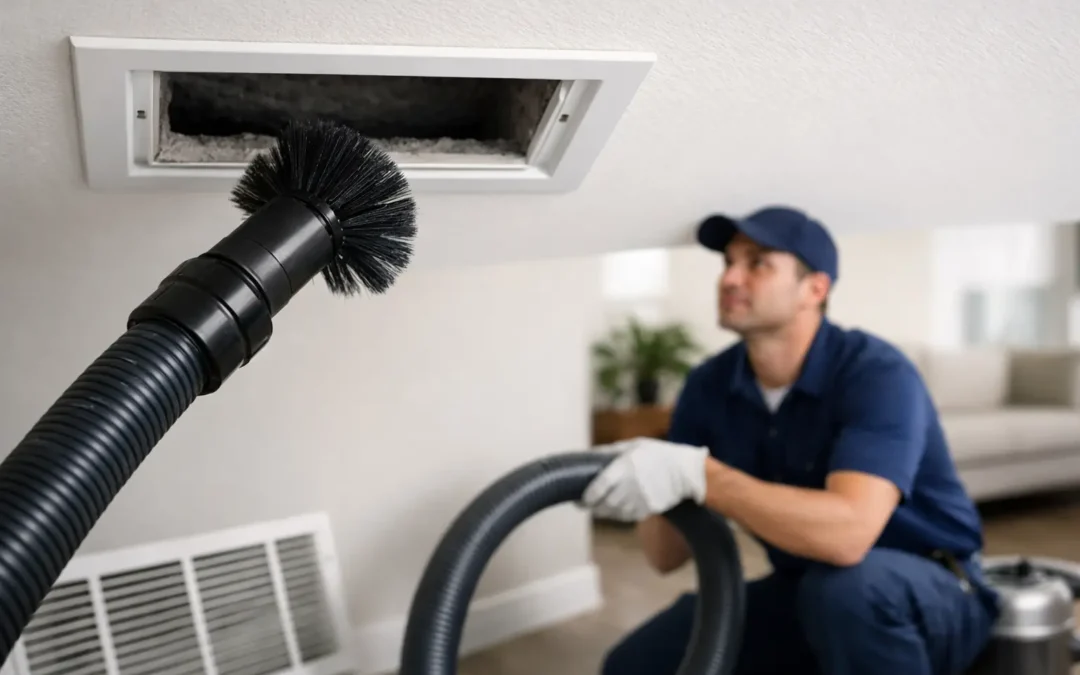
Quality air duct cleaning involves more than placing a vacuum hose near a vent opening. The work should focus on the supply and return sides of the system, along with accessible components where dust and debris collect. A professional technician should explain the scope before work begins, protect the home or facility during service, and identify concerns that require an HVAC repair specialist.
Video inspection is especially valuable because it provides a clearer view of duct conditions before and after cleaning. It helps distinguish normal light dust from heavier buildup, construction debris, signs of pests, or other material that deserves attention. This approach gives property owners evidence instead of guesswork.
When conditions call for it, antimicrobial treatment may be recommended after cleaning. This is not necessary for every job. It is typically considered when there has been contamination, moisture-related concern, or another issue that warrants an added layer of treatment. The right recommendation should be based on what is actually found inside the system.
At Wadley Services, air duct cleaning is approached as part of responsible property care. The focus is on detailed cleaning, video-inspected results, safe work practices, and clear communication about the condition of your ducts. That matters whether the job involves a family home, a rental property, or a commercial facility with ongoing maintenance needs.
Air Duct Cleaning Is Not a Replacement for HVAC Maintenance
Clean ducts support a cleaner system, but they do not replace routine HVAC service. The best results come from treating the system as a whole. Change filters according to the manufacturer’s recommendation and sooner when pets, smoke, heavy use, or dusty conditions are present. Keep return vents clear of furniture and rugs so air can move freely.
Your heating and cooling equipment should also receive regular maintenance from a qualified HVAC professional. A clean blower, properly sized filter, sealed duct connections, and functioning equipment all affect airflow and comfort. If a technician finds damaged or disconnected ductwork during cleaning, repair should take priority over cosmetic cleaning alone.
Dryer vent cleaning deserves attention as well, although it serves a different purpose. Dryer vents should generally be cleaned about once a year, or more often in large households and shared laundry facilities. Lint buildup can restrict drying performance and create a serious fire risk. Bundling dryer vent cleaning with other property maintenance can help busy owners stay ahead of a task that is easy to overlook.
Utah Conditions Can Change the Schedule
Utah properties face a mix of conditions that can increase indoor dust. Wind, dry air, nearby development, agricultural activity, and seasonal smoke can all contribute to particles entering a home or commercial building. Frequent use of heating in winter and cooling in summer means the HVAC system may circulate that material for long stretches of the year.
This does not mean every Utah property needs annual duct cleaning. In fact, annual service is usually unnecessary for a well-maintained home without special circumstances. But it does mean filter checks, visual inspections, and practical attention to changes in dust or airflow are worthwhile. A property near active construction or in an area affected by smoke may need an earlier inspection than the standard three-to-five-year cycle.
Property managers should also consider turnover and renovation schedules. Cleaning ducts after a substantial unit renovation, water event, or long-term vacancy can protect the quality of the next move-in. For commercial decision-makers, scheduling during lower-traffic periods can minimize disruption while keeping the property maintained to a professional standard.
How to Decide Whether It Is Time
Start with the basics. Check the filter, look at accessible vent covers, and think about recent changes in the building. Has dust increased? Has construction occurred? Are occupants noticing odors, allergies, or inconsistent comfort? If the answer is yes, a professional inspection is more useful than guessing.
Be cautious of companies that promise dramatic health claims or quote a very low price without explaining what the service includes. Reliable duct cleaning should come with a clear scope of work, professional equipment, respect for your property, and straightforward answers to your questions. The lowest quote is not always the best value if it leaves the job incomplete.
A clean, well-maintained duct system is one part of taking care of the property and the people inside it. If it has been several years since your last cleaning, or if your home or facility is showing the warning signs, a qualified inspection can give you a practical path forward.
Recent Comments