
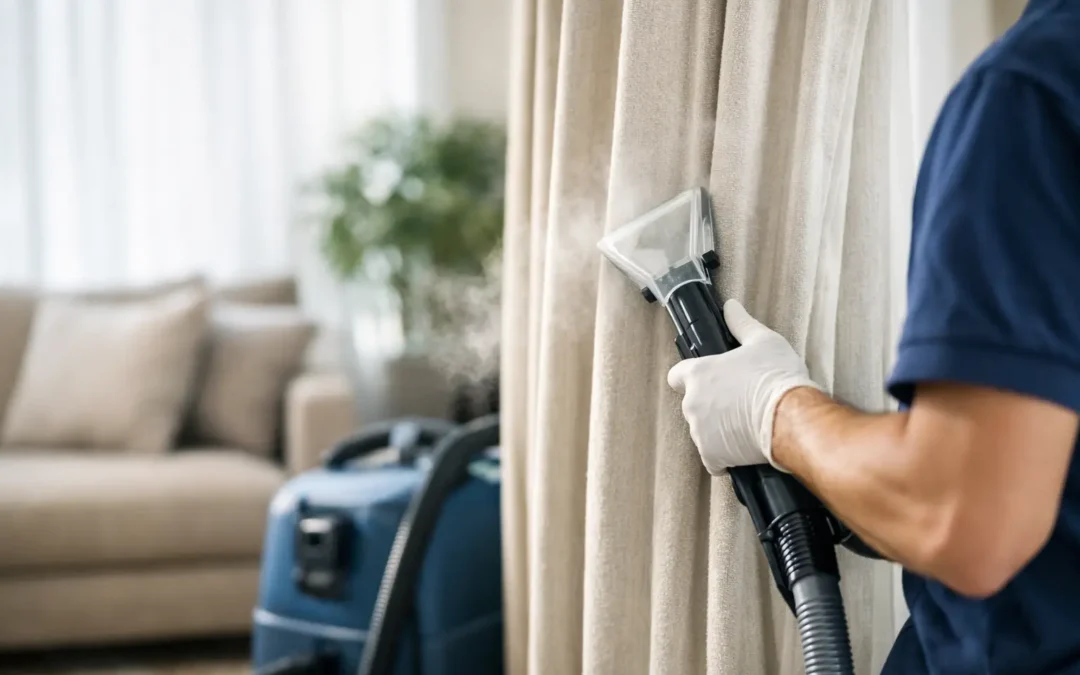
A beautiful set of drapes can quietly collect more than most property owners realize. Dust settles into pleats, cooking residue travels through open rooms, and sunlight can make faded or stained areas stand out. On site drapery cleaning gives homeowners and facility managers a practical way to refresh window treatments without the disruption of taking them down, transporting them, and reinstalling them.
For homes, offices, hotels, medical facilities, and multi-unit properties, draperies are part of the finished appearance of the space. They also represent a meaningful investment. The right cleaning process should improve that appearance while respecting the fabric, lining, hardware, and surrounding furnishings.
What On Site Drapery Cleaning Does Differently
On site cleaning means the draperies are cleaned where they hang. A trained technician evaluates the material, construction, condition, and visible staining before selecting an appropriate cleaning method. This approach is especially useful for large, heavy, custom, or difficult-to-remove window treatments.
Removing drapes is not always simple. Tall windows, layered panels, decorative rods, fragile hooks, and specialized linings can turn a cleaning project into a larger maintenance task. Taking fabric down also creates the risk of improper handling, misplaced hardware, or reinstallation issues. Cleaning in place reduces those concerns and helps keep the process organized.
That does not mean every drapery should be cleaned the same way. Some fabrics respond well to low-moisture cleaning, while others require more delicate fabricare methods. Silk, velvet, lined panels, blackout draperies, and older textiles all deserve a closer inspection before work begins. A dependable service provider will explain the recommended process rather than treating every window covering as interchangeable.
Why Draperies Need Professional Attention
Vacuuming with a brush attachment can remove loose surface dust, but it does not address the deeper buildup that collects over time. Draperies act as filters in a room. Air movement carries particles from HVAC systems, outdoor air, pets, cooking, and daily activity into the folds of the fabric.
In a home, that buildup may show up as dull-looking fabric, lingering odors, or dust that seems to return quickly after routine cleaning. In a commercial setting, it can affect the presentation of a lobby, meeting room, restaurant, rental unit, or guest space. Clean window treatments help the entire room look more maintained because they frame the windows and occupy a large visual area.
Professional cleaning can help address common concerns such as:
- Embedded dust and dry soil in pleats and hems
- Odors from food, smoke, pets, or high-traffic spaces
- Light surface staining and spots that need fabric-safe treatment
- Overall dullness caused by airborne residue
Results depend on the age of the fabric, the type of stain, prior cleaning attempts, and whether sun damage or permanent discoloration is already present. A reputable technician should set realistic expectations. Cleaning can make a substantial difference, but it cannot reverse fabric deterioration, fading, or stains that have chemically altered the material.
The Benefits of Cleaning Draperies in Place
Convenience is the most obvious advantage, but it is not the only one. On site drapery cleaning can minimize downtime in active homes and businesses. Rather than leaving windows uncovered for days or coordinating removal and return, the service can often be completed with far less interruption to the room.
It also reduces handling. Heavy panels and delicate fabrics can be difficult to take down safely, particularly in spaces with high ceilings or custom installations. Cleaning them in place helps avoid unnecessary pulling, folding, and transport.
For property managers, this can make scheduling easier. A cleaning appointment may be coordinated around tenant turnover, off-hours, seasonal maintenance, or preparation for a property showing. For business owners, it can support a cleaner, more professional environment without shutting down a workspace or common area for an extended period.
There is a trade-off to understand. Certain draperies with severe staining, water damage, brittle fabric, or manufacturer instructions that require specialized off-site care may not be ideal candidates for in-place cleaning. An honest assessment protects the customer and the fabric. The goal is not simply to clean at all costs. The goal is to choose the safest method that delivers worthwhile results.
What to Expect During the Service
A professional appointment should begin with an inspection. The technician checks the fabric type when possible, identifies concerns such as stains or fading, and looks at the condition of seams, linings, hems, and hardware. This is the time to point out areas of concern, including smoke odor, pet contact, food stains, or water spots near windows.
The work area is prepared to protect nearby flooring, furniture, and walls. Depending on the drapery and cleaning method, the technician may use specialized equipment designed to remove soil while controlling moisture. Proper moisture control matters because overly wet fabric can shrink, bleed color, or dry unevenly.
After cleaning, draperies may need time to dry fully. Air circulation, room temperature, fabric weight, and humidity can affect drying time. It is wise to avoid touching, tying back, or closing freshly cleaned panels until the technician confirms they are ready. This helps preserve the shape of pleats and prevents moisture from transferring to adjacent surfaces.
A quality service also includes a final review. The technician should check the fabric appearance, confirm that the workspace has been left clean, and let you know if any spots did not respond as expected. Clear communication is part of good workmanship, especially with specialty interior cleaning.
When Should You Schedule Drapery Cleaning?
Most homes benefit from professional drapery cleaning every one to three years, but the right schedule depends on the environment. Households with pets, smokers, frequent cooking, allergies, or open windows may need service more often. Draperies near kitchens, fireplaces, entryways, and busy family rooms usually collect soil faster than panels in lightly used bedrooms.
Commercial properties often benefit from a recurring maintenance plan. Hotels, offices, senior living facilities, event venues, and multi-unit communities have more consistent traffic and a greater need to maintain a clean appearance. Scheduling specialty cleaning alongside window cleaning, air duct service, blind cleaning, or other property maintenance can simplify vendor coordination and help prevent small appearance issues from becoming larger ones.
Do not wait until a panel looks visibly dirty. By that point, particles and oils may have had more time to settle into the fibers. Routine care is generally easier on fabric than aggressive cleaning after years of neglect.
Choosing a Drapery Cleaning Company You Can Trust
Window treatments are not a place to gamble on the lowest bid. Ask whether the company has experience with specialty fabrics, what process they use to assess material, and how they protect surrounding furnishings. You should also expect straightforward answers about limitations, drying time, and what can realistically be removed.
For larger properties, safety practices matter as much as cleaning knowledge. Technicians may be working near tall windows, ladders, furnishings, electrical outlets, or occupied spaces. A professional company should have trained personnel, proper insurance, and a clear commitment to employee and customer safety.
Wadley Services provides specialty interior cleaning with the same dependable approach used across its broader property care work. That means showing up prepared, treating your space with respect, and standing behind quality work. Whether you need one room refreshed or maintenance support across a commercial property, the service should feel organized from the estimate through the final walkthrough.
Keep Draperies Looking Better Between Appointments
A little routine care helps extend the results of professional cleaning. Use a vacuum with a gentle upholstery or brush attachment on low suction, working from the top down without pulling on the fabric. Open and close panels carefully, especially when they have delicate linings or heavy decorative hardware.
Address spills quickly by blotting, not rubbing. Avoid household spot cleaners unless you know they are safe for the specific fabric, lining, and dye. Products that look harmless on a hidden area can create rings, bleaching, or texture changes that are more noticeable than the original spot.
If your draperies have begun to look dull, hold odors, or no longer match the care you put into the rest of the room, a professional inspection is a sensible next step. Clean window treatments do more than improve the view – they help the whole property reflect the care behind it.
Recent Comments