
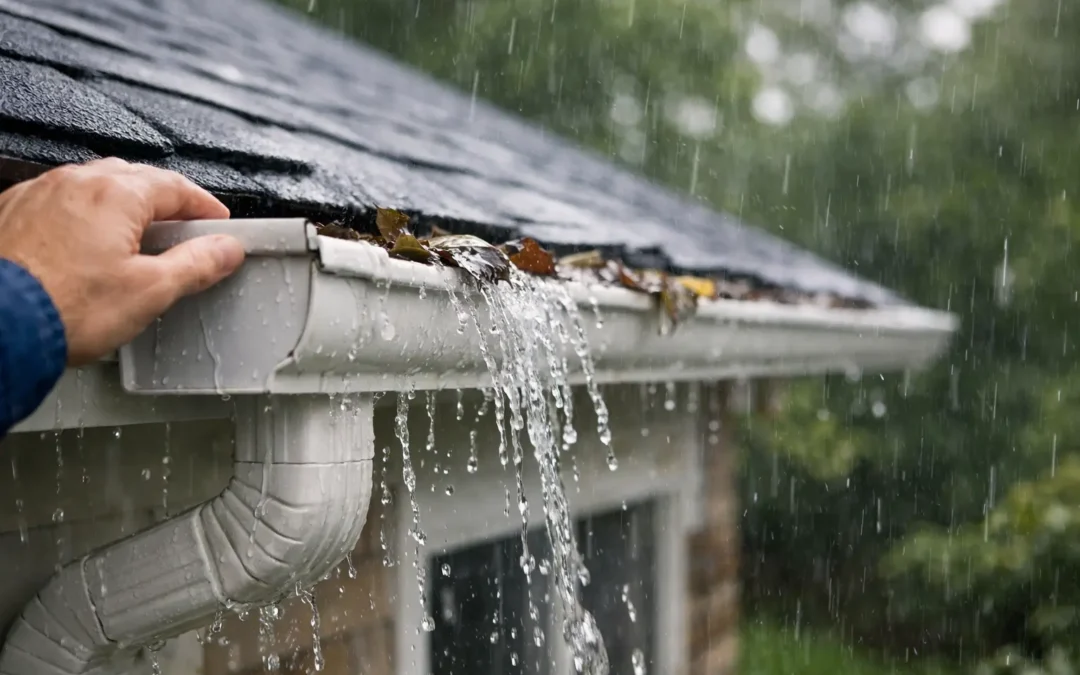
A gutter that spills over its front edge is not just an eyesore during a Utah rainstorm. That water can soak siding, stain masonry, erode landscaping, flood walkways, and work its way toward the foundation. Knowing how to prevent gutter overflow helps protect the parts of your property that are expensive and disruptive to repair.
The right solution depends on why the gutter is overflowing in the first place. A packed trough needs cleaning. A gutter that is pulling away from the fascia needs repair. Water that reaches a clean gutter but still pours over the edge may point to a pitch, capacity, or downspout problem. Addressing the cause, rather than only cleaning up the mess, is what keeps water moving where it belongs.
How to Prevent Gutter Overflow Before It Causes Damage
Start with regular cleaning. Leaves, pine needles, seed pods, roof grit, and windblown debris collect in gutters throughout the year. Once debris settles near a downspout opening, it can create a dam that holds water in the gutter. In a heavy storm, water has nowhere to go except over the sides.
For many Utah homes, cleaning twice a year is a practical baseline: once after spring debris and again after fall leaf drop. Properties below mature trees, near cottonwoods, or exposed to frequent wind may need attention more often. Commercial properties and multi-unit buildings should use a scheduled maintenance plan based on tree coverage, roof size, and drainage history rather than waiting for an obvious overflow.
Cleaning should include more than removing debris from the visible gutter channel. Each downspout needs to be checked for clogs, and the underground drain connection, if present, should be verified as clear. A gutter can look clean from the ground while a compacted blockage inside the downspout prevents proper drainage.
Check Whether Water Can Reach the Downspouts
A functional gutter must have the right slope. Gutters are installed with a subtle pitch that guides water toward the downspouts. If sections sag, are level, or pitch away from the outlet, water pools in the trough. Standing water adds weight, encourages corrosion, and makes overflow more likely when the next storm arrives.
Look for water sitting in a gutter long after rain has stopped, visible low spots, loose fasteners, or sections separating from the fascia. These are repair issues, not cleaning issues. Re-securing hangers, correcting the pitch, and replacing damaged sections can restore drainage and protect the roof edge from ongoing moisture exposure.
Downspout capacity matters as well. A long roofline can send a large amount of water into one short gutter run during a cloudburst. If a clean, properly pitched gutter consistently overtops near one area, the system may need an additional downspout or a larger downspout outlet. This is especially common where roof valleys direct a concentrated stream of water into a single section of gutter.
Pay Attention to Roof Valleys and Splash-Over
Not all gutter overflow comes from a clog. Roof valleys collect water from two roof planes and release it with force. During intense rainfall, that concentrated flow can shoot straight past a standard gutter or overwhelm it before it can drain.
A valley splash guard can help direct water into the gutter. In other cases, the gutter may need to be repositioned, reinforced, or replaced with a larger profile that can handle the volume. The best fix depends on roof design, gutter size, and where the overflow occurs. Adding a guard where the real issue is poor gutter placement will not solve the problem.
Also inspect the roof surface above the problem area. Granules from aging shingles, loose roofing materials, and moss or organic buildup can wash into the gutter and create recurring blockages. If overflow is isolated to one section, the source may be directly above it.
Make Sure Downspouts Discharge Away From the Building
Water should leave the downspout and travel away from the foundation. A downspout that empties beside the wall can saturate soil, contribute to basement moisture, and undermine landscaping even when the gutter itself is working properly.
Extensions, properly designed drain lines, and splash blocks can guide water away from the structure. The correct approach depends on the property grade and the condition of the surrounding soil. The goal is simple: keep runoff from collecting near the building or flowing across entryways and sidewalks where it can create a slip hazard.
Property managers should pay special attention to common walkways, loading areas, and entrances. Drainage problems at these locations affect both the building and the people using it. A routine inspection after a hard rain often reveals issues that are easy to miss on a dry day.
Consider Gutter Guards Carefully
Gutter guards can reduce the amount of larger debris entering a system, but they are not a replacement for maintenance. Fine pine needles, roof grit, seeds, and decomposing organic material can still collect on top of or beneath guards. Some guard styles can also cause water to skim over the gutter during heavy rain if they are not well matched to the roof and rainfall conditions.
Guards can be a worthwhile addition on tree-covered properties that require frequent cleaning. They work best when installed on gutters that are already securely fastened, correctly pitched, and sized for the roof. If the existing system has sagging sections or blocked downspouts, repair those problems first.
Prepare Gutters for Utah’s Changing Seasons
Utah weather can shift quickly from dry conditions to intense rain, snow, and freeze-thaw cycles. Seasonal attention helps prevent small drainage problems from becoming property damage.
In spring, clear winter debris and check for damage caused by snow load or ice. Before the rainy season, test the system with a controlled flow of water and watch for leaks, pooling, or slow downspouts. In fall, remove leaves before they break down into dense, heavy material. Before winter, make sure gutters and downspouts are clear so melting snow can drain rather than refreeze in a blocked system.
Ice buildup deserves special care. Ice dams can force water behind gutters and under roofing materials, but they are often tied to attic insulation, ventilation, and heat loss rather than gutters alone. Do not chip aggressively at ice or use methods that could damage roofing, gutters, or yourself. A professional assessment can identify whether drainage, roof conditions, or building heat loss is contributing to the issue.
Know When to Call a Professional
Gutter work involves ladders, roof edges, wet surfaces, and overhead electrical hazards. A homeowner may be comfortable clearing a low, accessible section of gutter, but recurring overflow or visible damage is a good reason to bring in trained help. The same applies to multi-story homes, steep rooflines, commercial buildings, and properties with extensive tree cover.
Professional service should address the full drainage path: debris removal, downspout clearing, inspection of fasteners and seams, identification of sagging or incorrect pitch, and recommendations for repairs where needed. At Wadley Services, gutter maintenance is approached as property protection, with attention to the details that keep water moving safely away from your home or facility.
If your gutters overflow only during severe storms, do not assume the problem is unavoidable. A careful inspection can reveal whether a valley is overshooting the gutter, a downspout is undersized, or a small slope issue is slowing the entire system. Taking care of that issue now can spare your property from the next storm’s runoff.
Recent Comments