
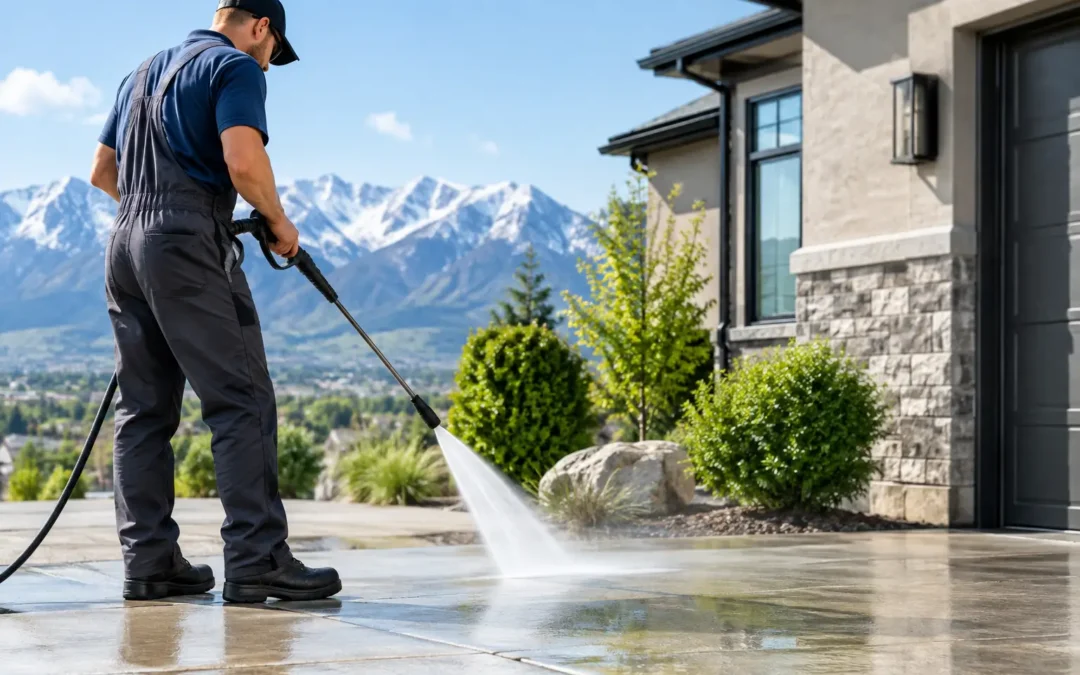
A clean driveway can start looking tired again after one winter of road salt, one spring of windblown dirt, or a few months of irrigation overspray. That is why a practical pressure washing maintenance guide matters for Utah property owners. Pressure washing is not just a way to improve curb appeal. When it is scheduled correctly and performed with the right method, it helps protect exterior surfaces from staining, buildup, slip hazards, and premature wear.
The key is not to pressure wash everything as often as possible. Different materials, locations, and exposure levels need different care. A shaded north-facing walkway, for example, may need attention sooner than a sunny patio. A busy commercial entryway may need recurring service more often than a private driveway. Good maintenance starts with the condition of the property, not a one-size-fits-all calendar.
What Pressure Washing Prevents
Exterior surfaces collect more than ordinary dirt. Concrete and pavers can hold oil, tire marks, deicing residue, mineral deposits, algae, mildew, and gum. Siding, soffits, fences, and masonry can develop staining from dust, pollen, cobwebs, sprinklers, and weather exposure. Around commercial properties, foot traffic and parking areas add another layer of grime that can make an otherwise well-managed building look neglected.
Some buildup is mainly cosmetic. Other buildup can create real maintenance concerns. Algae and mildew can make steps, sidewalks, pool decks, and entry areas slippery. Oil and automotive fluids can penetrate porous concrete if they are left too long. Salt and deicing products can leave a white haze or contribute to surface deterioration over time, especially where moisture repeatedly freezes and thaws.
Pressure washing also gives property owners a clearer view of the surface itself. Once dirt is removed, cracks, failing sealant, loose pavers, rust stains, and drainage problems are easier to spot. Cleaning does not replace repairs, but it can help identify when repairs are needed before a small issue becomes an expensive one.
A Pressure Washing Maintenance Guide by Surface
Concrete driveways, sidewalks, and parking areas
Most residential concrete benefits from professional cleaning every 12 to 24 months. The right frequency depends on shade, trees, sprinkler overspray, vehicles, and winter conditions. A driveway with regular oil drips or a sidewalk that stays damp may need spot treatment between full cleanings.
For commercial properties, high-traffic sidewalks, storefront entries, dumpster areas, loading zones, and parking sections often need a more frequent plan. Monthly, quarterly, or seasonal service can be appropriate depending on use. Consistent cleaning protects the property’s appearance and helps reduce slippery buildup in places where visitors and employees walk.
Do not assume higher pressure is always better for concrete. Older concrete, decorative finishes, exposed aggregate, and repaired areas can be damaged by poor technique. A professional should adjust pressure, water flow, cleaning solutions, and surface distance to suit the condition of the concrete.
Siding, stucco, brick, and exterior walls
Exterior walls generally need a gentler approach than hard flatwork. High pressure can force water behind siding, strip paint, scar wood, or damage soft mortar. In many cases, a low-pressure wash combined with the appropriate cleaning solution is the safer method for removing dust, organic staining, and cobwebs.
Homes near construction, open fields, busy roads, or areas with hard-water sprinkler exposure may need exterior washing every year. Other homes may only need service every two or three years. Look for dullness, dark streaks, green growth, visible dust, and staining beneath gutters or around window frames.
Brick and masonry deserve special attention. Mortar condition, efflorescence, and age all affect the cleaning method. If white mineral deposits keep returning, cleaning alone may not solve the problem. Drainage, sprinklers, and moisture intrusion should also be evaluated.
Decks, fences, patios, and outdoor living areas
Wood can look new again after proper cleaning, but it is one of the easiest materials to damage with excessive pressure. Too much force can raise the grain, leave visible wand marks, and shorten the life of the finish. Composite decking, vinyl fencing, painted surfaces, and natural stone each require their own method as well.
Plan to inspect these areas each spring and again before winter. Remove leaves, soil, and furniture marks as needed. If a deck is being stained or sealed, it should be cleaned and allowed to dry completely first. The right preparation helps coatings adhere and last longer.
Patios and pavers may need cleaning when joints collect weeds, moss, or packed dirt. If sand between pavers is disturbed during cleaning, it may need to be replaced. That is a normal part of maintaining some paver systems, not necessarily a sign that the work was done incorrectly.
Build Your Seasonal Maintenance Plan
Utah’s seasons create a useful rhythm for exterior care. Spring is often the best time for a thorough inspection and cleaning after winter grime, salt, and freeze-thaw exposure. It is also a good time to address slippery walkways, prepare patios for use, and remove debris from around exterior surfaces.
Summer cleaning can focus on sprinkler stains, dusty siding, outdoor gathering areas, and commercial storefronts. Hard-water deposits are easier to manage when they are addressed early instead of being allowed to build up for several seasons. Adjust sprinkler heads away from walls, windows, fencing, and walkways whenever possible. Pressure washing can remove existing mineral staining, but prevention will reduce repeat cleaning needs.
Fall is the time to clear organic debris before it becomes wet and compacted. Leaves, pine needles, and soil can stain concrete, clog drainage paths, and hold moisture against exterior surfaces. Property managers may also choose fall cleaning to keep entrances and common areas looking cared for before holiday traffic and winter weather arrive.
In winter, cleaning options depend on temperature and site conditions. Water-based work should not be performed where runoff can freeze and create a hazard. Instead, use winter months to monitor deicing residue, oil spots, drainage, and areas where ice repeatedly forms. Scheduling early spring service can help reset the property after the season.
Protect the Property While Cleaning It
A good result is about more than a bright surface. It also means protecting landscaping, windows, fixtures, adjacent materials, and people on site. Cleaning solutions must be selected carefully, applied correctly, and rinsed thoroughly. Nearby plants should be protected, and runoff should be managed responsibly.
Before a service visit, move vehicles, furniture, planters, and fragile décor away from the work area. Close windows, secure pets, and let tenants or employees know where work will take place. For commercial sites, the service provider should coordinate around customer access, deliveries, foot traffic, and safety barriers.
Pressure washers can cause injury and property damage in inexperienced hands. The stream can cut skin, dislodge loose materials, etch concrete, break seals, and force water into places it does not belong. Rental equipment may be suitable for a limited, low-risk task, but it is not always the best choice for multi-surface properties, elevated work, stained concrete, or high-traffic commercial areas.
Know When to Call a Professional
Consider professional service when stains have set into concrete, surfaces show algae or mildew, exterior walls need low-pressure cleaning, or the property includes multiple materials that need different methods. A qualified team can assess the surface before cleaning rather than treating every area with the same pressure setting.
Recurring maintenance is especially useful for property managers and business owners. It provides a predictable schedule, keeps common areas presentable, and reduces the need for last-minute cleaning before inspections, events, tenant turnover, or customer visits. Bundling exterior care with services such as window cleaning, gutter cleaning, or other property maintenance can also simplify coordination.
Wadley Services helps Utah homeowners and commercial property teams maintain the exterior areas that shape first impressions and protect daily use. The best schedule is the one built around your property’s actual exposure, traffic, and materials – then completed safely and consistently by people who stand behind the work.
Walk your property after the next storm, irrigation cycle, or busy weekend. The stains and surfaces you notice now can help you plan maintenance before they become a larger repair or safety concern.
Recent Comments