
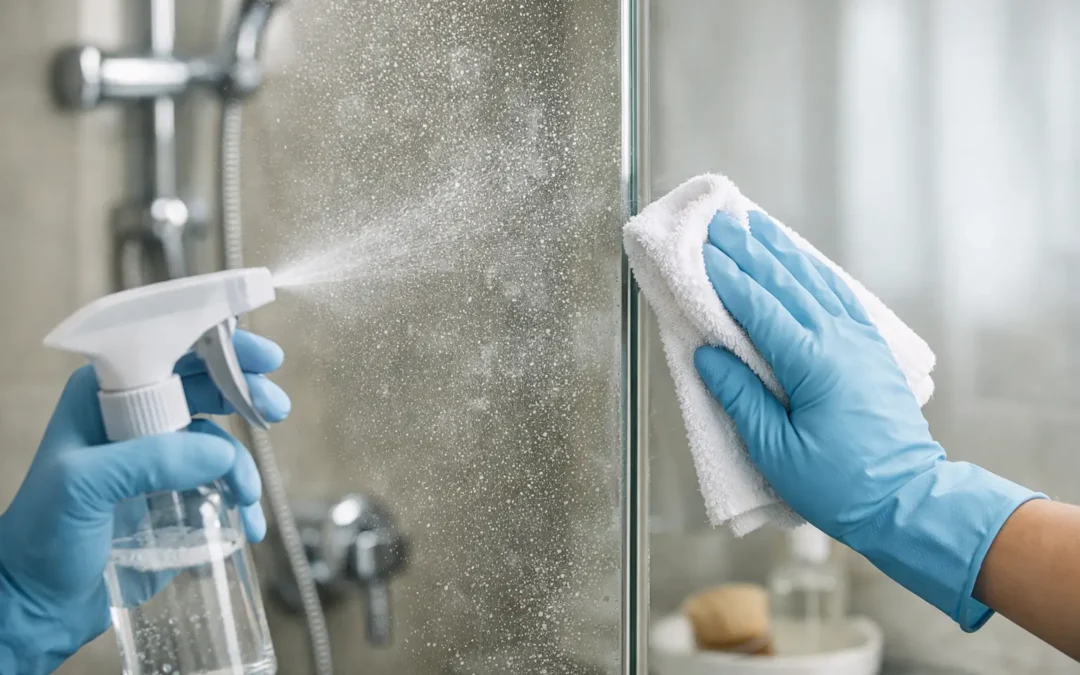
A sprinkler line that hits the same window every day can leave a white, cloudy buildup that ordinary glass cleaner will not touch. The same mineral deposits can form on shower doors, faucets, tile, brick, and concrete. Knowing how to remove hard water stains starts with identifying the surface underneath, because the right solution for a glass shower door can damage natural stone or a protected exterior finish.
Hard water stains are not simply dirt. They are mineral deposits, usually calcium and magnesium, left behind when water evaporates. Utah properties commonly deal with this problem because irrigation overspray, outdoor exposure, and mineral-rich water create ideal conditions for buildup. Addressing stains early protects the appearance of the property and helps prevent permanent damage.
Start by Identifying the Stain and Surface
A fresh hard water stain often feels rough or chalky and looks white, gray, or slightly brown. Older buildup may appear as cloudy spots, crusty rings, or streaks that seem permanently bonded to the surface. Rust-colored staining can also occur when minerals react with metal fixtures or runoff.
Before applying any cleaner, determine what you are cleaning. Glass, porcelain, ceramic tile, chrome, stainless steel, vinyl, painted surfaces, brick, and concrete all tolerate different methods. Natural stone such as marble, travertine, limestone, and some decorative pavers requires particular care. Acidic cleaners can etch stone, leaving a dull or rough area that is more noticeable than the original stain.
Test every product in a small, inconspicuous area first. If the surface changes color, loses shine, or feels rough, stop and use a safer method. Never assume a cleaner is appropriate because it worked somewhere else on the property.
How to Remove Hard Water Stains From Glass
Glass is one of the most common hard water problem areas, especially on exterior windows and shower doors. For light buildup, begin with a mild acidic solution made from equal parts white vinegar and water. Apply it to a microfiber cloth rather than spraying heavily around window frames, seals, or nearby stone. Let it sit briefly, then wipe with a clean cloth and rinse with water.
For a shower door, a non-abrasive sponge can help loosen deposits after the solution has had time to work. Follow with a clean-water rinse and dry the glass completely with a microfiber towel or squeegee. Drying matters because water left on the surface begins the mineral-deposit cycle again.
Do not use steel wool, razor blades, or aggressive scouring pads on glass unless the manufacturer specifically approves the method. They can scratch glass, damage coatings, or create fine marks that catch future deposits. Avoid cleaning exterior glass in direct, hot sunlight, since cleaning solutions can dry too quickly and leave residue.
If the glass remains cloudy after deposits are removed, the damage may be etched into the surface. Etching is different from buildup. It happens when minerals and environmental contaminants permanently affect the glass, and it cannot always be restored with cleaning alone. Professional assessment is the sensible next step before trying stronger chemicals or abrasive restoration products.
Removing Stains From Fixtures, Tile, and Shower Surfaces
Vinegar can be effective on chrome fixtures, ceramic tile, porcelain, and fiberglass when used carefully. Dampen a cloth with the vinegar-and-water mixture, wrap it around the affected faucet or shower fixture for several minutes, and then wipe it clean. Use a soft toothbrush for seams and around handles, followed by a clear-water rinse and thorough drying.
For heavier deposits on tile or grout, choose a cleaner labeled for the specific material. A paste of baking soda and water may help provide gentle cleaning action on many durable surfaces, but it should not be treated as a universal solution. Scrubbing too hard can wear grout, dull polished finishes, and push residue into small surface pores.
Keep acidic cleaners away from natural stone, decorative stone tile, and unsealed grout. Use a pH-neutral stone cleaner instead, and follow the product directions closely. When a shower includes several materials, such as glass, tile, stone, chrome, and silicone caulk, treating each part correctly takes more time but prevents expensive surface damage.
Never mix cleaning products. In particular, vinegar or other acids must never be combined with bleach. The combination can release harmful fumes. Good ventilation, gloves, and eye protection are wise when working with any concentrated cleaner, especially in a small bathroom.
Exterior Hard Water Stains Need a Different Approach
Hard water stains outside are often caused by irrigation overspray. They may show up on windows, stucco, siding, stone, brick, concrete, metal railings, and painted surfaces. These stains are frequently more difficult than indoor deposits because sunlight bakes them onto the material and wind carries dust that bonds to the mineral residue.
Begin by correcting the source. Adjust sprinkler heads so they do not spray windows, walls, walkways, or vehicles. Check for leaking valves and broken nozzles. Cleaning a stained wall without fixing irrigation overspray usually means the stains will return within weeks.
On durable concrete, a cleaner designed for mineral deposits may be appropriate, but the surface should be tested first. Concrete can vary widely in color, finish, age, and sealant condition. Strong acidic products can discolor concrete, expose aggregate, or create uneven light spots. Painted surfaces, aluminum, and decorative stone are also poor candidates for aggressive acid cleaning.
Pressure washing can remove dirt around mineral deposits, but pressure alone may not remove bonded hard water stains. Used incorrectly, it can damage mortar, strip paint, force water behind siding, or scar softer stone. The best exterior cleaning approach depends on the building material, the severity of staining, and whether the surface has been sealed or previously treated.
When Household Methods Are Enough – and When They Are Not
Home cleaning methods are usually suitable for light, recent deposits on durable surfaces. A careful vinegar solution, appropriate commercial cleaner, soft cloth, and regular drying routine can make a meaningful difference when stains have not had time to set.
Professional service is worth considering when stains cover large exterior areas, affect upper-story windows, remain after repeated safe cleaning, or appear on high-value surfaces such as natural stone, coated glass, specialty siding, or commercial storefront glass. Property managers may also benefit from a consistent maintenance schedule rather than responding to visible buildup after it becomes severe.
A trained cleaning team can evaluate the surface, determine whether the issue is mineral buildup or etching, and use methods suited to the material. This reduces the risk of trading a visible stain for scratched glass, stripped sealant, damaged landscaping, or uneven exterior finishes.
Prevent Hard Water Stains From Returning
The most reliable prevention method is removing water before it evaporates. Squeegee shower glass after use, dry faucets and fixtures with a microfiber cloth, and clean small deposits before they turn into a hard crust. For exterior windows, redirect sprinkler heads and check them at the start of each irrigation season.
Sealing appropriate stone, grout, concrete, or exterior surfaces can also make future cleaning easier, though sealing is not a substitute for proper cleaning or irrigation control. The correct product and application schedule depend on the material, exposure, and existing finish.
For homes, multi-unit properties, and business facilities across Utah, routine window cleaning and exterior maintenance can prevent small mineral deposits from becoming a bigger restoration issue. Wadley Services approaches each surface with the care it deserves, because protecting the property matters as much as improving its appearance. A quick response to the first signs of buildup can keep glass clearer, fixtures brighter, and exterior surfaces in better condition for the long run.
Recent Comments