
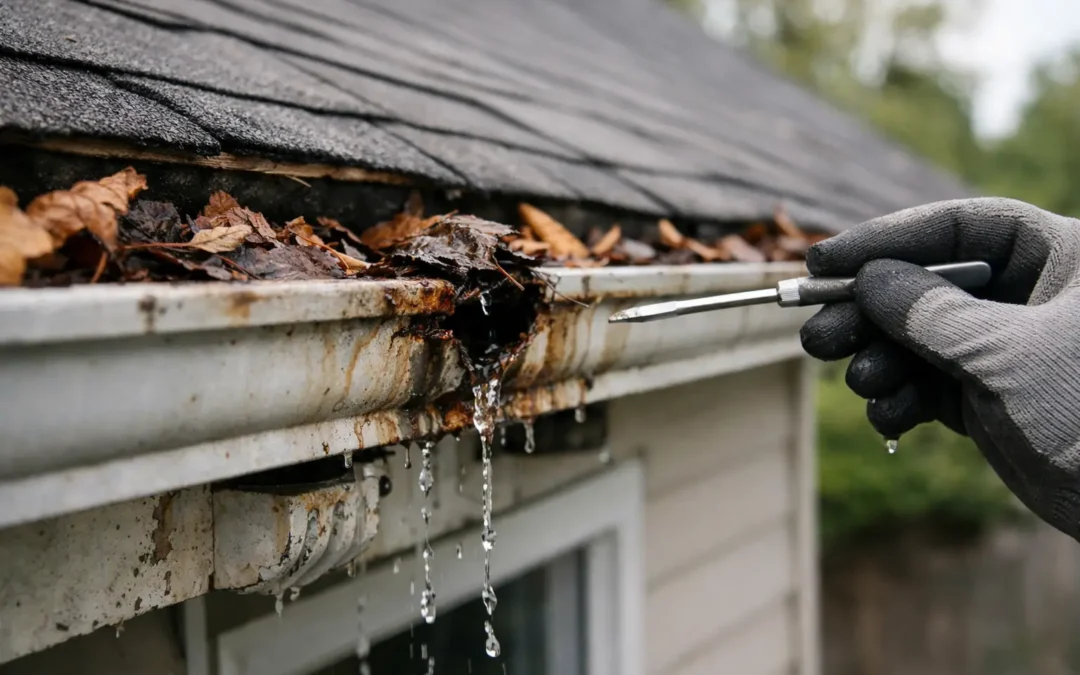
A gutter problem rarely starts with a dramatic collapse. More often, it begins with a small drip at a corner, water spilling over during a storm, or a section that no longer sits straight against the roofline. Recognizing the top signs gutters need repair gives homeowners and property managers a chance to protect the building before routine runoff turns into roof, siding, foundation, or landscape damage.
Utah weather can be especially hard on gutter systems. Snow loads, freeze-thaw cycles, wind, spring runoff, and dry-season debris all place stress on gutters and their fasteners. Cleaning is an essential part of maintenance, but a clean gutter can still need repair. Here is what to watch for and when it is time to bring in a qualified professional.
Top Signs Gutters Need Repair
Water spills over the gutter during rain
Overflow is one of the most visible warning signs. If water runs over the front edge of the gutter, it may be clogged with leaves, roof grit, nests, or other debris. It can also mean the gutter is pitched incorrectly, undersized for the roof area, or draining too slowly through the downspout.
The distinction matters. A basic cleaning may solve a one-time blockage, while repeated overflow after cleaning points to a repair or drainage design issue. Left alone, overflowing water can stain siding, soak entryways, erode beds, and collect around the foundation.
You see drips, seams opening, or rust spots
A few drops from a gutter seam may not look urgent, but water always finds a way to enlarge a weak point. Seams, end caps, outlets, and miters are common places for leaks because they depend on sealant and connections that can wear down over time.
Look for water marks beneath joints, rust-colored streaks, pinholes, or peeling sealant. Aluminum gutters do not rust the way steel does, but they can still corrode, crack, or develop holes. Repairing a failing seam early is usually far more manageable than replacing sections damaged by years of leaking water.
Gutters are sagging or pulling away from the home
Gutters should follow a consistent line along the roof edge. A section that bows, sags, or separates from the fascia is carrying weight it should not carry or has lost secure support. Wet debris, standing water, ice, and snow can add significant weight quickly.
Loose gutters are more than an appearance concern. As the system pulls away, water can run behind the gutter and into the fascia board or roof edge. Rotting wood may then make it harder to secure the gutter properly. A professional should inspect both the gutter hardware and the condition of the material behind it before simply adding new fasteners.
Water pools near the foundation
Downspouts are supposed to move roof runoff away from the building. If you notice puddles at the base of the home, wet soil along the foundation, or mulch repeatedly washing out after storms, the downspout may be clogged, disconnected, too short, or directed poorly.
This is particularly worth addressing on properties with basements, sloped lots, or known drainage concerns. Not every damp area is caused by the gutters, but gutter discharge is one of the first practical areas to inspect. The right repair may be as straightforward as reconnecting a downspout or adding an extension. In other cases, the gutter slope or outlet location needs correction.
Streaks, peeling paint, or rot appear on exterior surfaces
Water damage often leaves clues on the building itself. Watch for dark streaks on siding, paint that bubbles or peels near the roofline, softened fascia boards, and discoloration around windows or exterior trim. These signs can indicate that water is getting behind the gutter or flowing where it should not.
Wood rot should be handled promptly. It can spread beyond the visible spot and compromise the surface that supports the gutter system. A repair should address the source of the water, not just cover the cosmetic damage with paint.
Downspouts are loose, crushed, or disconnected
A downspout can be clean but still fail to do its job. Bent sections restrict flow, loose straps allow the pipe to shift in wind, and disconnected elbows send water directly against the structure. On commercial buildings and multi-unit properties, a single failed downspout can create a slippery walkway or concentrate water near a heavily used entrance.
Check the full path from the gutter outlet to the discharge point. If the downspout is damaged or improperly secured, repair it before the next heavy storm. This is also a good time to confirm that the discharge area remains clear and directs water away from the property.
There are signs of ice dams or recurring icicles
Icicles may look seasonal, but heavy or recurring ice formation along the gutter line deserves attention. Ice can bend gutters, pull fasteners loose, and block normal drainage. It can also be a symptom of broader roof ventilation or insulation issues that cause snow to melt and refreeze at the edge.
Gutter repair may be part of the solution, especially if damaged sections hold water or prevent proper drainage. Still, ice dams are not always a gutter-only problem. A careful inspection helps identify whether the issue involves the gutter system, the roof, or both.
How to Tell Whether You Need Cleaning, Repair, or Replacement
Gutter cleaning removes the debris that prevents normal flow. Repair restores parts that are leaking, loose, misaligned, or damaged. Replacement becomes the better value when multiple sections are failing, corrosion is widespread, or the existing system is no longer properly sized for the property.
Age alone does not determine the answer. A newer gutter system can need repair after storm damage or an improper installation, while an older system may continue working well with routine maintenance and targeted fixes. The most useful question is whether the issue is isolated or repeated across the system.
For example, one leaking seam may only need resealing. Several sagging sections, rotting fascia, and water spilling from multiple locations point to a larger project. A professional assessment can help prevent money from being spent on short-term patches that do not solve the drainage problem.
When a Professional Gutter Inspection Is Worth It
Property owners can safely spot many warning signs from the ground, but climbing ladders, working near roof edges, and handling damaged metal are not ideal do-it-yourself tasks. This is especially true for multi-story homes, commercial properties, steep rooflines, and systems affected by snow or ice.
A professional inspection should look beyond visible debris. The work should include checking gutter pitch, hangers, seams, outlets, downspouts, fascia conditions, and the way water exits the property. That approach matters because a gutter can appear clean from below while still holding standing water or draining toward the wrong area.
For busy property managers, coordinating gutter cleaning and repair at the same time can also reduce disruptions and keep small defects from being missed. Wadley Services provides dependable gutter cleaning and repair support for residential and commercial properties throughout Utah, with a focus on safe work practices and workmanship that protects the property.
Prevent Small Gutter Problems From Becoming Costly Repairs
Most gutter repairs are easier when they are found early. Schedule cleaning based on the trees around the property, not just the calendar. Homes beneath mature trees may need attention more often, while properties with limited nearby debris may still need seasonal checks after wind, snow, or heavy rain.
After a storm, take a quick walk around the building. Look for water coming over the gutter, damp areas near the foundation, loose downspouts, and fresh stains on siding. You do not need to diagnose every issue yourself. Noticing a change and arranging a timely inspection is often enough to prevent a small gutter concern from becoming damage inside or outside the building.
A properly working gutter system is quiet, easy to overlook, and valuable every time the weather turns. Address the warning signs early, and your roofline, exterior surfaces, and foundation will be better prepared for the next season.
Recent Comments