
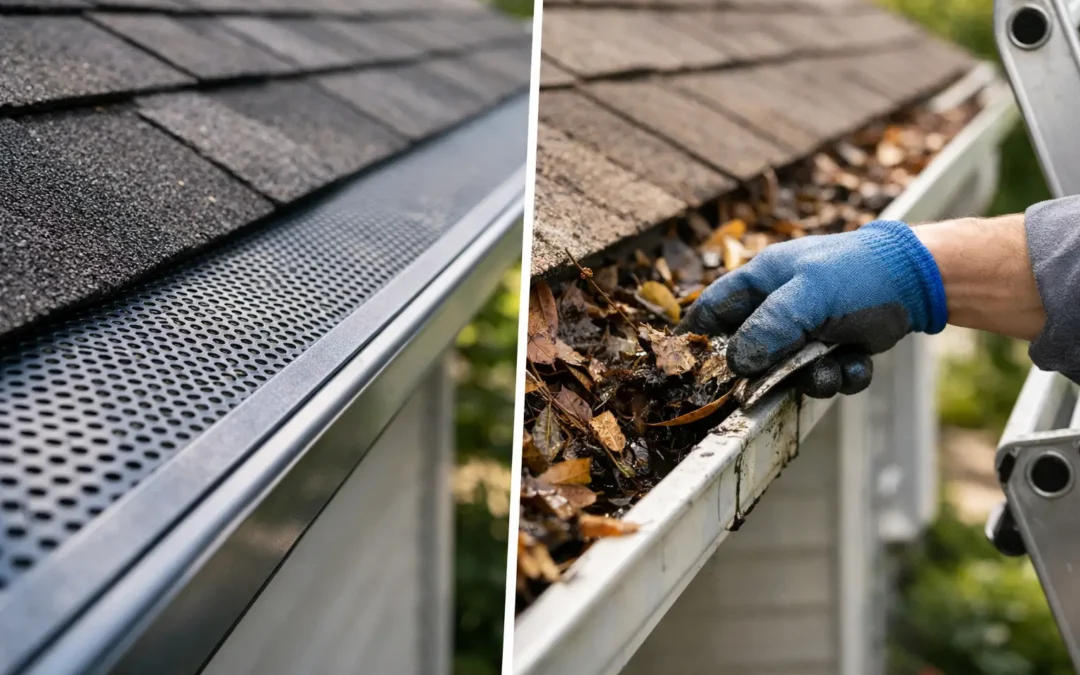
A gutter system can look fine from the ground while holding a heavy mix of leaves, roof grit, seed pods, and standing water. That is why gutter guards vs cleaning is not really a choice between maintenance and no maintenance. It is a decision about how you want to manage the work, protect the roofline, and reduce the chance of water damage.
For Utah homeowners, property managers, and commercial facilities, the right answer depends on the building, surrounding trees, roof design, and condition of the existing gutters. Guards can be a worthwhile improvement. They are not a substitute for periodic inspection and cleaning.
Gutter Guards vs Cleaning: The Real Difference
Gutter cleaning removes what is already inside the system. A proper service clears leaves, shingle granules, nests, mud, and other debris from the troughs and downspouts. It also gives a trained technician the opportunity to spot loose hangers, separated seams, standing water, damaged downspouts, and other problems that can worsen through the next season.
Gutter guards are installed over or inside the gutter opening to limit what enters in the first place. Depending on the style, they may use mesh, screens, reverse curves, foam, or brush-like materials. Their job is to keep larger debris out while allowing rainwater to pass into the gutter.
That distinction matters. Cleaning is a maintenance service. Guards are a preventive product. A guard may reduce how much material collects in the gutter, but it cannot correct poor slope, undersized downspouts, damaged gutters, or water that overshoots the system during a hard storm.
What Gutter Guards Do Well
A quality guard can reduce the volume of leaves, twigs, and larger debris inside the gutter. For a home surrounded by mature trees, that can mean fewer major cleanouts and less frequent accumulation in the downspouts. Guards may also make it harder for some birds and pests to build nests in an open gutter.
They can be especially helpful where access is difficult. A steep roof, multiple stories, or a building with long gutter runs may make frequent do-it-yourself cleaning a poor safety decision. Reducing debris buildup is valuable when every trip up a ladder carries risk.
Guards also help keep a property looking maintained between service visits. Overflowing gutters can stain siding, soak landscaping, contribute to icy walkways, and create an immediate appearance problem at a home, retail center, office building, or multi-unit property.
Still, the best results depend on correct installation. A guard that is not secured properly can lift, bend, trap debris, or interfere with water flow. Installing guards over gutters that already sag or leak simply covers a problem that still needs repair.
Why Gutter Cleaning Still Matters
Even covered gutters need attention. Fine roof grit, pine needles, blossoms, seed pods, and windblown dirt can collect on top of guards or work through small openings. Debris may gather at valleys and roof edges, where it blocks water from reaching the gutter. Downspouts can also clog below the guard, especially if old material was left in the system before installation.
Utah weather adds another reason to inspect regularly. Snowmelt, spring rain, summer storms, and fall leaf drop can each expose drainage issues at different times of year. In colder conditions, clogged gutters can contribute to ice buildup near the roof edge. The exact cause of ice dams varies by roof insulation, attic ventilation, snow conditions, and drainage, but clear gutters are part of keeping water moving where it should.
Professional cleaning is also an inspection opportunity. A technician can test downspout flow, remove debris from roof-adjacent areas when appropriate, and identify signs that water is escaping behind the gutter or pooling near the foundation. Those details are easy to miss when the goal is simply to scoop out visible leaves.
The Trade-Off: Upfront Cost vs Ongoing Service
Gutter guards usually require a larger upfront investment than a standard gutter cleaning. The cost varies with the type of guard, linear footage, roof height, accessibility, and whether repairs are needed first. A durable, properly fitted guard is generally a better long-term choice than a low-cost product that traps debris or must be replaced quickly.
Cleaning has a lower cost per visit, but it is recurring maintenance. Properties with heavy tree coverage may need cleaning more than once a year. Buildings in open areas with minimal debris may only need a seasonal inspection and occasional service.
The practical middle ground for many properties is to install guards where they make sense, then schedule periodic professional inspections and cleaning. This approach reduces heavy buildup without assuming the system can be ignored. It also keeps minor gutter issues from becoming fascia damage, siding stains, or drainage problems around the building.
When Guards Are Worth Considering
Guards tend to make the most sense when a property has recurring debris, difficult access, or an owner who wants to reduce the frequency of major cleanouts. They can be a good fit for homes under deciduous trees, properties with pine needles when the guard style is designed for them, and commercial buildings where regular maintenance needs to be planned around tenant or customer activity.
They may be less useful when gutters are already in poor condition or when the roof layout causes water to rush over the gutter during heavy rain. In those cases, repair, resizing, or correcting the gutter pitch may need to come first. A guard cannot solve a drainage design problem.
Before choosing a product, consider the actual debris around the property. Large leaves, fine needles, roof granules, and windblown dust behave differently. The guard that works well beneath broadleaf trees may not perform the same way under pines or near a roof that sheds significant granules.
When Routine Cleaning Is the Better Choice
Routine cleaning may be the better option for a property with limited tree cover, easy gutter access, and gutters that remain mostly clear between seasons. It is also a sensible starting point for a recently purchased home or building when the gutter condition is unknown. Cleaning first lets you see what is happening inside the system before investing in guards.
For property managers, scheduled cleaning can be easier to budget and document. Regular visits create a record of service and make it more likely that developing repair needs are identified before they affect tenants, landscaping, exterior finishes, or pedestrian areas.
Cleaning is also the right immediate response when gutters are overflowing now. Guards should not be installed over packed debris. The gutters and downspouts need to be cleared, checked for proper flow, and repaired as needed before any cover system is considered.
A Better Maintenance Plan for Utah Properties
Rather than treating gutter care as a one-time task, build it into the property’s maintenance schedule. Most homes benefit from at least a seasonal inspection, particularly after heavy leaf drop or severe weather. Properties with dense trees, pine needles, multi-story rooflines, or a history of clogs may need more frequent service.
A dependable service visit should address more than what can be seen from the ground. The work should include clearing the gutters, checking downspouts, confirming drainage, and noting visible repair concerns. Safety matters as much as cleanliness, especially on steep roofs and commercial sites where ladder work requires proper equipment and planning.
Wadley Services helps property owners and managers maintain gutters with the same attention to safety, workmanship, and dependable service that exterior maintenance requires. Whether you are considering guards or need a cleaning plan that fits the property, start with the condition of the gutters you have. Clear, properly functioning gutters are the foundation for every good decision that follows.
Recent Comments