
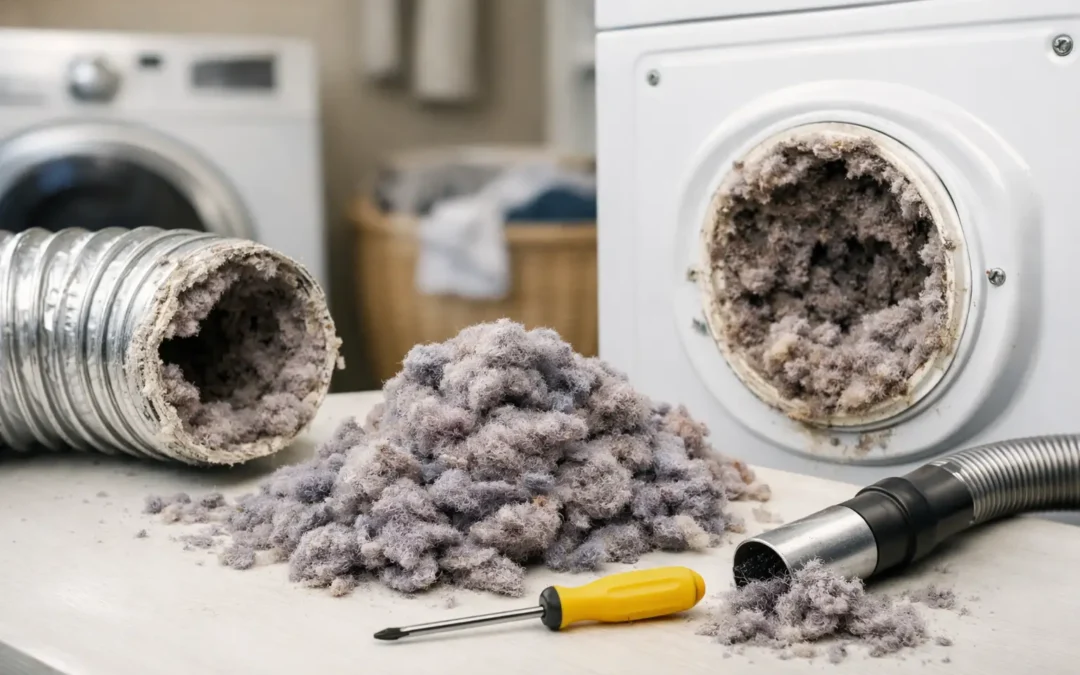
A dryer that suddenly needs two or three cycles to dry a normal load is not just frustrating. It may be signaling a restricted vent line. Understanding what clogs dryer vents can help homeowners, property managers, and facility teams address a small maintenance issue before it becomes an expensive repair, a moisture problem, or a serious fire hazard.
Dryer vents carry heat, moisture, and lint from the appliance to the outdoors. When that path is clear, the dryer can work as designed. When debris narrows or blocks the path, heat builds up, drying times increase, and the appliance has to work harder than it should.
What Clogs Dryer Vents Most Often?
Lint is the most common culprit, but it is not the only material found inside a blocked dryer vent. Even when a lint screen is cleaned after every load, fine fibers pass through it and enter the vent system. Over time, those fibers cling to the interior of the duct, especially at turns, joints, and long horizontal runs.
Lint and fabric fibers
Towels, fleece, pet bedding, work clothes, and other high-shed items can produce a surprising amount of lint. Dryer sheets may also leave behind a light residue that helps fine lint stick to the screen and vent walls. A lint screen that looks clean can still have a nearly invisible coating that limits airflow.
Lint accumulates faster when loads are consistently overfilled. Clothing cannot tumble freely, so more fibers are released and the dryer takes longer to remove moisture. Older dryers may also push less air than newer models, making regular vent maintenance even more valuable.
Bird nests, insects, and outdoor debris
The exterior vent hood is the first line of defense against weather and pests, but it can also become a point of blockage. Birds may build nests in or near an unprotected vent opening. Wasps, insects, leaves, grass clippings, windblown dirt, and even snow can interfere with the flap that should open while the dryer runs.
Utah properties face changing conditions throughout the year. A vent outlet that was clear in summer may be covered by leaves in fall, packed with snow in winter, or affected by nesting activity in spring. Outdoor vent covers deserve a visual check as part of routine property maintenance.
Crushed, disconnected, or poorly designed ducts
Not every dryer vent restriction is caused by debris. Flexible transition ducts behind the dryer can become crushed when the appliance is pushed too close to the wall. Older plastic or foil-style ducts can sag, tear, or trap lint in their ridges. A disconnected section can release warm, humid air into a wall, ceiling, crawlspace, or utility room instead of exhausting it outside.
Long vent routes, too many sharp turns, and undersized ductwork can also create chronic airflow problems. Lint settles in places that are difficult to reach with a household brush. In these cases, cleaning matters, but correcting the vent configuration may be necessary for a lasting result.
Moisture and residue buildup
A dryer vent is designed to move moist air outdoors. If airflow is weak, moisture can combine with lint and create a dense, matted blockage. This material is harder to remove than loose lint. It can also contribute to damp odors and condensation around the dryer area.
Commercial laundry rooms, multi-unit housing, and properties with frequent laundry use often see this buildup sooner than a single-family home. The more the dryer runs, the more important consistent inspection and cleaning become.
Warning Signs of a Clogged Dryer Vent
A blocked vent rarely happens all at once. Most dryers provide warning signs well before the system is fully obstructed. Paying attention to these changes can prevent unnecessary strain on the appliance.
One of the clearest signs is longer drying time. If a load that once dried in one cycle now takes two cycles, restricted airflow is a likely possibility. Hot clothes at the end of a cycle are another concern, particularly if they are still damp. The dryer may be producing heat but unable to move moist air out through the vent.
Watch for a laundry room that feels unusually warm or humid while the dryer is operating. You may notice a burning smell, excessive heat on the dryer cabinet, or a lint screen that fills more quickly than usual. Outside, the vent flap may barely open or fail to open during a running cycle.
For property managers, repeated tenant reports of poor dryer performance should not be dismissed as an appliance issue alone. Shared walls, long duct runs, roof exits, and concealed vents can make multi-unit systems more prone to restrictions. A professional inspection can help identify whether the problem is the dryer, the vent path, or both.
Why a Restricted Vent Is a Safety Concern
Lint is highly combustible. When it collects in a vent system and is exposed to the high temperatures created by a dryer, the risk of fire increases. A clogged line can also force the dryer to run longer and hotter, putting added stress on heating components, motors, and electrical parts.
The concern is not limited to fire. Moist air that fails to exit the building can create condensation issues. Over time, that moisture may affect nearby drywall, insulation, framing, or finishes. In commercial settings, inefficient dryers can raise utility costs and create avoidable downtime for residents, guests, employees, or customers.
The right response depends on the condition of the vent. A minor lint buildup may be resolved with cleaning. A crushed connector, improperly routed duct, missing exterior cover, or disconnected line calls for repair as well as cleaning. Treating only the visible lint does not solve a mechanical problem behind the wall or ceiling.
What You Can Safely Check Between Cleanings
Homeowners can take a few practical steps to support safe dryer operation. Clean the lint screen before every load and wash it periodically with warm water and mild soap to remove residue. Let it dry completely before reinstalling it.
Keep the area behind and around the dryer free of stored boxes, clothing, and combustible materials. Without moving the appliance excessively, check that the transition duct is not sharply kinked or crushed. While the dryer is running, look at the exterior vent outlet from a safe location to confirm that air is exhausting and the flap is opening.
Avoid using a leaf blower, shop vacuum, or improvised tools to force debris through a concealed duct system. These methods can compact lint, damage a vent connection, or push debris into a location where it is harder to remove. They also do not provide a clear view of the full run, including bends and exterior termination points.
When Professional Dryer Vent Cleaning Makes Sense
Professional service is especially worthwhile when drying times have changed, the vent route is long or hard to access, or the property has multiple dryers. It is also a sound preventive measure after a move, renovation, appliance replacement, or discovery of pest activity near the exterior outlet.
A proper dryer vent service should address more than the lint screen area. The technician should inspect the accessible vent path, remove accumulated debris from the duct, assess airflow, and check for obvious damage or disconnections. Depending on the property layout, video inspection may be useful for locating restrictions in longer or concealed runs.
Cleaning frequency is not identical for every property. A household with one lightly used dryer may need service less often than a busy family, a salon, a gym, a vacation rental, or a multi-unit property. Pet owners and properties that wash large amounts of towels, uniforms, or bedding may also need more frequent attention. Annual evaluation is a practical baseline for many properties, with more frequent service when usage or warning signs call for it.
For Utah homeowners and property teams, Wadley Services provides professional dryer vent cleaning as part of a broader approach to dependable property care. The goal is straightforward: clear the restriction, check the system carefully, and help keep the property operating safely.
If your dryer is taking longer, running hotter, or leaving the laundry area damp, do not wait for the problem to become harder to solve. A timely inspection can restore airflow, protect the equipment, and give you greater confidence every time the dryer runs.
Recent Comments