
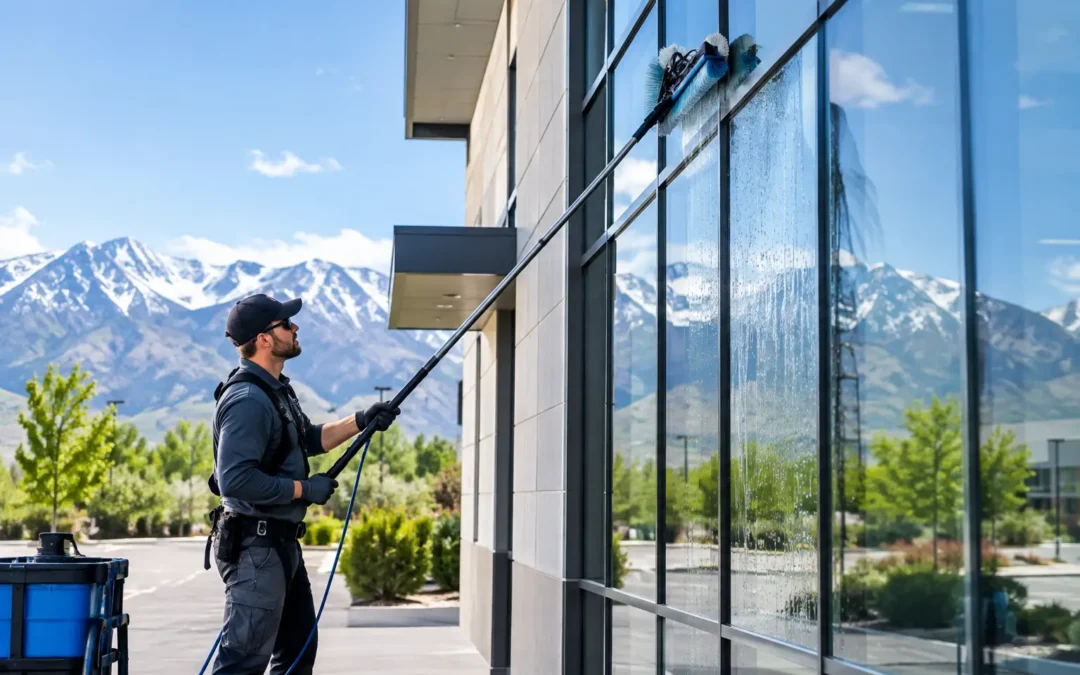
A commercial facade is exposed to more than everyday dust. In Utah, windblown grit, hard-water minerals, road film, salt, pollen, and seasonal weather can build up quickly on glass, masonry, metal, and painted surfaces. This commercial facade cleaning guide helps property managers and business owners make sound decisions about cleaning methods, timing, safety, and long-term building care.
A clean exterior does more than improve curb appeal. It supports tenant confidence, gives customers a better first impression, and makes it easier to spot maintenance concerns before they become costly repairs. The right approach protects the building materials as well as the people working around the property.
Start With the Facade, Not the Equipment
There is no single cleaning method that fits every commercial building. A pressure setting that is appropriate for a concrete walkway can damage a painted panel, force water behind siding, or etch a softer masonry surface. Before scheduling service, identify what the facade is made of and what has collected on it.
Glass curtain walls, storefront windows, aluminum cladding, stucco, brick, stone, EIFS, precast concrete, vinyl, and painted surfaces all respond differently to water pressure, detergents, brushes, and rinse techniques. The building’s age also matters. Older mortar, worn sealant, oxidized metal, cracked coatings, and loose stone should be addressed carefully so cleaning does not worsen an existing issue.
A qualified contractor should inspect the building before recommending a process. That inspection should account for access points, drainage, landscaping, pedestrian traffic, electrical fixtures, awnings, signage, and sensitive areas near entrances. The goal is not simply to make surfaces look brighter for a day. It is to clean them thoroughly without creating damage, runoff concerns, or interruptions for tenants and customers.
Common Facade Problems and What They Require
Routine soil is usually the simplest issue, but commercial exteriors often have more than one type of buildup. Mineral spotting may appear on glass or below irrigation lines. Dark streaks can form under roof edges, window sills, or metal features where water repeatedly drains. Organic growth may develop on shaded stucco, stone, or masonry. Grease and soot are common near restaurant exhaust areas, loading zones, and busy roads.
Each condition needs a different response. Mineral deposits may require a material-safe restoration product and careful rinse work. Organic staining often calls for a controlled cleaning solution rather than aggressive blasting. Grease may need degreasing before it can be rinsed away. In many cases, lower-pressure washing combined with the right detergent and dwell time is safer and more effective than using maximum pressure.
Hard-water staining deserves particular attention in Utah. If irrigation overspray reaches windows, stone, or painted trim week after week, cleaning alone will not solve the problem. The source should be adjusted or repaired. Otherwise, the stain returns and repeated restoration work may eventually affect the appearance of the material.
Choose a Cleaning Method That Protects the Building
The best commercial facade cleaning guide is one that treats cleaning as a technical service, not a one-size-fits-all task. Methods commonly include hand washing, pure-water window cleaning, soft washing, controlled pressure washing, brush cleaning, and specialty stain treatment. A dependable provider may use more than one method on the same property.
Pure-water systems are often a strong choice for exterior glass because they rinse clean without leaving the mineral residue associated with untreated water. Soft washing uses low pressure and appropriate solutions to remove organic buildup from delicate surfaces. Pressure washing may be suitable for durable masonry, concrete, and certain exterior panels, but the pressure, nozzle, distance, and rinse direction must be selected for the surface.
Test areas are valuable when a building has unusual staining, older materials, or a specialty finish. A small, less-visible section can confirm whether the method will produce a consistent result. This is especially useful for historic masonry, natural stone, anodized metal, and painted facades where the wrong product can cause permanent changes in color or sheen.
Plan for Safety, Access, and Daily Operations
Commercial facade cleaning can involve elevated work, wet walkways, equipment hoses, traffic flow, and public access. Safety planning should be part of the estimate, not an afterthought once a crew arrives on site.
The provider should determine whether the work requires ladders, lifts, water-fed poles, rope access, or other specialized equipment. Each option has trade-offs. Water-fed poles can reduce the need for elevated access on many buildings, while lifts may be necessary for complex architecture, deep setbacks, upper-story details, or heavy buildup. The best choice depends on the building layout and the work itself.
For occupied offices, retail centers, medical facilities, schools, and multi-unit properties, service timing matters just as much as technique. Cleaning early in the morning, after business hours, or in scheduled sections can reduce disruption. Crews should set clear work zones, protect entrances, manage hoses, and communicate with building contacts when an area must remain temporarily clear.
A professional commercial cleaning provider should also carry appropriate insurance, train employees for the work being performed, and follow applicable safety requirements. Ask how the crew protects pedestrians, landscaping, vehicles, doors, and nearby finishes. Clear answers are a good sign that the company plans carefully and stands behind its work.
Build a Schedule Around Conditions, Not Guesswork
Many commercial properties benefit from facade cleaning once or twice a year, but the right schedule depends on exposure and property use. A professional office building set back from traffic may need a lighter maintenance schedule than a retail center near a major road. Buildings with frequent irrigation overspray, nearby construction, high customer traffic, or food-service operations may need more regular attention.
Rather than waiting until the exterior looks neglected, walk the property seasonally and look for early signs of buildup. Pay close attention to lower walls near landscaping, glass below irrigation heads, entry canopies, corners that stay shaded, and surfaces beneath roof drainage points.
These areas are worth checking during each inspection:
- Storefront glass, doors, and entrance framing where customers form their first impression
- Irrigation-adjacent windows, stone, and siding where mineral spotting can develop
- Masonry joints, sealant lines, and painted surfaces that may show deterioration or staining
- Loading areas, trash enclosures, and restaurant-adjacent walls exposed to grease and grime
- Gutters, roof edges, and downspouts that can create streaking or direct water onto the facade
Recurring maintenance can make costs more predictable and prevent a basic cleaning job from turning into stain restoration. It also gives the service team a chance to notice developing issues, such as blocked gutters, failing drainage, damaged caulking, or persistent water intrusion marks. Cleaning professionals do not replace a building inspector or repair specialist, but their regular view of the exterior can help property teams catch visible concerns sooner.
Ask the Right Questions Before Hiring
Price matters, but it should not be the only factor when selecting a facade cleaning provider. A low quote may leave out access costs, stain treatment, water management, insurance coverage, or protection for landscaping and adjacent surfaces. Get clarity on the full scope before work begins.
Ask what methods will be used for each material, whether the company has experience with your building type, and how it handles difficult stains. Confirm whether the quote includes windows, frames, awnings, entry features, lower walls, and any requested pressure washing. If your property has tenant hours, security procedures, loading restrictions, or sensitive landscaping, discuss them during the estimate rather than on the service date.
It is also reasonable to ask how the team handles quality control. A final walkthrough, clear communication with the property contact, and a willingness to address missed areas are signs of a company that values long-term relationships. Wadley Services approaches exterior cleaning with that same focus on safe work, dependable scheduling, and results that reflect well on the property.
Keep Cleaning Connected to Overall Property Care
Facade cleaning works best when it is coordinated with other exterior maintenance. Window cleaning, gutter service, pressure washing, drainage checks, and seasonal property care all affect how the building looks and performs. For example, cleaning windows before fixing overspray may create repeat staining, while ignoring clogged gutters can lead to fresh streaks down a newly cleaned wall.
A coordinated plan reduces duplicate work and helps property managers simplify vendor scheduling. It can also protect the exterior investment over time by keeping contaminants from sitting on vulnerable surfaces through multiple seasons.
The best time to plan facade cleaning is before the property looks overdue. A careful inspection, a method matched to the materials, and a service schedule built around your operations can keep the building looking cared for while protecting the details that make it valuable.
Recent Comments