
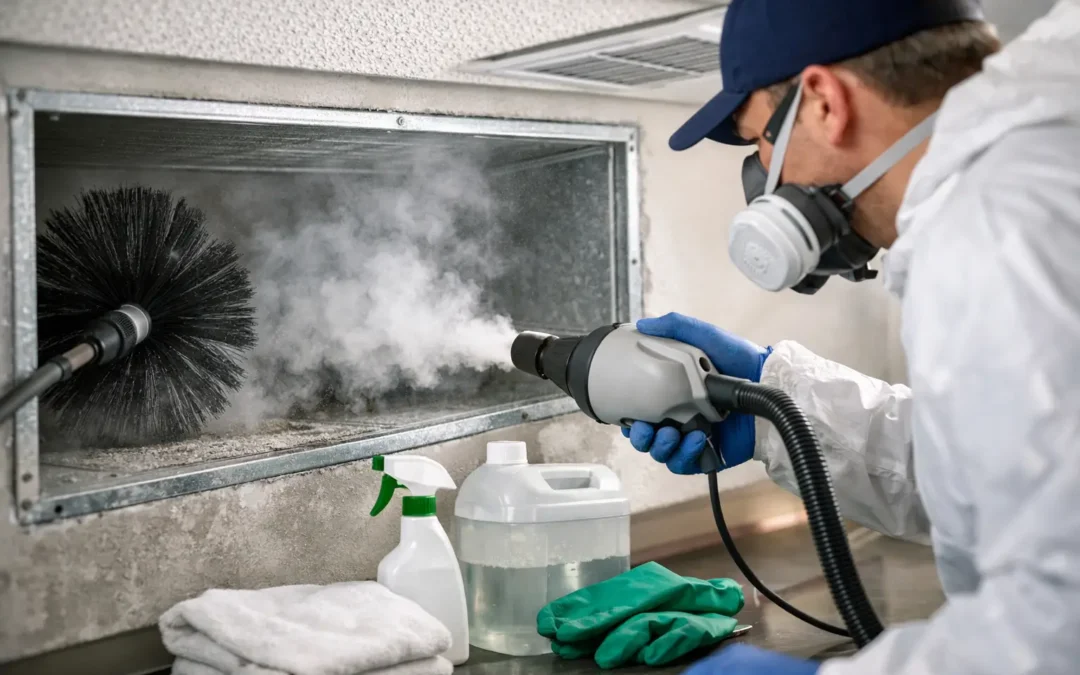
A musty smell from the vents, visible residue around supply registers, or concerns after water damage can make antimicrobial duct cleaning worth discussing. But it is not a standard add-on for every duct cleaning job. The right approach starts with a careful inspection, removal of buildup, and an honest assessment of whether an antimicrobial treatment is appropriate for the property.
For homeowners, property managers, and facility teams, that distinction matters. A treatment applied without addressing the source of moisture or contamination will not solve the underlying problem. A professional service should focus first on restoring clean, dry ductwork and then recommend treatment only when conditions support it.
What Antimicrobial Duct Cleaning Actually Does
Air ducts collect normal household and building debris over time: dust, pet dander, pollen, construction particles, and lint. In some cases, ductwork may also be affected by moisture, microbial growth, odors, or contamination following a leak, flood, pest issue, or extended vacancy.
Antimicrobial duct cleaning combines mechanical duct cleaning with the targeted application of an antimicrobial product labeled for use in HVAC systems. The product is intended to help control microbial growth on treated interior duct surfaces. It is not a substitute for cleaning, and it does not turn an HVAC system into a permanently germ-free environment.
That is why the order of work is so important. A qualified technician should remove dust and debris first using appropriate negative-air equipment, agitation tools, and vacuum collection methods. If a product is used, it should be applied according to its label directions after the duct surfaces have been properly cleaned and evaluated.
The goal is practical: reduce buildup, address qualifying contamination concerns, and help return the system to a cleaner condition. It is not to make promises that no responsible contractor can guarantee, such as eliminating every allergen, odor, or health concern in a building.
When an Antimicrobial Treatment May Make Sense
Most routine duct cleaning projects do not automatically need antimicrobial treatment. The service is generally considered when there is a specific reason to go beyond normal debris removal.
A water event is one of the most common examples. If a plumbing leak, roof leak, flood, or HVAC drain problem introduced moisture into ductwork or nearby components, the system should be inspected promptly. Moisture can create conditions where microbial growth becomes more likely, particularly if it remains hidden inside insulated duct sections, plenums, or equipment compartments.
Persistent odors can also justify a closer look. A dusty odor when the system starts may simply point to ordinary buildup. A strong musty or stale odor, especially one that returns after basic cleaning, may indicate that moisture, residue, or another source needs to be located. Treatment should only follow an effort to identify and correct that source.
Commercial properties often have additional reasons for inspection. Offices, retail spaces, medical-adjacent facilities, multi-unit housing, and other high-occupancy buildings can experience heavier use, tenant turnover, renovation dust, and maintenance issues that affect HVAC cleanliness. Property managers need documentation, consistent scheduling, and a contractor who can work safely around occupied spaces.
Visible suspected growth near vents or inside accessible HVAC components also deserves professional attention. Appearance alone cannot confirm what a substance is, so avoid assuming every dark mark is mold. An experienced inspection can help determine whether cleaning, moisture correction, further testing, or another specialized service is the appropriate next step.
Situations That Require Source Control First
Antimicrobial products cannot compensate for ongoing moisture. If a condensate line is leaking, insulation is wet, a roof penetration is failing, or humidity is consistently too high, the source must be corrected before treatment. Otherwise, the same conditions can return.
The same principle applies to heavy debris. Construction dust, pest material, and accumulated lint should be physically removed rather than sprayed over. Cleaning comes first because it improves airflow conditions, makes inspection more meaningful, and allows any recommended treatment to contact the intended surface.
What a Professional Duct Service Should Include
A dependable duct cleaning service begins with access, assessment, and protection of the property. Technicians should explain the work area, protect floors and nearby furnishings as needed, and identify the HVAC components involved. On larger systems, this planning helps prevent disruptions for tenants, employees, customers, or residents.
Video inspection is especially valuable when practical. It gives the technician and property owner a clearer view of duct conditions before and after service rather than relying on guesswork. It can reveal dust accumulation, damp areas, disconnected sections, debris, or conditions that call for attention from an HVAC, restoration, or roofing professional.
During cleaning, technicians use specialized equipment to dislodge and collect debris from supply and return ductwork. Registers, grilles, accessible trunk lines, and other system components may be addressed based on the scope of work. The exact method depends on the duct material, layout, access points, and condition of the system.
If antimicrobial application is recommended, ask what product will be used and why. The contractor should be able to explain where it will be applied, whether the product is labeled for HVAC use, and what occupants should expect during and after service. Follow label instructions for ventilation, reentry, and any precautions involving children, pets, or sensitive occupants.
A trustworthy recommendation will also include limits. For example, internally lined or insulated ductwork that is wet or heavily contaminated may need replacement rather than cleaning alone. Severely damaged flex duct, compromised insulation, or an unresolved moisture problem may require a different solution.
Questions to Ask Before Approving the Work
Before scheduling antimicrobial duct cleaning, get clear answers about the reason for treatment. Ask what the inspection found, whether the moisture source has been corrected, and whether the product is necessary for the condition observed. A reputable provider will not pressure you to add a treatment that does not fit the job.
It is also wise to ask how the system will be contained and cleaned, whether before-and-after documentation is available, and what areas are included in the quote. For commercial sites, confirm scheduling, access requirements, safety procedures, insurance, and communication expectations for building staff.
Cost varies because duct systems vary. A small home with accessible ductwork is different from a multi-story commercial facility, a large home with multiple HVAC zones, or a property with restricted access and post-water-damage concerns. The best quote is not simply the lowest number. It is the one that clearly explains the scope, the equipment, the treatment decision, and the work needed to protect the building.
Keep Ducts Cleaner After Service
Good HVAC maintenance helps protect the value of professional cleaning. Replace filters on the schedule recommended for the system and occupancy level. High-use homes, pet owners, renovation projects, and commercial properties may need more frequent attention than a lightly occupied space.
Keep supply and return vents clear, have HVAC drainage and condensate components maintained, and address leaks quickly. During remodeling, protect return openings from drywall dust and other fine particles. If a property has been vacant, experienced flooding, or undergone major construction, an inspection before full occupancy can prevent unpleasant surprises.
For Utah property owners, seasonal temperature swings and dry conditions can make it easy to overlook HVAC maintenance until an odor, dust issue, or performance concern becomes noticeable. A planned maintenance approach is usually less disruptive than waiting for a problem to become urgent.
Wadley Services provides professional air duct cleaning with video inspection and antimicrobial treatment when conditions warrant it. The focus is on doing the work correctly, safely, and with a clear explanation of what your system needs. If something does not call for treatment, you deserve to hear that too.
A clean duct system starts with evidence, not assumptions. When you notice moisture concerns, unusual odors, or visible buildup, schedule an inspection and address the cause before it has a chance to affect more of the property.
Recent Comments