
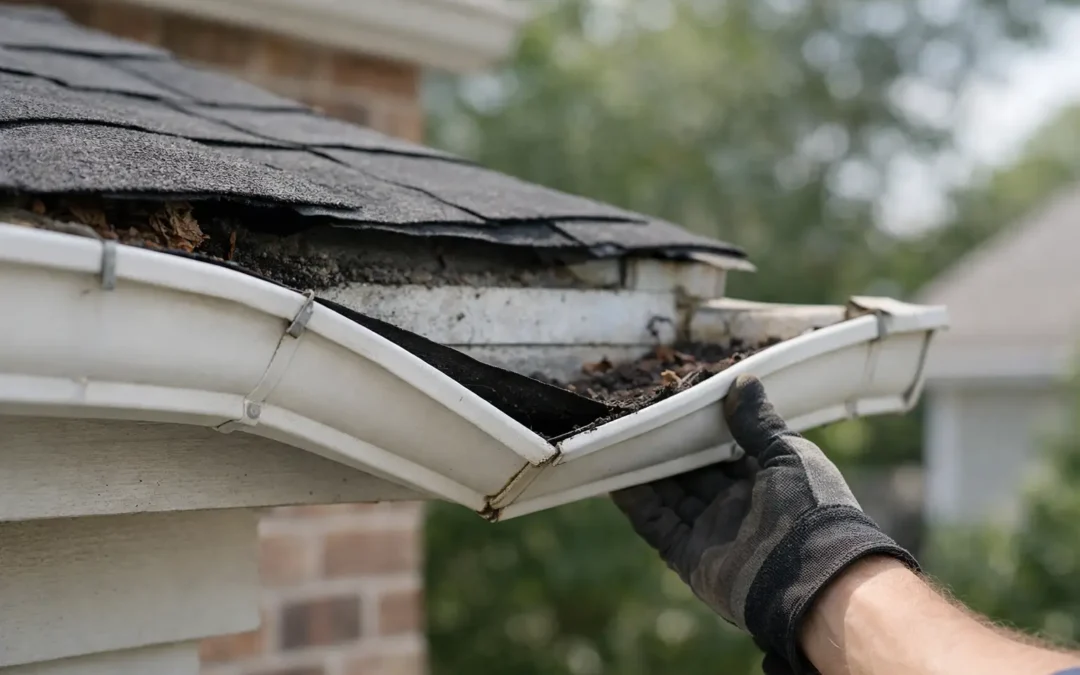
A gutter that pulls away from the roofline is more than an appearance issue. When homeowners ask why gutters sag, the answer usually involves weight, failed fastening, or damage hidden behind the gutter itself. Left alone, a sagging section can send water over the edge, against siding, into landscaping, or toward the foundation where it does not belong.
For Utah homes and commercial properties, the problem often becomes more noticeable after winter snow, spring runoff, or a heavy summer storm. The right repair depends on what caused the sag. Simply pushing the gutter back into place may improve its appearance for a short time, but it will not correct a weak fascia board, a poor slope, or hardware that can no longer carry the load.
Why Gutters Sag in the First Place
Gutters are designed to carry a surprising amount of water, but they need consistent support along the roof edge. When that support weakens or the system becomes overloaded, the metal or vinyl begins to dip between hangers. Water then settles in the low spot instead of flowing to the downspout, adding more weight and making the sag worse.
Clogged gutters create unnecessary weight
Leaves, pine needles, roof grit, seed pods, and windblown debris do not just block drainage. They hold moisture. A gutter packed with wet debris can become substantially heavier than it was designed to be, especially when water cannot move through the downspout.
In winter, that trapped water can freeze. Ice adds significant weight and can pull hangers loose, bend the gutter channel, or expose an existing weakness in the attachment points. Snow and ice are not the only concern in Utah, but they make regular gutter cleaning especially valuable before cold weather arrives.
Loose, damaged, or insufficient hangers
Hangers are the brackets or fasteners that hold the gutter to the fascia board. Older systems may use spikes and ferrules, while newer installations often use hidden hangers and screws. Any fastening method can fail when hardware loosens, corrodes, bends, or is spaced too far apart.
A single loose hanger may not look urgent. However, it allows the gutter to flex under water weight. The neighboring hangers then take on more stress, and the sag can spread across a longer section. If screws are backing out, the wood behind them may also be soft, split, or unable to hold a new fastener securely.
Fascia damage is often the real issue
The fascia is the board running along the lower edge of the roof where gutters are commonly attached. If water has been overflowing for years, or if roof flashing has allowed moisture behind the gutter, this board can rot. A gutter cannot stay firmly attached to deteriorated wood, regardless of how many new screws are added.
This is why a proper repair starts with an inspection of the fascia, soffit area, and roof edge. Refastening a gutter to compromised wood may create a temporary fix, but the system will likely pull loose again. Damaged fascia may need to be repaired or replaced before the gutter can be securely reinstalled.
Incorrect slope causes standing water
Gutters need a slight, deliberate pitch toward the downspout. The slope is subtle enough that it should not be obvious from the ground, but it is essential for drainage. If the gutter was installed too flat, settled over time, or was rehung unevenly during a previous repair, water can sit in one area.
Standing water is a warning sign because it adds constant weight, encourages corrosion in metal systems, and creates a place for debris to collect. In some cases, the gutter is still tightly attached but appears to sag because its alignment no longer follows the proper drainage line.
The gutter may be undersized or poorly designed
Not every sagging gutter is caused by neglect. Some roof sections shed water faster than a standard gutter can handle. Large roof planes, steep pitches, valley areas, and locations where multiple roof sections drain together can send a concentrated volume of water into one run.
If the gutter size, downspout capacity, or placement does not match the roof’s drainage demands, overflow becomes routine. That repeated overload can strain hangers and wear down the fascia. A repair may require more than cleaning. It may call for additional downspouts, a larger gutter profile, improved splash management, or changes to the layout.
Signs a Sagging Gutter Needs Attention
A visible dip is the most recognizable sign, but there are other clues that matter just as much. Water spilling over the front edge during rain, downspouts that drain slowly, peeling paint near the roofline, and streaking on siding can all point to a gutter that is not draining correctly.
Look for gaps between the gutter and fascia, loose brackets, dark or soft wood around attachment points, and water marks beneath seams. On commercial properties, check for pooling near entrances, walkways, and landscaped areas after storms. Drainage problems can create more than maintenance concerns when water reaches high-traffic areas.
Inside the building, unexplained stains near exterior walls or ceiling edges may also deserve attention. A sagging gutter does not automatically mean there is a roof leak, but persistent overflow can allow water to find weak spots around flashing, trim, and wall penetrations.
What a Lasting Gutter Repair Should Address
The correct repair is based on condition, not just what is most visible from the ground. A service professional should remove debris, check the full gutter run, verify downspout flow, and identify whether the issue is hardware, alignment, fascia damage, or a combination of problems.
If the fascia is sound, the repair may involve resetting the gutter to the proper pitch and replacing failed fasteners with securely anchored hangers. When the gutter itself is bent, split at a seam, badly corroded, or repeatedly holding water, replacement of that section may be the more dependable choice.
For damaged fascia, the gutter should be removed carefully so the underlying wood can be evaluated and repaired. This is the point where cutting corners creates repeat problems. Strong new hardware will not solve rotten wood, and a clean gutter will not solve a system that was installed with the wrong slope.
Gutter guards can reduce the amount of leaves and debris that enter the system, but they are not a cure for sagging gutters. Their usefulness depends on the roof, nearby trees, guard style, and existing gutter condition. A guard installed over loose hangers or a poorly pitched gutter can make future inspection more difficult without correcting the underlying problem.
When Cleaning Is Enough and When Repair Is Necessary
If the gutter is straight, firmly attached, and simply overflowing because it is packed with debris, a thorough cleaning and downspout flush may restore normal performance. This is common after a windy season or where mature trees overhang the roof.
Repair becomes necessary when the gutter remains uneven after cleaning, water pools in a clear section, fasteners are visible or pulling out, or the fascia shows signs of damage. If ice has bent the gutter or pulled it away from the roofline, waiting for the next storm can allow water damage to expand.
Property managers should also consider the age and consistency of the system. A few isolated loose hangers on an otherwise sound gutter may be a straightforward repair. Multiple sagging runs, failing seams, recurring overflow, and aging materials may point toward a broader replacement plan. The most cost-effective choice depends on whether the existing system can still provide reliable drainage after targeted repairs.
Preventing Future Gutter Sagging
Routine maintenance is the best protection against avoidable strain. Gutters should be cleaned often enough to prevent buildup, particularly after leaf drop and before freezing temperatures. Downspouts need to be checked for clogs and directed away from foundations, entryways, and areas where water could create erosion or slippery conditions.
It also helps to inspect the roof edge after major storms. Catching a loose hanger or a small fascia issue early is far less disruptive than dealing with water-damaged trim, stained siding, or foundation drainage concerns later. For multi-unit and commercial properties, scheduled maintenance creates a consistent record of condition and helps prevent small issues from being missed between tenant reports.
A gutter system should work quietly in the background, moving water away from the building without drawing attention to itself. If yours is dipping, overflowing, or pulling away from the roofline, addressing the cause now can protect the exterior work you have already invested in and help keep the next storm outside where it belongs.
Recent Comments