
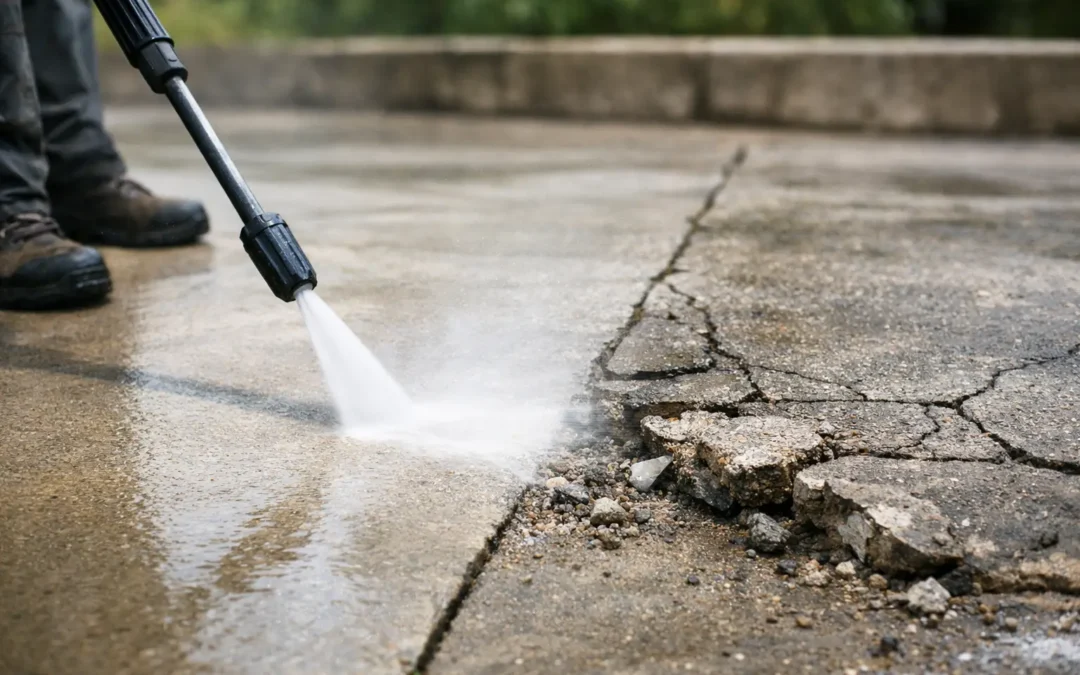
A clean driveway or sidewalk can make a property look cared for in a single afternoon. But homeowners and property managers are right to ask, can pressure washing damage concrete? Yes, it can when the equipment, pressure, cleaning method, or operator is wrong for the surface. Done correctly, pressure washing removes dirt, algae, oil residue, and winter grime without harming sound concrete.
The difference is not simply whether someone uses a pressure washer. It is whether they understand the age and condition of the concrete, the type of stain involved, and how much force the surface can safely handle. Concrete is durable, but it is not indestructible. A professional approach protects the investment while delivering the clean, even appearance you expect.
Can Pressure Washing Damage Concrete?
Pressure washing can damage concrete by stripping away weak surface material, leaving visible wand marks, opening up existing cracks, or exposing aggregate beneath the top layer. These problems are most common on older, deteriorating, poorly finished, or already damaged concrete. They can also happen on healthy concrete when a powerful nozzle is held too close or aimed at one spot for too long.
The top layer of concrete, often called the cream or paste layer, gives a finished slab much of its smooth appearance. If that layer has weakened from freeze-thaw cycles, deicing salts, poor drainage, vehicle traffic, or years of weather exposure, high pressure can remove it. The result may look rough, patchy, or lighter in isolated areas.
That does not mean pressure washing should be avoided altogether. It means the method needs to match the condition of the surface. A new-looking concrete driveway may tolerate a different approach than a 20-year-old walkway with spalling near the edges.
What Causes Pressure Washing Damage to Concrete?
Most concrete damage comes from too much concentrated force rather than routine cleaning itself. A zero-degree nozzle, for example, creates a narrow, aggressive stream that can cut into weak material. Using it close to the ground may leave lines that become even more noticeable once the concrete dries.
Pressure is only one part of the equation. Water flow, nozzle angle, distance from the surface, dwell time, and cleaning chemicals all matter. A technician who moves too slowly can create zebra-striping. Someone who starts cleaning without testing a small area may not discover that the surface is already fragile until damage has occurred.
Chemicals also require care. The wrong degreaser, an overly strong mix, or insufficient rinsing can leave discoloration or affect nearby landscaping and finishes. Rust stains, oil spots, tire marks, algae, and efflorescence do not all respond to the same product. Applying more pressure to solve a stain that needs the right treatment is a common mistake.
Older and Damaged Concrete Needs Extra Care
Utah weather can be hard on exterior concrete. Moisture enters small pores and cracks, then expands when temperatures drop. Over time, this can cause flaking, scaling, and spalling. Deicing products, snowmelt, and repeated exposure to vehicle fluids can add to the wear.
Pressure washing will not cause every existing defect, but it can reveal how much deterioration is already present. If loose material is coming away from a slab, washing may remove more of it. That is why a pre-cleaning inspection matters. The right decision may be a lower-pressure wash, a gentler cleaning method, or a recommendation to repair the concrete before deep cleaning it.
New Concrete Has a Waiting Period
Freshly poured concrete needs time to cure before it is pressure washed. The exact timing depends on the mix, weather, curing process, and the installer’s guidance, but new concrete should not be treated like a fully hardened, established surface. Cleaning too early can disrupt the developing surface and leave permanent marks.
If a driveway, patio, pool deck, or commercial walkway was recently installed, ask the concrete contractor for specific curing recommendations before scheduling exterior cleaning. Waiting is usually less costly than repairing an etched or uneven finish.
Signs Your Concrete May Be at Risk
A careful look can tell you whether a slab needs a more conservative approach. Watch for flaking areas, exposed aggregate, loose edges, spiderweb cracks, pitting, scaling, or previous patches. White mineral deposits and dark staining are not necessarily signs that pressure washing is unsafe, but they do indicate the need for correct stain identification and treatment.
Sealed or decorative concrete also deserves special attention. Stamped, colored, stained, polished, and coated surfaces can be damaged by excessive pressure or incompatible cleaners. Washing may remove or dull a failing sealer, which can make the surface look uneven even if the concrete itself remains sound. In these cases, cleaning should be planned around the finish and any resealing work that may be needed afterward.
Property managers should inspect high-traffic areas closely. Entry walks, loading areas, dumpster pads, parking surfaces, and common-area patios often collect the most contamination and experience the most wear. A consistent maintenance plan can keep buildup manageable, reducing the need for overly aggressive cleaning later.
How Professionals Clean Concrete Safely
Safe concrete cleaning starts before the machine is turned on. A trained crew evaluates the surface, identifies stains, notes loose or damaged areas, and considers nearby windows, doors, landscaping, vehicles, and pedestrian routes. This preparation helps prevent runoff problems, overspray, and unnecessary risk around the property.
The operator then selects an appropriate pressure setting and nozzle pattern. For many concrete surfaces, a wider fan tip and a consistent working distance provide effective cleaning without concentrating force in one small area. The goal is even results, not the highest possible PSI.
For broad, flat surfaces, professional-grade surface cleaners can produce a more uniform finish than cleaning solely with a wand. They maintain a controlled distance from the concrete and reduce the chance of visible stripes. Detail work may still be needed around edges, steps, and tight spaces, but it should be handled with the same care.
The cleaning solution matters just as much as the equipment. A quality process uses products suited to the stain, allows adequate dwell time when appropriate, and rinses thoroughly. This can reduce the amount of pressure needed to lift grime. Oil-stained areas may require pretreatment. Organic growth may require a different solution and technique. There is no one-setting answer for every slab.
When Pressure Washing Is Not the Best First Option
There are times when pressure washing should be postponed or modified. Loose, heavily spalled concrete may need repair before cleaning. A surface with active cracks, failing coatings, or severe salt damage may not withstand a standard wash. In some cases, a low-pressure rinse and carefully selected treatment are safer than a high-pressure service.
It is also wise to avoid cleaning when water will freeze quickly or when drainage is poor. Standing water can create safety hazards and may carry dirty runoff toward doors, drains, or landscaped areas. For commercial properties, scheduling around foot traffic and business operations is part of protecting people as well as the property.
An honest service provider should explain these limitations before work begins. Promising a like-new result on badly deteriorated concrete is not good workmanship. The right recommendation may be cleaning, repair, sealing, or a combination of those services.
Protect Your Concrete Between Cleanings
Regular upkeep helps concrete stay cleaner and makes professional washing safer and more effective. Sweep away leaves, soil, and gravel so they do not hold moisture against the slab. Address vehicle fluid leaks quickly, especially on driveways and garage approaches. Keep gutters and downspouts directing water away from walkways, foundations, and patios.
Sealing can also help certain concrete surfaces resist moisture and stains, though the best sealer and schedule depend on the slab’s age, finish, use, and exposure. A sealer is not a substitute for cleaning or repair, but it can make routine maintenance easier when applied to a properly prepared surface.
For homes, multi-unit communities, and commercial properties, recurring exterior cleaning prevents dirt and organic growth from becoming a larger project. Wadley Services approaches pressure washing with the same care expected of a long-term property maintenance partner: assess the surface, use the right process, and protect the property throughout the job.
If you are unsure about the condition of a driveway, patio, sidewalk, or commercial concrete area, start with a professional assessment rather than testing the strongest setting yourself. The best clean is one that improves the appearance of your property without taking years off the surface beneath it.
Recent Comments