
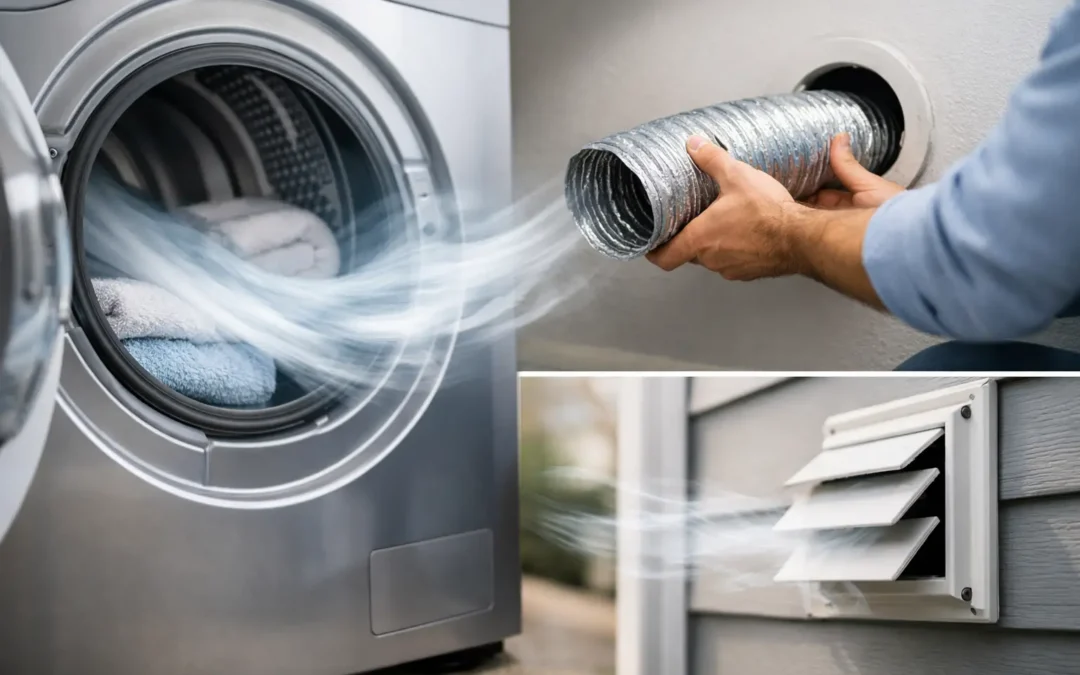
A dryer that suddenly needs two or three cycles to finish a normal load is not just frustrating. It is often telling you that heat and moisture cannot leave the machine efficiently. Knowing how to improve dryer airflow helps protect your appliance, control energy use, and reduce one of the most preventable fire risks in a home or commercial laundry area.
The problem is usually not inside the dryer alone. Air must move from the lint screen, through the blower and transition duct, along the vent line, and out through the exterior termination. A restriction at any point can slow the entire system down. The right fix depends on where that restriction is located.
Start with the signs of poor dryer airflow
Long dry times are the most obvious warning sign, especially when the same type of load used to dry normally. Clothes may come out unusually hot, yet still damp in the middle. The laundry room may feel warm or humid, and you may notice a musty smell caused by moisture lingering in fabrics.
Outside, check the vent hood while the dryer is running. You should see the damper open and feel a steady flow of warm, moist air. A weak flow, no movement at the flap, or lint collecting around the exterior hood points to a likely restriction. For gas dryers, a burning odor, unusual heat, or any concern about gas equipment calls for prompt professional attention. Turn the dryer off if you suspect a safety issue.
How to improve dryer airflow safely
Begin with the easiest maintenance items, then work outward toward the full vent path. Always unplug an electric dryer before moving it or removing panels. For a gas dryer, shut off the gas supply only if you are trained and comfortable doing so. If not, leave disconnection and reconnection to a qualified technician.
Clean the lint screen the right way
Remove lint from the screen before every load. This simple habit makes a meaningful difference, but visible lint is not the only issue. Dryer sheets and fabric softeners can leave a nearly invisible film over the mesh, limiting airflow even when the screen appears clean.
Every few months, wash the screen with warm water, dish soap, and a soft brush. Rinse it well and allow it to dry fully before reinstalling it. A quick test is to pour a small amount of water onto the screen. If water pools instead of passing through, the screen needs a more thorough cleaning.
Also vacuum the lint-screen housing carefully with a narrow attachment or a purpose-made dryer lint brush. Do not force tools deep into the housing, where they can dislodge components or push lint farther into the machine. If large lint buildup is visible beyond your reach, professional dryer cleaning is the safer choice.
Inspect the connection behind the dryer
The short duct that connects the dryer to the wall is a common trouble spot. Pull the appliance forward carefully and look for crushed, kinked, torn, or loose ducting. A dryer pushed too close to the wall can flatten the duct and dramatically reduce airflow.
Rigid or semi-rigid metal ducting is generally the better option for this connection because it resists crushing and does not trap as much lint as thin plastic or foil-style material. Avoid using screws that protrude into the duct, since lint can catch on their points. Proper metal foil tape is preferred for sealing duct joints.
Give the dryer enough clearance so the connection can make a gradual turn rather than a tight bend. This is especially important in closets, laundry rooms with limited depth, and multi-unit properties where equipment may be moved frequently during turnover or maintenance.
Check the exterior vent hood
A vent hood cannot exhaust properly if its damper is stuck, blocked, painted shut, or covered by debris. Turn the dryer on and inspect the hood from outside. The flap should open freely during operation and close when the dryer stops.
Remove visible lint, leaves, nesting material, snow buildup, or other obstructions around the hood. Utah weather can add another layer of concern, particularly after windstorms or winter conditions. Do not install a screen over the exterior dryer vent. Although screens may seem like a way to keep pests out, they collect lint quickly and can create a serious blockage.
If birds or rodents are entering the vent, use a dryer-appropriate pest guard that does not restrict the exhaust path. The vent must still open fully and release air without resistance.
Look beyond the visible parts of the vent
A clean lint screen and clear exterior hood do not guarantee a clear vent line. Lint can build up along long duct runs, at elbows, and in areas hidden inside walls, ceilings, crawl spaces, or roofs. The more turns and distance air must travel, the more important regular cleaning becomes.
Many homes have dryer vents that run a short distance to an exterior wall. Others, particularly larger homes, apartments, condominiums, and commercial properties, have longer and more complicated routes. A roof exit, multiple bends, or a shared maintenance history can make a DIY inspection incomplete.
Professional dryer vent cleaning removes accumulated lint throughout the full accessible line, rather than only clearing what is near the dryer or exterior cap. A qualified service team can also identify disconnected ducts, damaged sections, improper materials, and routing problems that cleaning alone will not solve. In some cases, the best airflow improvement is not another cleaning but a vent repair or a shorter, straighter route installed correctly.
Avoid shortcuts that create bigger problems
It can be tempting to run a leaf blower through the vent, use an unverified flexible brush, or remove a duct section without a plan for resealing it. These approaches can compact lint farther down the line, damage a damper, disconnect hidden ductwork, or leave leaks that send humid air into wall cavities.
Dryer vent cleaning should also never involve blowing lint into an attic, crawl space, garage, or basement. The exhaust needs a proper route to the outdoors. Indoor vent kits are not a suitable replacement for a correctly installed exterior vent on standard dryers, and they can introduce moisture and lint into occupied spaces.
Be cautious with excessively long flexible ducts. They may be convenient during installation, but every sag, rib, and sharp bend creates a place for lint to settle. When airflow problems keep returning, the issue may be the vent design rather than household cleaning habits.
Build dryer vent care into property maintenance
For most households, cleaning the lint screen with every load and checking the exterior hood regularly are practical routines. The full vent line should be professionally evaluated and cleaned on a schedule that reflects how heavily the dryer is used. A large family, pet hair, frequent laundry, vacation rental, salon, fitness facility, or multi-unit property may need service more often than a lightly used household dryer.
Property managers should pay particular attention during unit turnovers. A dryer can appear to work during a quick inspection while a partially blocked vent quietly increases drying times and operating costs for the next resident. Documented vent maintenance also supports safer building operations and helps prevent avoidable service calls.
For commercial laundry equipment, manufacturer requirements and local code considerations may call for a more structured maintenance plan. Commercial machines move more air and process more lint, so small restrictions can become significant faster. A professional assessment is worthwhile when several machines share a laundry room or when vent routes are difficult to access.
When to call a professional
Arrange professional dryer vent service when drying times remain long after cleaning the lint screen and checking the exterior hood. You should also call for help if the dryer feels excessively hot, lint is accumulating behind the appliance, the exterior damper does not open, or you cannot safely inspect the full vent route.
Wadley Services provides dryer vent cleaning as part of a broader property maintenance approach for homes and facilities across Utah. A thorough service visit can help determine whether lint buildup, damaged ducting, poor routing, or an exterior termination issue is holding your system back.
A dryer should not have to work harder just to dry a basic load. Keeping the airflow path open gives you faster cycles, less strain on equipment, and greater confidence every time the dryer is running.
Recent Comments