
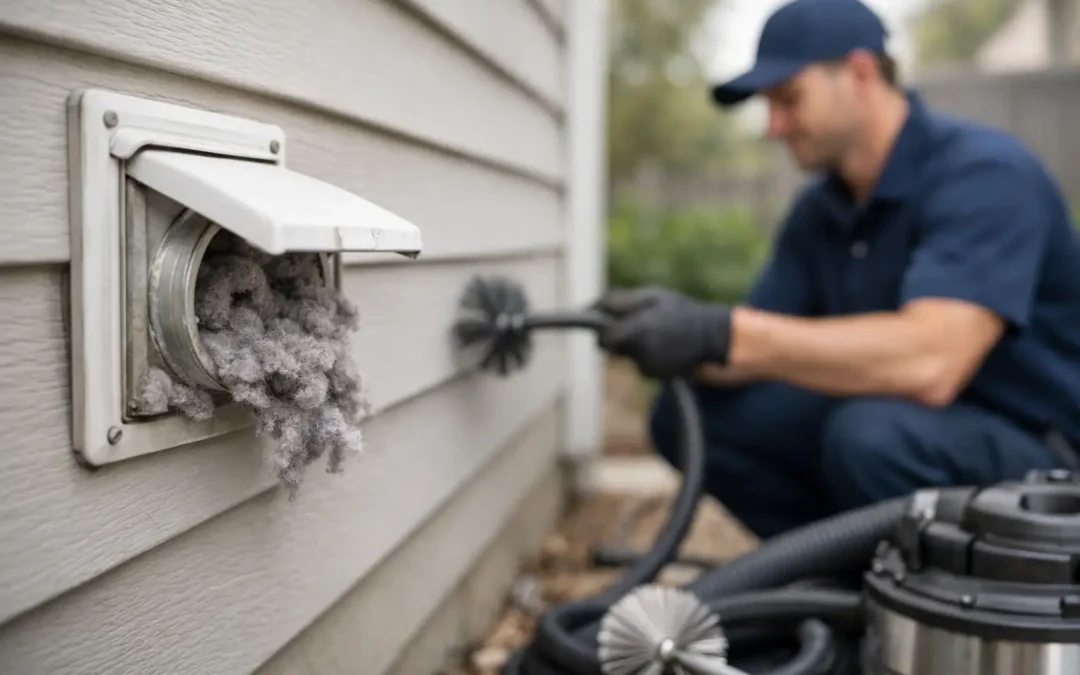
A dryer that takes two or three cycles to finish a normal load is not just frustrating. It can be a warning that lint is building up where you cannot see it. A professional dryer vent cleaning service removes accumulated lint and debris from the full vent path, helping homes, apartments, and commercial properties operate their laundry equipment more safely and efficiently.
For Utah property owners and managers, this is practical preventive maintenance. Dryer vents run through walls, ceilings, crawl spaces, attics, and exterior exits. That means a problem can grow long before anyone notices it. Regular cleaning protects the equipment, supports better drying performance, and addresses one of the most overlooked fire risks in a property.
Why Dryer Vents Need Professional Attention
Every load of laundry creates lint. The lint screen catches a portion of it, but not all of it. Fine fibers travel beyond the screen and collect inside the dryer cabinet, transition duct, vent pipe, elbows, and exterior termination cap. Over time, that buildup restricts airflow.
Restricted airflow makes the dryer work harder. Clothes stay damp longer, cycles become less effective, and the appliance may run hotter than it should. Lint is highly combustible, so heat and reduced airflow are a combination that should never be ignored.
The condition of the vent matters as much as its length. A short, straight vent run may be easier to maintain than a long route with several turns. Multi-level homes, townhomes, condominium buildings, and commercial laundry rooms often have more complicated vent paths. Birds’ nests, exterior dirt, damaged covers, and disconnected duct sections can also interfere with proper exhaust.
A thorough service should look beyond the lint screen. The goal is to restore clear airflow from the dryer connection to the exterior discharge point.
Signs You May Need Dryer Vent Cleaning Service
Most properties do not need to wait for a complete blockage before scheduling service. Changes in dryer performance are often the first sign that the vent system needs attention.
Watch for longer drying times, unusually hot clothing or laundry-room temperatures, a burning smell during operation, visible lint around the dryer or exterior vent, or a vent flap that does not open while the dryer is running. A dryer that shuts off before the load is dry may also be responding to excess heat.
For property managers, tenant reports about poor dryer performance deserve timely follow-up. What sounds like an appliance complaint may actually be a ventilation issue. Addressing it early can prevent repeated maintenance calls, reduce unnecessary strain on equipment, and give residents greater confidence in the condition of the property.
Commercial facilities should pay close attention to usage volume. A laundry room serving a multifamily community, hotel, salon, fitness facility, or care setting can accumulate lint much faster than a single-family home. The right cleaning schedule depends on the equipment, vent design, daily load volume, and whether occupants consistently clean lint screens between loads.
What a Professional Dryer Vent Cleaning Service Includes
Professional work begins with assessing the system, not simply pushing a brush through a short section of duct. The technician should identify the dryer connection, trace the accessible vent route, inspect the exterior termination, and look for conditions that limit airflow.
Specialized equipment is used to loosen and remove lint from the vent line while containing debris and protecting the surrounding area. A qualified team also checks for common concerns such as crushed transition ducts, excessive bends, loose connections, damaged vent covers, or exterior obstructions. Cleaning is valuable, but identifying a vent that is poorly connected or physically damaged is equally important.
At Wadley Services, the focus is on careful, dependable property care. That means treating dryer vent cleaning as part of a larger maintenance picture, with attention to safety, workmanship, and clear communication about what the system needs.
A professional service is especially worthwhile when the vent exits through a roof, travels a long distance, or is difficult to access. These are not situations for improvised tools or guesswork. Improper cleaning methods can damage ductwork, leave lint behind, or create a disconnection that sends warm, moist air into a wall or attic.
How Often Should Dryer Vents Be Cleaned?
For many households, annual dryer vent cleaning is a sensible baseline. However, frequency is not one-size-fits-all. A family that runs several loads each week may need service more often than a household with light use. Homes with pets can also see faster lint accumulation because pet hair contributes to blockages.
Property managers and commercial decision-makers should base service intervals on use and system conditions. High-volume laundry areas may benefit from more frequent inspection and cleaning. A maintenance plan can make this easier by establishing a schedule rather than waiting for a resident complaint, equipment failure, or safety concern.
There are also times when service should be scheduled outside the normal routine. Consider an inspection after moving into a previously owned home, completing a renovation near the laundry area, replacing a dryer, noticing roof or exterior vent damage, or discovering that the dryer has begun taking longer to dry clothes.
The Cost of Waiting Can Be More Than a Slow Dryer
A clogged vent affects more than convenience. Longer cycles use more energy and add wear to the dryer. Components may be exposed to higher operating temperatures, which can shorten the life of the appliance and lead to avoidable repair or replacement costs.
For businesses and multifamily properties, the operational impact can spread quickly. Shared dryers that stay out of service disrupt residents, guests, or staff. Repeated complaints take time away from other maintenance priorities. In a commercial setting, poor dryer performance can slow daily operations and increase utility usage.
There is also a moisture concern. Clothes dryers exhaust warm, humid air. If a vent is disconnected, blocked, or improperly routed, that moisture may be released into concealed building spaces instead of outdoors. Over time, excess moisture can affect materials around the vent path and create conditions no property owner wants to manage.
The best time to address dryer vent maintenance is before these problems become urgent. Preventive service is generally easier to schedule, less disruptive, and more cost-effective than responding after equipment has overheated or stopped working.
Simple Steps Between Professional Cleanings
Daily habits make a difference, even though they do not replace professional cleaning. Clean the lint screen before or after every load, and wash the screen occasionally if fabric-softener residue is preventing air from passing through it. Keep the area behind and around the dryer free from lint, boxes, and other combustible clutter.
When the dryer is operating, take a moment to check the exterior vent cover. Air should be exhausting outside, and the flap should open freely. If it remains closed, airflow seems weak, or lint is collecting around the outlet, it is time to have the system evaluated.
Avoid using flimsy plastic or foil-style transition ducts behind the dryer. These materials can sag, tear, and trap lint. A properly installed metal connection is generally a safer, more durable choice. Because every installation is different, ask a qualified technician to assess the setup rather than making changes that could restrict the vent path.
Add Dryer Vent Care to Your Property Maintenance Plan
Dryer vent cleaning works well alongside other recurring property services, particularly for owners and managers who prefer one dependable partner for ongoing maintenance. Coordinating service can reduce the number of separate appointments and help keep routine tasks from falling through the cracks.
A home may need dryer vent service along with air duct cleaning, gutter maintenance, window cleaning, or specialty interior cleaning. A multifamily or commercial property may combine laundry-area service with exterior cleaning and scheduled building upkeep. The right mix depends on the property, but the principle stays the same: regular attention protects the building and makes maintenance easier to manage.
If your dryer is running hot, taking too long, or showing signs of restricted airflow, do not treat it as a minor inconvenience. A clear vent gives your dryer room to do its job properly and gives you one less preventable concern to carry forward.
Recent Comments