
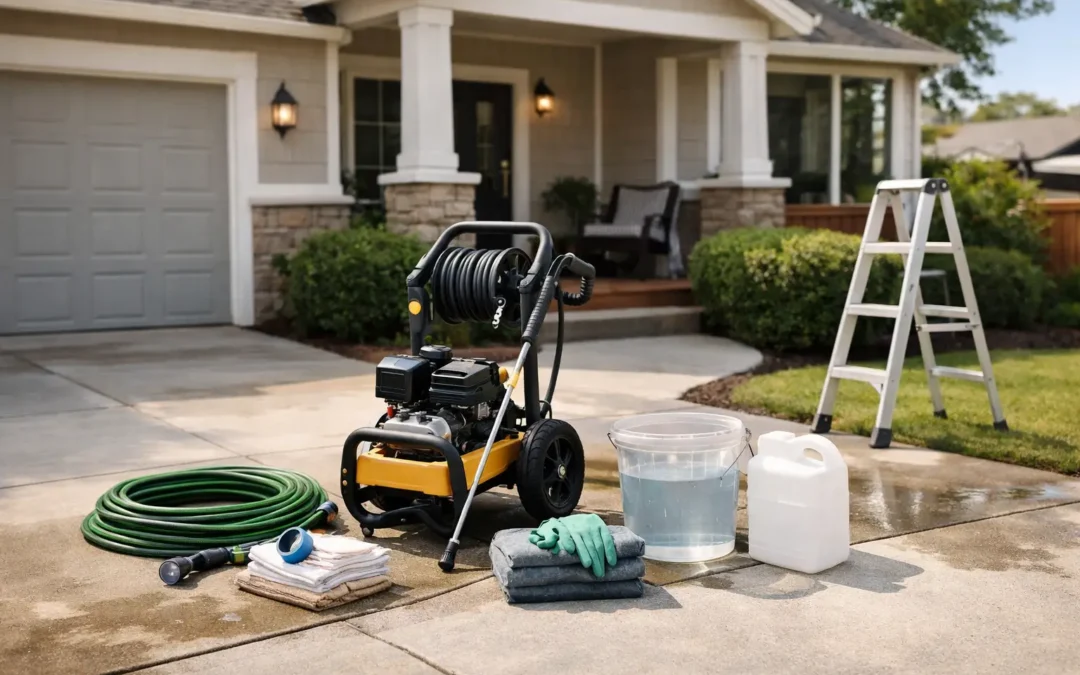
A clean exterior can make a home look cared for again, but the work starts before the equipment arrives. Knowing how to prepare home for pressure washing helps protect your landscaping, windows, outdoor belongings, and delicate building materials. It also gives the cleaning crew safe access to the areas that need attention, so the job can be completed thoroughly and without unnecessary delays.
Pressure washing is not a one-setting service. Concrete, brick, vinyl, painted siding, decks, fences, and stone can each require different methods. A reputable professional will select the right pressure, cleaning solution, and technique for the surface. Your preparation makes that careful work easier.
Prepare Home for Pressure Washing Before Service Day
Start by walking the exterior of your property a day or two before your appointment. Look for loose siding, cracked windowpanes, damaged screens, broken light fixtures, loose shutters, peeling paint, or open gaps around doors and utility penetrations. Pressure washing does not usually cause sound materials to fail, but water can find its way through existing damage.
Point out any concerns to your service provider before work begins. This is particularly helpful on older homes, properties with aging wood trim, and buildings that have recently had repairs. A professional crew can adjust its approach around vulnerable areas, but they need to know where those areas are.
If you are a property manager, include known site issues in your work order or walk-through. Clear notes about leaking window wells, fragile signage, tenant patios, restricted access areas, or recently painted surfaces help the crew plan responsibly.
Close Windows and Secure Exterior Openings
Every exterior window and door should be fully closed and latched. Check basement windows, garage side doors, sliding glass doors, attic vents, pet doors, and any rarely used entries. If a window has a damaged seal or does not close properly, let the technician know before cleaning begins.
Remove window screens when practical, especially if they are loose, brittle, or already damaged. Screens can trap dirt and prevent a full clean of the glass and frame. If window cleaning is scheduled with your pressure washing service, ask whether the crew prefers screens removed in advance or left in place for their process.
Make sure exterior electrical outlets are covered and that weatherproof covers are secure. Turn off outdoor electrical features when possible, including decorative fountains, landscape lighting, and patio heaters. Do not tape over unsafe wiring or damaged outlet covers. Instead, identify the issue so the cleaning crew can avoid it.
Move What Can Be Moved
Clear as much space as possible around the areas being washed. Patio furniture, planters, grills, toys, bikes, tools, doormats, rugs, and decorative items should be moved away from walls, walkways, decks, and driveways. This protects your belongings from overspray and gives the crew room to clean evenly.
A clear work area also reduces the risk of trip hazards around hoses and equipment. On commercial properties, move portable signage, outdoor seating, trash receptacles, and deliveries away from the service zone when possible. If certain items cannot be moved, tell the crew in advance so they can plan around them.
Keep vehicles out of driveways, parking stalls, or garage access points that need washing. Vehicles can be affected by overspray, and they make it difficult to clean the full surface. If driveway or parking-area cleaning is planned, ask how long the surface should remain clear while it dries.
Protect Plants, Pets, and People
Most professional exterior cleaning methods include steps to protect surrounding landscaping. Still, homeowners can help by watering plants and shrubs near the work area before the appointment, particularly during Utah’s dry periods. Well-hydrated plants are less likely to absorb cleaning residue than dry, stressed vegetation.
Move potted plants, hanging baskets, and delicate garden décor away from the house if you can. Covering plants is not always the best option, since heat can build up beneath plastic coverings. A qualified crew will generally wet down nearby landscaping, control cleaning solutions carefully, and rinse vegetation after the work is finished.
Keep pets indoors or in a separate enclosed area for the duration of the service. Pressure washing equipment is loud, hoses create trip hazards, and open gates may be needed for access. Children should also stay away from active work areas. A professional team will manage the site carefully, but a clear perimeter helps everyone work safely.
If you have a pond, water feature, beehive, vegetable garden, or other sensitive outdoor feature, mention it when scheduling. These areas may need special protection or a modified cleaning plan.
Check Water Access and Drainage
Most pressure washing services need access to an exterior water spigot. Before the appointment, make sure the designated spigot is working, reachable, and not blocked by furniture or storage. If the water shutoff or spigot is inside a locked area, arrange access ahead of time.
Take a few minutes to look at drainage around the home. Remove leaves, dirt, and small debris from nearby drains, gutter outlets, window wells, and low spots in the driveway. This helps water move away from the property rather than pooling beside doors or foundations.
Let the crew know about drainage concerns, such as a basement stairwell that floods, a downspout that empties onto a walkway, or a parking lot drain that backs up during heavy runoff. Pressure washing uses water efficiently, but the site still needs a safe route for rinse water.
Know Which Surfaces Need Extra Care
Not every exterior surface should receive high pressure. This is where professional judgment matters. Painted wood, stucco, older brick, mortar joints, composite decking, soft stone, oxidized siding, and roofing materials may require low-pressure washing or a specialized treatment instead.
Do not assume that visible staining means a stronger setting is the answer. On siding, for example, mildew or algae can often be treated with an appropriate cleaning solution and a controlled rinse. Excessive pressure can force water behind siding, strip paint, scar wood, or damage mortar.
Tell your provider if you have recently stained a deck, painted exterior trim, installed new windows, sealed concrete, or completed masonry work. Fresh coatings and repairs may need additional curing time before they can be cleaned. The right timing depends on the product used and the condition of the surface.
Homeowners should also identify areas with lead-based paint concerns, especially on older structures. Disturbing failing paint requires a careful approach and may affect the recommended service method. A trustworthy contractor will not treat every surface the same just to finish faster.
Make Access Simple and Expectations Clear
A few practical details can keep service day moving. Unlock gates, secure pets, and make sure the crew can reach the areas included in your estimate. If you will not be home, provide approved access instructions and a reliable phone number for questions.
For multi-unit and commercial properties, notify residents, tenants, or staff about the work window. Ask them to close windows, move personal items from balconies or patios, and keep clear of marked areas. Good communication protects personal property and reduces interruptions for everyone on site.
It is also helpful to discuss what you expect the finished result to look like. Some stains are surface-level and respond well to washing. Others, such as deep rust marks, permanent concrete discoloration, sun-faded paint, or staining beneath failed sealant, may need a separate treatment or repair. A professional should be direct about those differences rather than promising that pressure alone will solve every issue.
After the Washing Is Complete
Once the crew has finished, allow cleaned surfaces time to dry before replacing furniture, rugs, and décor. Drying time varies with temperature, shade, humidity, and the type of material. In Utah, direct sun can dry a driveway quickly, while shaded north-facing siding or a covered patio may take longer.
Walk the property after the work is complete and look for anything that needs attention. Check that gates are closed, outdoor furniture is returned safely, and landscape areas have been rinsed. If you see a question or concern, raise it promptly while the details are fresh.
Regular cleaning can do more than improve curb appeal. Removing dirt, algae, mineral buildup, and organic growth helps you spot developing maintenance issues before they become larger repairs. For homeowners and property managers who want one dependable partner for exterior cleaning and ongoing property care, Wadley Services is ready to provide a clear quote and workmanship backed by accountability.
The best preparation is simple: create safe access, protect what matters, and give your cleaning team a clear picture of the property. That small amount of planning helps produce the clean, well-maintained exterior your home deserves.
Recent Comments