
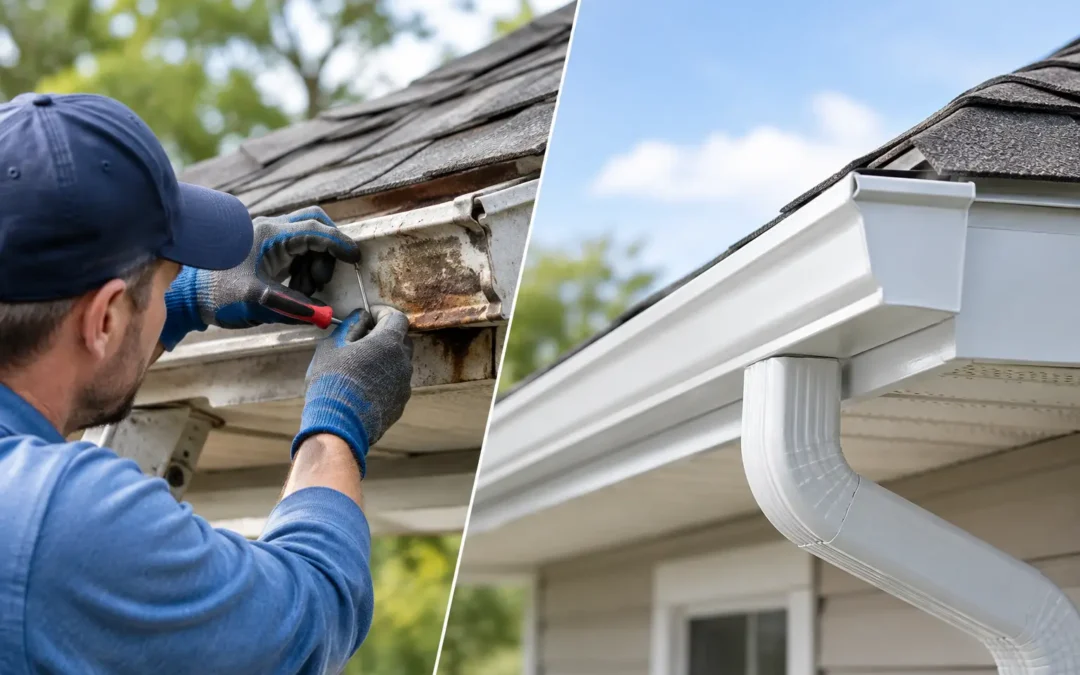
Water running over the edge of a gutter may look like a small maintenance issue, but it can become a costly property problem quickly. When homeowners and property managers weigh gutter repair versus replacement, the right answer depends on more than the size of the visible leak. The condition of the whole system, the age of the materials, the slope of the gutter, and the cause of the failure all matter.
A gutter system has one job: move water away from the roofline, siding, foundation, walkways, and landscaping. In Utah, that job gets harder with snow loads, spring runoff, windblown debris, freeze-thaw cycles, and sudden heavy storms. Addressing trouble early can often preserve a functional system. Waiting until water has damaged fascia boards or found its way into a building changes the scope and cost of the work.
When Gutter Repair Makes Good Sense
Repair is usually the sensible choice when the problem is isolated and the rest of the gutter system remains secure, properly pitched, and in good condition. A single loose hanger, separated seam, missing end cap, or small hole does not automatically mean every gutter needs to come down.
For example, a seam that has begun to leak may be cleaned, resealed, and reinforced if the surrounding gutter is still solid. Gutters pulling away from the fascia can often be re-secured with properly placed hangers, provided the fascia itself has not rotted. A downspout that comes loose or drains too close to the foundation may only need reconnection, extension, or a change in routing.
Repair is also a good option for newer systems that were installed correctly but have been affected by a fallen branch, ice buildup, ladder damage, or a clogged downspout. In these cases, replacing the affected section and correcting the cause can restore dependable drainage without the expense of a full replacement.
The key is to repair the underlying issue, not simply cover up the symptom. Caulk applied over a dirty, failing seam may slow a leak for a short time, but it will not correct poor pitch, deteriorated metal, unsupported sections, or repeated ice dam pressure.
Signs an Isolated Repair May Be Enough
A professional inspection often points toward repair when there is one clear issue rather than widespread wear. Common repair-friendly conditions include:
- One or two leaking seams or small punctures
- A limited section sagging because of loose or missing hangers
- A disconnected, dented, or poorly placed downspout
- Clogs that have caused temporary overflow but have not damaged the gutter or fascia
Even simple repairs should be handled safely. Gutters sit at roofline height, and the areas around them can be slick, unstable, or difficult to reach. For multi-unit buildings and commercial properties, safe access and coordinated work practices are especially important.
When Gutter Replacement Is the Better Investment
Replacement becomes the better long-term choice when problems occur throughout the system or when the gutter material and support structure have reached the end of their useful life. Repeated repairs can become more expensive than installing a properly designed system that addresses drainage, capacity, and durability from the start.
Frequent leaks in multiple locations are a major warning sign. So are widespread rust, cracks, peeling finish, persistent sagging, and sections that repeatedly pull away from the building. If gutters hold standing water after a cleaning, they may be incorrectly pitched, bent, or inadequately supported. Water that sits in a gutter adds weight, encourages corrosion, and can freeze during cold weather.
Damage behind the gutter also changes the decision. Soft fascia boards, rotten soffits, stained siding, or water marks near the foundation suggest that the system has been failing for some time. Replacing gutters without addressing damaged wood or drainage conditions can leave the property exposed to the same problems again.
A replacement is also worth considering when the original system is undersized. Older gutters may not be built to handle the water volume from a large or steep roof. Adding capacity, adjusting downspout locations, or improving the drainage path may prevent the overflow that has been frustrating occupants and damaging exterior surfaces.
Problems That Usually Point to Replacement
Replacement is often the responsible recommendation when gutters have extensive corrosion, long cracks, recurring separation at several seams, or major sections with poor slope. It is also appropriate when prior patching has created a cycle of temporary fixes, or when the gutters are no longer securely attached to sound fascia.
For property managers, consistency matters as much as immediate cost. A system with visible patchwork and recurring service calls can create tenant complaints, slip hazards near entryways, and avoidable maintenance disruptions. A planned replacement can be easier to budget and schedule than emergency repairs during the next storm.
Cost Is More Than the Initial Quote
The lowest upfront price is not always the lowest ownership cost. A small repair that stops a localized leak can be an excellent value. But repeatedly sealing seams, replacing hangers, and correcting new failures on an aging system can add up while water continues to threaten the building.
When comparing gutter repair versus replacement, consider how often the system has needed attention in the last few years. Consider whether the repair has a clear, lasting outcome or merely buys time. Also account for potential damage that poor drainage can cause to fascia, exterior finishes, landscaping, basement walls, sidewalks, and foundations.
The layout of the property affects pricing as well. A one-story home with straightforward access is different from a multi-level residence, a large commercial facility, or a property with steep roof sections and complex drainage runs. Material type, gutter size, downspout placement, and the need for fascia repair all influence the final scope.
A qualified service provider should explain what is failing, why it is failing, and whether the recommended work addresses the cause. Clear recommendations help owners make a confident decision instead of paying for work that does not solve the drainage problem.
Do Not Mistake Clogs for Failed Gutters
Overflowing gutters are not always damaged gutters. Leaves, pine needles, roof grit, nests, and compacted debris can block water flow and add significant weight to the system. A blocked downspout can make a sound gutter appear as though it is leaking or improperly pitched because water backs up and spills over the edge.
That is why cleaning should come before a final condition assessment whenever possible. Once debris is removed, it is easier to see loose joints, rust, holes, poor slope, and damaged hangers. It also allows water flow to be tested through the downspouts.
Regular cleaning is preventive maintenance, not an optional cosmetic task. Properties surrounded by mature trees may need service more often than homes in open areas. Commercial buildings should also include gutters and downspouts in recurring exterior maintenance plans, particularly before spring runoff and after heavy fall leaf drop.
A Practical Way to Make the Decision
Start by looking for patterns. One damaged corner after a storm is different from five leaking seams across the building. A downspout that needs an extension is different from a gutter line that holds water from end to end.
Next, inspect the areas around the gutters. Look at the fascia, soffits, siding, foundation perimeter, and walkways. If water has been overflowing near doors or high-traffic paths, act quickly to reduce slip risks and prevent further damage.
Then ask whether the current system fits the property. Roof additions, changed landscaping, new hardscape, or a history of basement moisture may mean the original drainage design no longer works as well as it should. In those cases, replacement may include better downspout routing and improved water control, not just new metal at the roofline.
Wadley Services approaches gutter work with the same standard applied to every property maintenance service: do the work safely, identify the real issue, and stand behind the quality of the result. A thorough assessment can help determine whether a targeted repair protects your property or whether replacement is the more dependable path.
If your gutters are overflowing, sagging, or showing signs of repeated failure, schedule an inspection before the next major weather change. A timely decision now can keep water where it belongs – moving away from your property, not into the repairs you hoped to avoid.
Recent Comments