
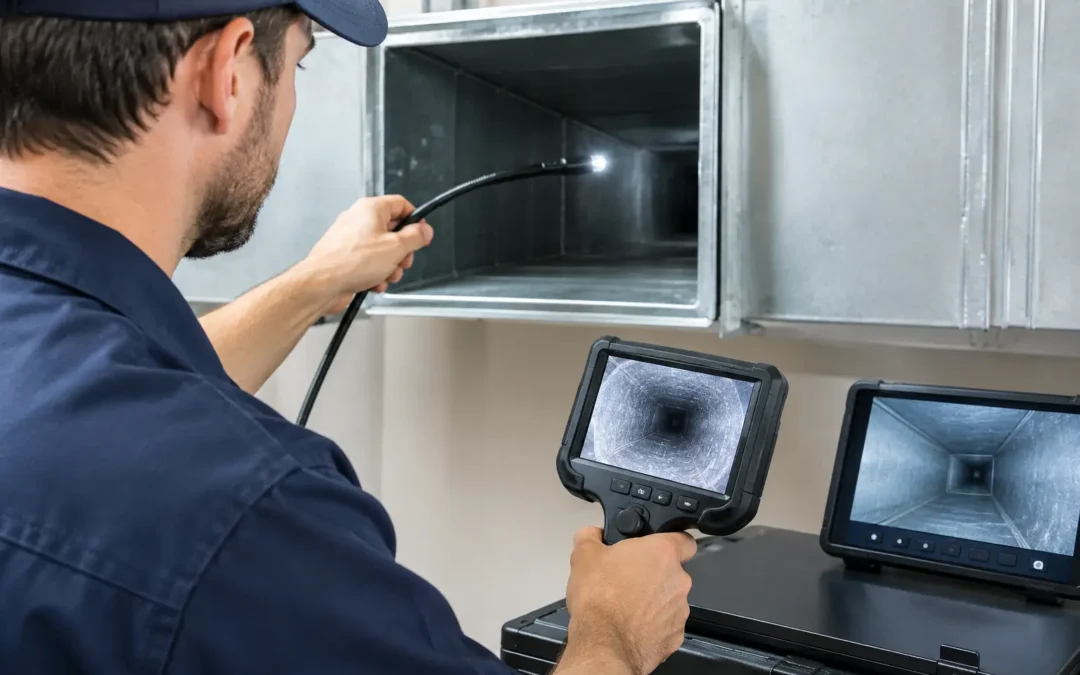
A duct video inspection comparison is useful for one simple reason: an air duct system is mostly hidden, but the condition of that system affects the air moving through your home or facility every day. A provider can tell you ducts need cleaning, but a camera inspection can show you why. It gives property owners a clearer basis for approving work, understanding the scope, and confirming results when the job is complete.
For Utah homeowners, property managers, and facility teams, video inspection is not about adding technology for its own sake. It is about accountability. When a contractor can document buildup, construction debris, damaged duct sections, moisture concerns, or other issues inside the system, you can make a decision based on evidence rather than a guess.
What a Duct Camera Inspection Can Show
A duct camera travels through accessible portions of the HVAC system and records what a technician cannot see from a register opening. Depending on the equipment and the layout of the system, it may show dust accumulation, pet hair, drywall dust, loose debris, and signs that prior work did not fully address the trunk lines or returns.
It can also help identify concerns that cleaning alone may not solve. A disconnected duct, crushed flex duct, damaged insulation, standing water near a component, or visible microbial growth may call for HVAC repair, moisture correction, or further evaluation. A reputable provider should explain that distinction clearly. Video is valuable evidence, but it is not a substitute for a full mechanical diagnosis or indoor air quality testing.
For commercial properties, the camera is especially helpful when systems serve multiple suites, long corridors, or high-use areas. A property manager can better understand which areas deserve priority instead of authorizing broad work without knowing where the actual buildup or damage is located.
Duct Video Inspection Comparison: The Differences That Count
Not every inspection delivers the same level of information. The most meaningful comparison is not simply camera versus no camera. It is whether the inspection is thorough, documented, and connected to a clear cleaning plan.
Visual spot checks versus recorded inspections
A visual spot check usually means a technician removes a grille and looks into the first section of ductwork with a flashlight or small camera. This can be useful for a quick initial assessment, especially in a compact residential system. Its limitation is obvious: it only shows what is close to the opening.
A recorded video inspection provides a better view of accessible runs farther into the system. It can capture the condition before service and, when appropriate, after service. This matters when you want proof that the work reached beyond the visible register boot. It is particularly valuable for landlords, facility managers, and owners overseeing work at more than one property.
Basic cameras versus purpose-built duct cameras
A basic inspection camera may be sufficient for checking a short, straight section of duct. Purpose-built duct cameras are designed for the job, with lighting, maneuverability, and recording capability that help technicians inspect more of the accessible system.
More advanced equipment does not automatically mean better service. The technician still needs to know where to inspect, how to interpret what appears on screen, and when to recommend another trade. The best result comes from capable equipment paired with careful workmanship and honest communication.
Pre-cleaning video versus before-and-after documentation
Pre-cleaning footage helps establish whether cleaning is warranted and where attention is needed. Before-and-after documentation goes further by showing the condition of the same accessible areas after service. This is one of the strongest ways to verify a cleaning result.
There are practical limits. Duct systems have turns, transitions, narrow branches, and components that cannot always be viewed from every angle. A dependable contractor will not promise footage of every inch if access does not allow it. They should explain what was inspected, what was cleaned, and any areas that require separate service or repair.
When Video Inspection Is Worth Requesting
A camera inspection is especially worthwhile after construction, remodeling, water damage, pest activity, or a long period of vacancy. Drywall dust, sawdust, insulation fragments, and debris from nearby work can find their way into supply and return ducts. In these cases, seeing the interior condition can help separate a routine cleaning need from a larger issue.
It is also helpful when occupants notice repeated dust around registers, unusual odors when the system starts, inconsistent airflow, or visible debris at vents. Those signs do not always mean the ducts are the cause. A camera allows the technician to look for evidence before making a recommendation.
For property managers, video documentation can help support maintenance records and communicate with owners or tenants. For commercial buildings, it can provide a clearer service record for spaces that must maintain a clean, professional environment, such as offices, retail locations, medical waiting areas, and multi-unit housing common areas.
What Video Inspection Does Not Tell You
A trustworthy duct video inspection includes clear limits. The footage can show visible conditions in reachable areas, but it cannot measure every air quality concern. It does not confirm the presence of a specific contaminant without appropriate testing, and it cannot replace a qualified HVAC technician when the problem involves equipment performance, refrigerant, electrical components, or system design.
A camera also cannot make dirty-looking ductwork new. Older metal ducts may show staining or discoloration even after proper cleaning. The objective is to remove accumulated debris from the accessible system, improve cleanliness, and identify conditions that deserve attention – not to make promises the system cannot support.
Be cautious if a provider uses a brief video clip to create urgency without explaining what you are seeing. Ask where the footage was taken, whether it is from your system, what the technician recommends, and whether the recommendation is cleaning, repair, moisture control, or a combination. Clear answers are part of quality work.
How Video Changes the Cleaning Plan
The inspection should guide the service, not become a sales prop. If the camera shows heavier buildup in return ducts, the crew can focus attention there. If it reveals construction debris in a specific branch, that area can be addressed carefully. If it shows a damaged section, the customer can be advised to arrange repair before contamination or airflow issues worsen.
When cleaning is appropriate, the process should involve more than vacuuming the register openings. Professional duct cleaning typically uses containment and negative-pressure equipment to capture loosened debris while technicians agitate accessible duct surfaces. The exact method depends on the system, its access points, its materials, and the property’s needs.
Some systems may also benefit from an antimicrobial treatment after cleaning, but only when conditions and product use support it. It should never be presented as a replacement for removing debris or correcting an active moisture source. If moisture remains, the underlying cause needs to be addressed.
Questions to Ask Before You Schedule
Before approving duct cleaning with video inspection, ask whether the provider records the inspection, whether you can review relevant footage, and whether before-and-after documentation is available for accessible areas. Confirm what parts of the HVAC system are included, such as supply ducts, return ducts, trunk lines, registers, and the air handler area.
You should also ask how the crew protects floors, furnishings, and occupied spaces; what safety practices they follow; and how they handle unexpected findings. For larger properties, request a straightforward scope that identifies the areas being serviced and any limitations caused by access or system design.
Price matters, but the lowest quote may not include the documentation, containment, equipment, or time required to do the job correctly. A clear estimate helps you compare service level, not just the number at the bottom of the page.
Wadley Services approaches duct cleaning with the same standard applied to every property care service: show up prepared, protect the property, and stand behind the work. Video inspection gives customers a practical view of the system and a better conversation about what their property actually needs.
If you are unsure whether your ducts need attention, start with evidence. A careful inspection and an honest explanation can help you choose the right next step for a cleaner, better-maintained home or facility.
Recent Comments