
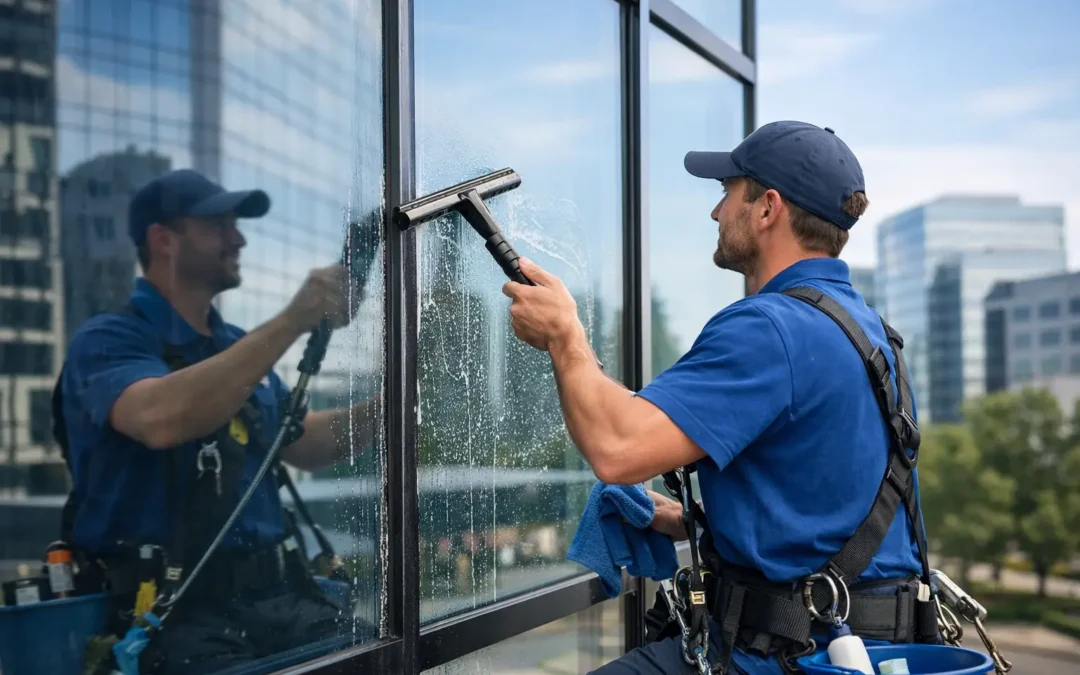
A clean storefront can make a customer feel welcome before they reach the door. Clear office windows improve daylight and help employees see that their workplace is cared for. This commercial window cleaning guide helps Utah property managers, business owners, and facility teams plan service that protects both the appearance and condition of their buildings.
Commercial window cleaning is not simply a matter of making glass look better for a day. Dirt, mineral deposits, hard-water spots, construction dust, pollen, and salt residue can build up over time. Left in place, certain contaminants can etch glass, stain frames, and make routine cleaning more difficult and costly.
Start With the Building, Not Just the Glass
The right cleaning plan depends on the property. A single-story retail building has different needs than a medical office, multi-unit community, restaurant, school, or multi-story professional building. Before scheduling service, take stock of the window types, access points, building traffic, and issues that affect the work.
Look at whether windows are ground-level, elevated, inside an atrium, above landscaping, or located over sidewalks and entrances. Consider the frame material and condition as well. Aluminum, vinyl, wood, painted trim, and specialty glass may require different methods and care.
The surroundings matter, too. A building near a busy road may collect exhaust film and dust faster. Properties with sprinklers near windows often develop mineral spotting. Construction nearby can leave fine debris that scratches glass if it is handled incorrectly. A dependable cleaning provider should evaluate those conditions before promising a one-size-fits-all schedule.
Identify Problem Areas Early
A walk-through often reveals issues that ordinary cleaning will not solve. Hard-water staining, oxidation on frames, failed window seals, scratched glass, and damaged screens can all affect the finished result. Good technicians explain what cleaning can improve and what may be permanent damage or a repair issue.
That distinction protects everyone. It sets realistic expectations and helps property owners avoid treating a maintenance concern as a cleaning failure.
Choose a Cleaning Frequency That Fits Your Property
There is no universal commercial window cleaning schedule. The best interval depends on how visible the windows are, how quickly they collect debris, and what standard your customers or tenants expect.
Many customer-facing businesses benefit from exterior cleaning every one to three months. Restaurants, retail storefronts, hotels, and medical facilities may need more frequent attention around entryways and high-visibility glass. Professional offices, schools, and managed communities may work well on a quarterly or semiannual schedule, especially when the property is set back from heavy traffic.
Interior glass usually needs less frequent service, but fingerprints, handprints, dust, and indoor construction can change that. Glass partitions, lobby doors, conference rooms, and elevator areas may require regular spot cleaning between full window service visits.
Recurring maintenance is often more practical than waiting until the windows look neglected. Scheduled service allows the cleaning team to work before buildup becomes stubborn, and it gives property managers one less vendor task to track each season.
What Professional Commercial Window Cleaning Should Include
A clear scope prevents surprises. A commercial window cleaning quote should identify which glass is included, whether service covers interior and exterior panes, and how the crew will access difficult areas. It should also state whether frames, sills, tracks, screens, mirrors, glass doors, or high dusting are part of the service.
Standard window cleaning generally involves removing loose debris, washing the glass with appropriate solutions, detailing edges, and drying the surface for a clean finish. The goal is clear, streak-free glass without leaving drips on frames, floors, sidewalks, or furnishings.
However, extra work may be needed for windows with paint overspray, adhesive, silicone, tape residue, mineral deposits, or post-construction debris. Those materials should be evaluated carefully. Using the wrong scraper, abrasive pad, or chemical can permanently damage coated or tempered glass.
Ask how the company handles problem glass before work begins. The lowest quote is not always the best value if it leaves important preparation, access, or restoration work undefined.
Safety Is Part of Quality Work
Commercial window cleaning often involves ladders, lifts, roof access, water-fed pole systems, and work near public walkways. Safety planning is not an extra. It is a basic requirement for protecting employees, occupants, visitors, and the property itself.
A qualified provider should use an access method that fits the building and the task. For some low-rise exterior windows, water-fed poles can reduce ladder use and minimize disruption. Other properties require properly placed ladders, aerial lifts, or specialized access equipment. The safest choice depends on height, terrain, window layout, nearby power lines, pedestrian traffic, and weather.
Property managers should also ask about insurance, employee training, OSHA compliance practices, and how the crew secures work areas. Cones, signage, ground protection, and coordination with building staff can prevent an otherwise routine service visit from creating avoidable risk.
Plan Around Weather and Site Activity
Utah weather can change quickly. High winds, freezing temperatures, lightning, and icy conditions may require service to be postponed for safety. That is not poor scheduling. It is good judgment.
Timing also matters around tenant moves, events, deliveries, landscaping, and construction. A professional crew should communicate clearly about arrival windows, access needs, parking, and any areas that must remain open during service. For active commercial properties, coordination is just as valuable as clean glass.
Protect Glass, Frames, and Building Finishes
Commercial windows are part of a larger exterior system. Careless cleaning can affect seals, caulking, paint, siding, stone, awnings, and landscaping. The cleaning method should match the materials around the glass.
For example, high-pressure water is not appropriate for every window or frame condition. Water can be forced behind failed seals or into vulnerable areas if used incorrectly. Strong chemicals may also dull finishes or harm nearby plants. Technicians should use controlled methods, appropriate solutions, and sufficient rinsing where needed.
Hard-water spots deserve special attention. These are often caused by sprinkler overspray or mineral-rich water drying on the glass. Regular cleaning helps, but the long-term answer may include adjusting sprinkler heads, checking drainage, or changing the irrigation schedule. Cleaning treats the symptom; property maintenance can address the cause.
Build Window Cleaning Into Total Property Care
Windows look their best when the rest of the property is maintained alongside them. Dirty gutters can send overflow onto exterior surfaces. Clogged drains can splash grime onto lower windows. Dusty blinds, neglected screens, dirty air vents, and stained entryways can undermine the cleaner appearance of freshly washed glass.
For property managers handling multiple maintenance needs, bundling related services can save coordination time and create a more consistent standard across the site. Exterior cleaning, gutter service, pressure washing, blind cleaning, and recurring maintenance can often be planned around the same seasonal schedule.
This approach is especially useful for multi-unit communities, office complexes, and facilities with a long list of visible maintenance priorities. Rather than reacting to each issue separately, managers can establish a practical plan that keeps the property presentable throughout the year.
Questions to Ask Before Hiring a Window Cleaning Company
A reputable provider should be comfortable discussing the work in plain terms. Ask whether the estimate includes interior and exterior glass, how difficult windows will be accessed, and what happens if weather delays the job. Confirm whether screens, tracks, frames, and doors are included or priced separately.
It is also wise to ask how the company handles scratched glass, mineral staining, paint overspray, and other pre-existing conditions. Request proof of appropriate insurance and ask about safety procedures for ladders, lifts, and public areas. For recurring service, find out whether the same scope and quality standards will be documented from visit to visit.
The goal is not to make the process complicated. It is to hire a team that values clear expectations, protects your building, and does the work correctly the first time.
A Better Standard for Your Building
Clean windows support curb appeal, tenant satisfaction, customer confidence, and the long-term condition of the glass. The right plan is based on your building’s use, exposure, access requirements, and maintenance goals, not a generic calendar.
For Utah businesses and managed properties, Wadley Services can help create a dependable window cleaning schedule that fits the site and the season. A straightforward on-site evaluation is often the best first step toward cleaner glass and one less property task on your plate.
Recent Comments