
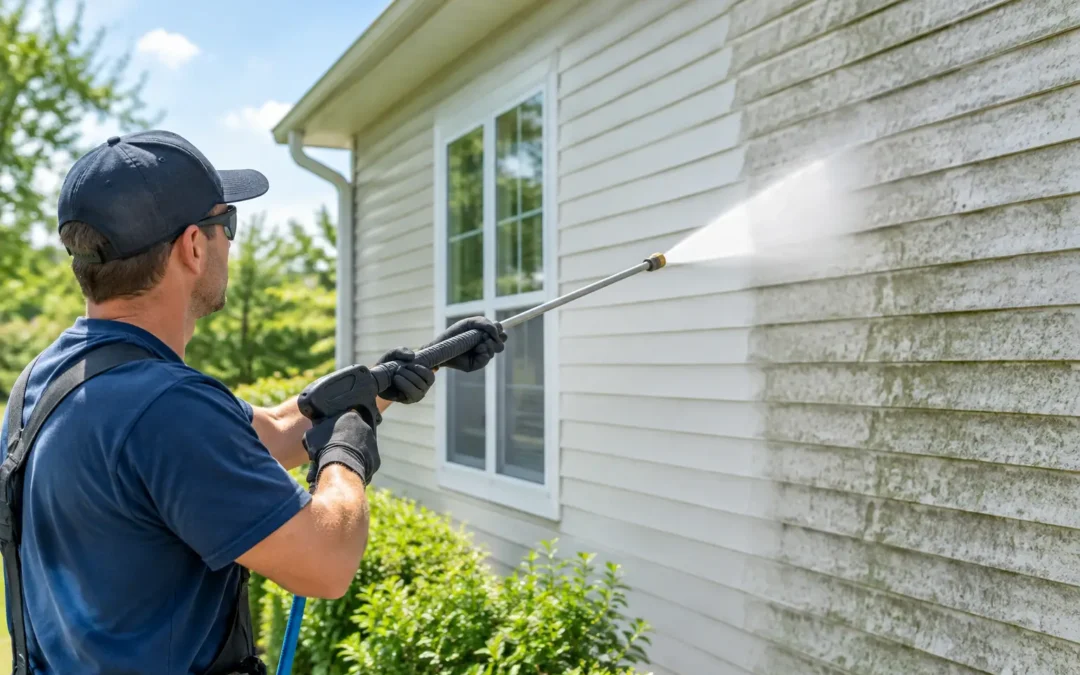
A black streaked roof, green siding, or slippery walkway can make a well-kept property look neglected fast. Softwashing is often the right answer for organic growth and exterior staining, but homeowners and property managers are right to ask: is softwashing safe?
When it is performed by trained professionals using the correct solution strength, application method, safety equipment, and site protection, softwashing is a safe and effective way to clean many exterior surfaces. When it is rushed, overmixed, or treated like a do-it-yourself pressure washing project, it can create avoidable risks to landscaping, finishes, people, and nearby property.
The difference is not just the equipment. It is the process and the accountability behind it.
What Softwashing Is and Why It Is Different
Softwashing uses low-pressure water and a cleaning solution designed to remove the source of discoloration, including algae, moss, mildew, mold, lichen, and bacteria. Instead of relying on high-pressure water to blast contaminants away, the treatment breaks down organic growth so it can be rinsed from the surface safely.
That distinction matters. High pressure has its place on durable concrete and some hardscape surfaces, but it can damage roofing materials, force water behind siding, etch softer surfaces, strip paint, and disturb window seals when used incorrectly. Softwashing is generally the better method for delicate exterior materials such as asphalt shingles, vinyl siding, painted trim, stucco, certain wood surfaces, and many commercial building finishes.
Softwashing is not simply spraying chemicals on a building. A proper service starts with identifying the surface, the staining, drainage conditions, nearby plants, and any sensitive areas that need protection. The technician then uses the appropriate solution and rinse procedure for that specific job.
Is Softwashing Safe for Roofs, Siding, and Other Surfaces?
Softwashing can be safe for roofs and exterior finishes when the material is suited to the method and the work follows manufacturer guidance. It is commonly used to address the dark algae streaks that develop on asphalt shingles, especially where shade, moisture, and changing weather encourage growth.
For roofs, low pressure is critical. High-pressure roof cleaning can dislodge protective granules from shingles and shorten their service life. A controlled softwash treatment removes the biological growth without the aggressive force that makes pressure washing a poor choice for many roofing systems.
Siding also benefits from a lower-pressure approach. Vinyl, painted fiber cement, stucco, and trim can collect dirt and organic staining, but they do not always tolerate strong pressure. A trained cleaner adjusts both the solution and the rinse so the work removes buildup without driving water into seams, vents, or wall cavities.
There are limits. Not every surface should receive the same treatment, and not every stain is biological. Oxidation, irrigation overspray, rust, hard-water deposits, and paint failure require different cleaning methods. A reliable contractor does not use one solution for every problem just because it is convenient.
Roof Warranty and Material Considerations
Before cleaning a roof, a professional should consider its age, condition, pitch, material, and manufacturer recommendations. Loose shingles, failing flashing, brittle materials, or existing leaks need attention before any cleaning begins. Softwashing cannot repair a worn roof, and cleaning should never be used to hide a maintenance issue.
For property managers, this assessment is especially valuable. A documented exterior cleaning plan can help keep buildings presentable, while also identifying gutters, downspouts, rooflines, and drainage issues that need repair rather than another cleaning cycle.
The Real Safety Concerns With Softwashing
The cleaning solutions used in softwashing are effective because they address living organic growth. That also means they must be handled carefully. The main risks are not a reason to avoid softwashing altogether. They are a reason to hire a company that treats safety procedures as part of the job, not an extra.
A professional crew protects people by controlling the work area, using proper personal protective equipment, and preventing unauthorized access while cleaning is underway. Windows and doors should be checked and secured, and walkways should be managed so occupants and visitors do not enter a wet or active work zone.
Landscaping deserves the same level of attention. Plants, grass, and shrubs near the cleaning area should be pre-watered, monitored throughout the application, and rinsed thoroughly afterward. Sensitive plants may need additional covering or careful hand work. A technician should also watch for runoff patterns and avoid allowing cleaning solution to collect in low areas.
Good preparation protects more than plants. It includes covering or rinsing outdoor fixtures, checking nearby vehicles, accounting for pools and water features, and making sure exterior electrical components are handled appropriately. On commercial sites, the crew also needs to plan around tenant access, pedestrian traffic, loading areas, and business hours.
What a Safe Softwashing Process Looks Like
The safest softwashing jobs are not the fastest-looking jobs. They are the ones where the crew takes time before, during, and after the application to control the details.
A dependable process typically includes these steps:
- Inspecting the roof, siding, gutters, windows, landscaping, and surrounding surfaces before work begins.
- Choosing a cleaning solution and dilution appropriate for the material and level of organic growth.
- Protecting plants, exterior fixtures, and nearby property with watering, covering, controlled application, and thorough rinsing.
- Applying the solution at low pressure, allowing proper dwell time, and avoiding oversaturation or unnecessary runoff.
- Rinsing and checking the work area, including plants, paved surfaces, windows, and drainage points, before the crew leaves.
These steps may sound straightforward, but experience matters. A technician needs to recognize when a stain calls for a different treatment, when a surface is too fragile to clean aggressively, and when weather conditions make rescheduling the responsible choice.
Wind, extreme heat, freezing temperatures, and incoming storms can all affect exterior cleaning. Utah properties also face distinct conditions across the state, from intense sun and dry periods to snow, freeze-thaw cycles, and shaded areas where algae returns quickly. The right timing and technique protect the property and produce a better result.
Why DIY Softwashing Can Go Wrong
Many homeowners are comfortable handling routine upkeep, but softwashing presents more variables than it may appear to. Store-bought cleaners, online mixing instructions, and rental equipment do not replace surface knowledge, safety training, or site-specific planning.
The most common DIY mistakes include using too strong a solution, applying it unevenly, failing to protect vegetation, mixing products improperly, working from an unsafe ladder position, or using too much water pressure during rinsing. Even a seemingly minor mistake can leave bleached spots, damaged plants, water intrusion, or a slippery surface around the property.
There is also the issue of incomplete cleaning. If the visible staining is rinsed away without addressing the underlying organic growth, the problem can return quickly. A professional softwash treatment is intended to clean more deeply than a cosmetic rinse while treating the structure with care.
For commercial properties, DIY work or an inexperienced vendor can create additional liability. A wet entrance, exposed cleaning area, or poor runoff control can affect employees, tenants, visitors, and daily operations. Professional planning helps reduce those risks.
Questions to Ask Before Hiring a Softwashing Company
The right contractor should be comfortable explaining how they will protect your property. Ask whether they use low-pressure application for appropriate surfaces, how they protect landscaping, what precautions they take around doors and windows, and how they handle runoff.
It is also reasonable to ask about employee training, insurance, safety practices, and experience with your particular surface. A company that provides exterior cleaning alongside gutter service, window cleaning, and ongoing property maintenance may be better positioned to spot related issues that a single-purpose cleaning crew could miss.
Price matters, but an unusually low quote can leave out the preparation that makes softwashing safe. Protecting a landscaped home, a multi-unit community, or a busy commercial site takes time. The goal is not just a cleaner exterior at the end of the day. It is a cleaner exterior without creating a new maintenance problem.
A Safer Way to Maintain Exterior Surfaces
Regular exterior cleaning can help protect curb appeal and reduce the buildup that makes a property look older than it is. The right schedule depends on shade, moisture, trees, irrigation, traffic, and the type of surface being maintained. Some buildings need seasonal attention, while others may only need treatment every few years.
Wadley Services approaches exterior cleaning with the same care expected of a long-term property maintenance partner: assess the job, protect the property, complete the work correctly, and stand behind the result. If you are unsure whether softwashing is appropriate for your roof, siding, walkways, or commercial exterior, a professional evaluation is the safest first step. A clear quote and a conversation about your specific property can help you choose the cleaning method that protects both its appearance and its condition.
Recent Comments