
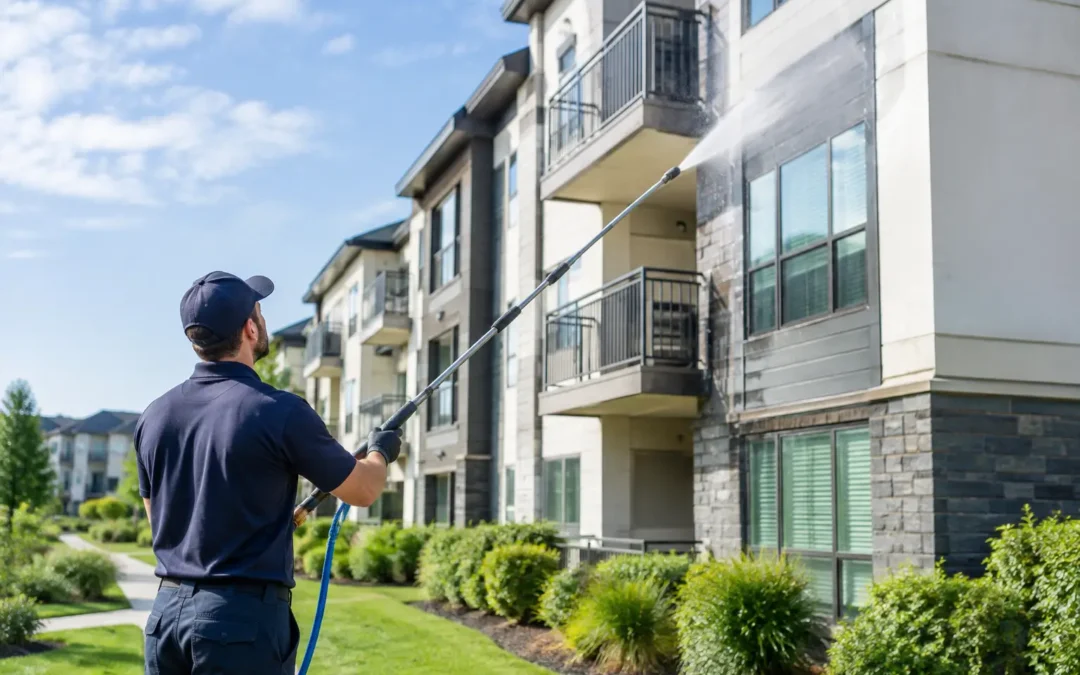
A clean apartment community does more than create a strong first impression at a showing. It helps property managers protect exterior materials, reduce preventable maintenance issues, and show residents that the property is cared for. This multifamily exterior cleaning guide focuses on the areas that make the biggest difference, how often to address them, and what to expect from a qualified service partner.
For multifamily properties, exterior cleaning is rarely a one-service job. Windows, walkways, gutters, building siding, breezeways, common-area surfaces, and entry points all age differently. A dependable plan considers the building material, resident traffic, seasonal weather, access requirements, and safety needs before a crew arrives.
Start With the Property’s Highest-Visibility Areas
Leasing traffic and resident experience usually begin at the entrance. Dirty glass, stained sidewalks, full gutters, and cobwebs around fixtures can make an otherwise well-managed property feel neglected. Start by walking the site the same way a prospective resident would, from the street to the leasing office and through the main common areas.
Pay close attention to sidewalks and entry pads. Oil spots, gum, algae, hard-water deposits, and winter deicing residue can build up over time. Beyond appearance, slick surfaces can become a liability concern. The right pressure washing method removes buildup without damaging concrete, stripping sealers, or forcing water into joints and cracks.
Windows deserve the same attention. Clean exterior glass improves the look of individual units, hallways, clubhouses, leasing offices, and amenity spaces. It also lets more natural light into interior areas. For properties with several stories, window cleaning must be planned around safe access, proper equipment, and resident communication.
Build a Multifamily Exterior Cleaning Schedule
A fixed annual cleaning date is simple, but it may not be enough for every property. High-traffic communities, buildings near construction, properties with mature landscaping, and sites exposed to windblown dust often need more frequent attention. In Utah, winter salt, spring pollen, summer dust, and fall leaves can all affect exterior conditions.
A practical schedule often includes a detailed spring cleaning to address winter buildup, followed by targeted service during the warmer months. Gutter cleaning is commonly handled in the fall after leaves have dropped, though properties with heavy tree coverage may need another visit earlier in the season.
Recurring maintenance helps managers avoid the familiar cycle of waiting until a problem becomes highly visible or urgent. Regular service also makes budgeting more predictable. A provider who knows the property can track recurring trouble spots, adjust the schedule when conditions change, and coordinate several exterior needs in one visit when appropriate.
Match the Cleaning Method to the Surface
Not every exterior surface should receive the same water pressure, cleaning solution, or treatment time. This is where experience matters. A method that works well on a concrete dumpster pad may be too aggressive for painted siding, stucco, older masonry, wood trim, or delicate exterior fixtures.
Pressure washing is effective for durable hard surfaces such as sidewalks, curbs, patios, parking areas, retaining walls, and many entryways. However, the pressure level, nozzle selection, water temperature, and cleaning product should be chosen for the specific material and condition. Stains may require pretreatment rather than more pressure.
Soft washing uses lower pressure and appropriate cleaning solutions to lift organic growth and surface grime from more sensitive materials. It is often a better choice for certain siding, soffits, painted surfaces, and exterior areas where high pressure could cause damage. The best approach depends on the surface, its age, previous repairs, and the source of the staining.
Gutters also need more than a quick visual check. Leaves, roof grit, seed pods, and debris can block water flow and send runoff over the gutter edge. That water can stain siding, erode landscaping, create icy walking conditions, or contribute to moisture problems near the foundation. Cleaning should include checking downspout flow and identifying visible gutter concerns that may call for repair.
Plan Around Residents, Vehicles, and Daily Operations
Exterior service at an occupied community requires coordination. Residents need clear notice when work may affect parking, balcony access, walkways, or window access. Maintenance teams and vendors also need a shared plan for gates, water access, utility areas, pets, and any spaces with limited entry.
Before scheduling, confirm which areas must remain open and which can be temporarily closed. For example, cleaning a main entrance during peak move-in hours may create unnecessary disruption, while early service in a controlled section of the property may be easier to manage. A good crew works efficiently, but property staff can help the work go smoothly by providing current site information.
Vehicle protection is another important detail. Pressure washing near parking spaces, window cleaning above occupied areas, and gutter work around drive lanes all require appropriate setup. Cones, caution signs, controlled work zones, and careful routing protect residents and crews alike.
Make Safety and Compliance Part of the Scope
Multifamily exterior cleaning can involve ladders, lift equipment, rooflines, elevated windows, wet surfaces, chemicals, and active pedestrian areas. Choosing a vendor based only on the lowest quote can leave major questions unanswered: Are employees trained for the access method? Is the company properly insured? How will the crew protect residents during the work?
Ask for a clear description of the work scope, including the surfaces being cleaned, methods being used, access requirements, and any areas excluded from service. For elevated work, crews should use equipment and procedures suited to the building. For ground-level washing, they should manage runoff responsibly and keep walkways safe until dry.
Professional exterior cleaning should be performed with employee and customer safety in mind. That includes following OSHA requirements, using well-maintained equipment, and recognizing when a surface condition needs repair rather than cleaning. A cracked gutter, failing caulk line, loose siding panel, or damaged window screen will not be fixed by washing around it.
Use Cleaning Visits to Spot Preventive Maintenance Needs
Exterior cleaning is a valuable opportunity to see conditions that are easy to miss during routine site walks. When crews are working near windows, rooflines, gutters, siding, and common-area fixtures, they may notice issues that deserve attention before they become more costly.
Look for recurring overflow marks below gutters, water stains on exterior walls, loose downspouts, mold or algae returning in the same shaded areas, cracked concrete, and staining near irrigation zones. These conditions may point to drainage, sprinkler, ventilation, landscaping, or material problems. Cleaning improves the appearance, but it should not hide a maintenance issue that will return quickly.
For this reason, it helps to work with a provider that can communicate clearly about what was found on site. Photos, service notes, and straightforward recommendations give managers useful information without turning every observation into an unnecessary repair. The goal is to protect the property and make informed decisions.
Choose a Provider That Can Handle the Full Property
Coordinating separate vendors for windows, gutters, pressure washing, dryer vents, and specialty cleaning can create more scheduling work for an already busy management team. There are times when a dedicated specialist is needed, but many communities benefit from one accountable company that can manage several services under a coordinated plan.
Look for a provider with experience serving occupied multifamily communities, a strong safety culture, dependable scheduling, and the ability to scale from a small building to a large apartment portfolio. Statewide coverage can be especially helpful for regional managers responsible for properties across Northern, Central, Eastern, and Southern Utah.
Wadley Services works with property managers who need reliable exterior cleaning and maintenance support, not a one-time vendor who disappears after the job. A clear quote, trained crews, and consistent follow-through make it easier to keep buildings looking cared for throughout the year.
Know What to Include in Your Service Request
A useful service request gives a cleaning provider enough information to quote accurately and prepare the right crew. Include the property address, building count, approximate height, desired service areas, known access limitations, and preferred timing. Mention active resident concerns such as slippery walkways, overflowing gutters, stained entries, or difficult-to-reach windows.
If possible, separate immediate needs from recurring maintenance. A one-time cleanup may be necessary before an inspection, ownership visit, or leasing event. After that, a recurring plan can keep the same issues from rebuilding to the point where they demand emergency attention.
The best exterior cleaning plans are visible to residents but easy on property staff. When the right work is completed safely, on schedule, and with respect for the community, the property looks better and your maintenance team has one less preventable problem to chase.
Recent Comments