
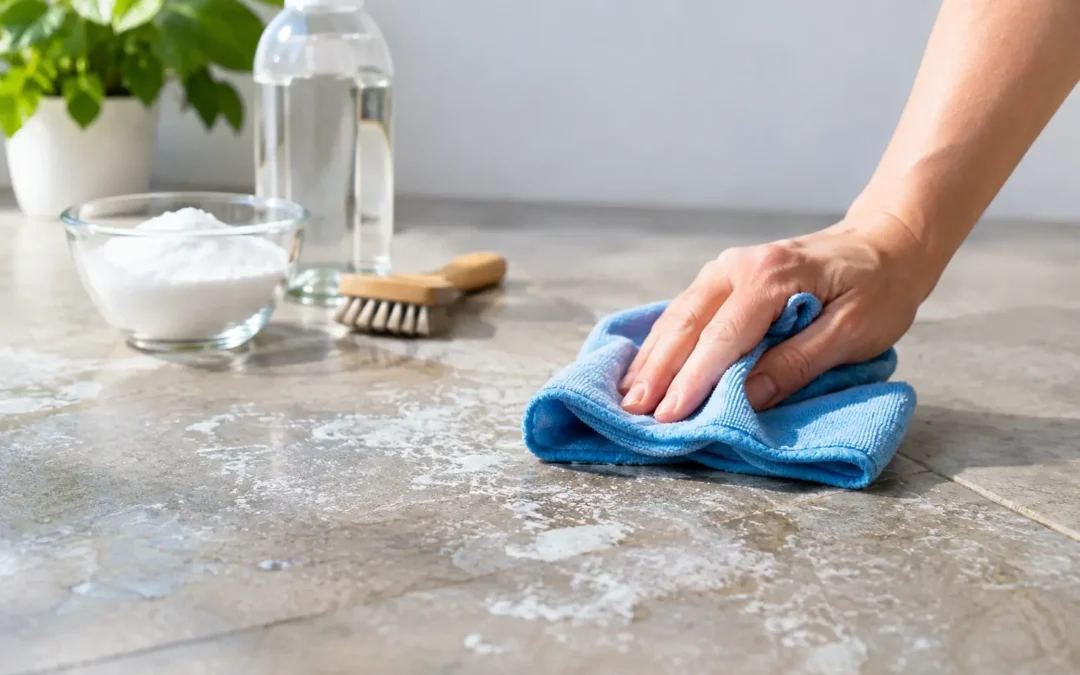
Winter road treatment protects drivers, but it can be hard on the properties they enter. White crust on concrete, hazy windows, dull entry floors, and carpet discoloration are common signs of salt being tracked in or splashed onto exterior surfaces. The best solutions for salt stains depend on the material underneath, the type of salt involved, and how long the residue has been left in place.
A quick rinse is sometimes enough. In other cases, the wrong cleaner can etch stone, discolor carpet, or leave masonry more vulnerable to future damage. The goal is not simply to remove the visible white film. It is to clean the surface thoroughly while protecting the finish, drainage, and long-term condition of the property.
Start by Identifying the Type of Salt Stain
Not every white mark is the same. Deicing salt residue is usually left behind when melted snow or slush dries. It often appears near parking areas, sidewalks, entry doors, garages, and building entrances. Salt can also be carried indoors on shoes, carts, and equipment.
On brick, concrete, block, and stone, white powder may also be efflorescence. This occurs when moisture moves through the material and brings naturally occurring minerals to the surface. It can look like road salt, but it requires a different approach because the source may be moisture within the wall, patio, or slab.
A simple clue is location. Residue that follows foot traffic, snow piles, or vehicle splash is likely deicing salt. White deposits that return in the same area without winter traffic may point to efflorescence or a drainage issue. If the surface is crumbling, flaking, or showing rust-colored stains, do not treat it as a routine cleaning project. Those signs can indicate a larger maintenance concern.
Best Solutions for Salt Stains by Surface
The safest cleaner is the one that removes the residue without damaging the material. Start with the mildest effective method, test a small hidden area, and avoid mixing cleaning products.
Concrete, sidewalks, and driveways
For fresh salt residue on concrete, rinse thoroughly with clean water as soon as temperatures allow. A stiff nylon-bristle broom or brush can loosen remaining film after the rinse. Use a concrete-safe cleaner for stubborn spots, following the product directions carefully.
Pressure washing can be effective, but it must be done correctly. Too much pressure, a narrow spray tip, or cleaning too close to the surface can leave visible lines and damage aging concrete. This is especially true around spalled areas, expansion joints, decorative finishes, and deteriorating driveway edges. Professional pressure washing uses the appropriate pressure, water flow, and cleaning method for the condition of the concrete.
Avoid using harsh acids on standard concrete unless the product is specifically selected for that purpose and applied by someone who understands the risk. Acid can damage the surface, alter its color, and create uneven results. It may remove the stain while creating a more expensive problem.
Brick, stone, and masonry
Brick and natural stone need more caution than plain concrete. Start with low-pressure water and a masonry-safe cleaning product. Agitate gently with a soft or medium nylon brush, then rinse well. Keeping the surface wet while cleaning helps prevent the cleaner from drying unevenly.
Do not use household vinegar or strong acidic cleaners on limestone, marble, travertine, and many other calcareous stones. These materials can etch permanently. Even on brick, an aggressive cleaner may damage mortar joints or pull mineral color from the surface.
When white residue keeps returning, cleaning alone may not solve the problem. Water may be entering behind the masonry through failed caulking, poor grading, damaged gutters, or roof runoff. Correcting the moisture source is what protects the wall over time.
Windows and glass doors
Salt spray can leave glass looking cloudy even after it has been wiped down. Start with clean water to flush away loose grit, then use a professional glass-cleaning solution and a clean microfiber cloth or squeegee. Rinse the cloth often so particles are not dragged across the glass.
Avoid dry wiping a salt-covered window. Road grit mixed with salt can scratch glass, window frames, and tinted surfaces. Pay attention to tracks, frames, and lower seals as well. Salt buildup in those areas can hold moisture and make regular operation more difficult.
For commercial buildings and homes with high or hard-to-reach glass, professional window cleaning is the safer option. Proper equipment and safety procedures matter just as much as the finished appearance.
Carpet, entry mats, and hard floors
Salt stains inside a building usually appear as pale, chalky rings or dull patches around entrances. Vacuum dry salt and grit first. This is an important step because grinding debris into carpet fibers can cause wear before any cleaner is applied.
For carpet, use a cleaner designed for salt residue or a mild acidic rinse formulated for textile use. Apply lightly, blot rather than scrub, and follow with a clean-water rinse or extraction process. Overwetting carpet can push contamination deeper into the backing or leave excess moisture behind.
On tile, vinyl, sealed wood, and other hard floors, use a neutral floor cleaner and a clean mop head. Change the solution often. A dirty mop spreads dissolved salt across the floor and can leave it hazy after drying. Unsealed wood and specialty flooring may require manufacturer-approved products, so it is worth checking before applying any chemical.
Metal doors, railings, and exterior fixtures
Salt accelerates corrosion. Rinse metal surfaces with fresh water and dry them where practical, especially around fasteners, seams, hinges, and painted edges. A protective coating may help on suitable surfaces, but it should be applied only after the salt has been fully removed.
If paint is bubbling, fasteners are rusting, or corrosion is visible around door frames and railings, cleaning should be paired with repair planning. Removing surface residue is still worthwhile, but it will not reverse corrosion that has already started beneath the finish.
What Not to Do When Removing Salt Residue
The fastest-looking fix is not always the best one. Do not use wire brushes on delicate masonry, glass, painted metal, or finished floors. Do not pour concentrated chemicals directly onto a surface and leave them to sit. And do not use high-pressure washing as a one-setting solution for every exterior material.
It is also wise to avoid homemade cleaning mixtures on unknown stone, specialty flooring, or expensive finishes. A product that works on one surface can permanently damage another. For property managers, using the same cleaner across every area of a multi-unit property can create unnecessary risk.
Prevent Salt Stains Before They Build Up
Prevention is less expensive than restoring a surface after a full winter of exposure. Place high-quality walk-off mats inside and outside busy entrances, and maintain them regularly. Mats need cleaning too, or they become a reservoir for salt, sand, and moisture.
Choose deicing products carefully and apply only the amount needed for safe traction. Excess material is more likely to be tracked indoors or washed into landscaping and drainage areas. Prompt snow removal also reduces the amount of melting slush that can carry salt across concrete and through entryways.
Regular exterior maintenance makes a difference. Clean gutters, controlled downspouts, and proper drainage help keep salty runoff from repeatedly hitting walls, walkways, and foundations. Seasonal window cleaning and pressure washing can remove residue before it bonds to surfaces or begins to affect their appearance.
When Professional Cleaning Is the Right Call
A professional service is especially valuable when salt staining covers large concrete areas, affects sensitive masonry, has reached high windows, or is embedded in commercial entry carpeting. It is also the right choice when you are seeing repeated staining, surface damage, or signs that drainage and runoff are contributing to the problem.
For Utah homes, offices, multi-unit communities, and retail properties, winter residue often affects more than one surface at once. Coordinating exterior cleaning, window cleaning, entry-floor care, and ongoing maintenance through one dependable provider can simplify the work and help keep standards consistent. Wadley Services approaches each property with the right equipment, trained technicians, and respect for the surfaces being cleaned.
Salt stains are part of living through a Utah winter, but they do not have to become a permanent mark on your property. Address them early, use methods suited to the material, and bring in experienced help when the job calls for more than a bucket and brush.
Recent Comments