
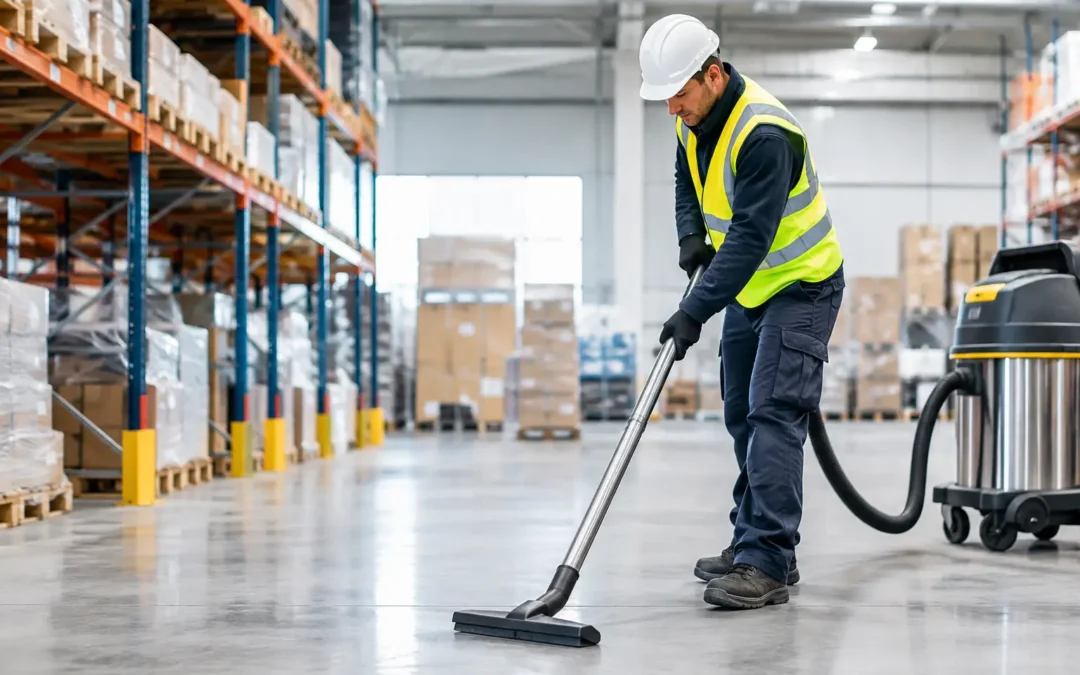
Dust on warehouse floors is easy to notice. Dust on racking, overhead piping, light fixtures, ductwork, shelving, and equipment is easier to overlook – until it affects air quality, inventory, machinery, or day-to-day operations. Professional warehouse dust remediation addresses the buildup throughout the facility, not just the areas visible from ground level.
For Utah warehouse operators, dust can accumulate quickly. Dry conditions, loading activity, pallet traffic, manufacturing processes, cardboard debris, and outdoor contaminants all contribute. A clean facility supports a better working environment, protects the appearance of the property, and helps management stay ahead of preventable maintenance concerns.
Why Warehouse Dust Requires a Planned Response
A warehouse is not cleaned effectively with a single pass of a floor machine or a quick wipe-down of accessible surfaces. Dust travels. It settles on elevated surfaces, becomes airborne again when equipment moves, and can collect in places that are difficult to reach without the right equipment, training, and safety procedures.
The right response depends on what is creating the dust, where it has collected, and how the building operates. A distribution center with frequent dock activity has different needs than a storage facility, fabrication shop, food-related operation, or multi-tenant industrial property. The goal is not simply to make a space look better for a day. It is to remove accumulated dust safely and create a cleaning plan that fits the facility’s actual conditions.
Ignoring elevated dust can lead to dirty inventory, more frequent equipment cleaning, poor first impressions for customers and inspectors, and increased housekeeping demands on employees. In certain environments, fine combustible dust may also require specialized attention under applicable safety standards. Facility managers should never assume all dust is harmless or use cleaning methods that could spread it further.
What Warehouse Dust Remediation Should Include
Effective warehouse dust remediation starts with an assessment of the space. A qualified cleaning team should identify the dust source, note affected surfaces, understand access challenges, and work around inventory, machinery, and active work zones. This process helps determine whether the work is best completed in phases, after hours, during a planned shutdown, or around a facility’s operating schedule.
A thorough scope may include floor-level cleaning, detailed cleaning of shelving and racking, wall and ledge dust removal, high dusting of beams and fixtures, and attention to accessible vents and ductwork exteriors. Dust that has settled above eye level is often the largest part of the job, especially in facilities that have gone months or years without an overhead cleaning program.
The cleaning method matters as much as the scope. Blowing dust from one surface to another is not remediation. Depending on the material and setting, trained technicians may use HEPA-filtered vacuuming, controlled wiping, specialized high-reach tools, and equipment designed to capture particles rather than redistribute them. The best approach protects nearby products, keeps dust migration under control, and leaves the facility ready to return to work.
High Areas Need More Than a Ladder
Warehouse ceilings and elevated surfaces create real access and safety challenges. Racking systems, electrical components, sprinkler lines, roof trusses, signage, and high fixtures must be cleaned with care. Attempting this work with untrained staff or improvised access equipment can put people, inventory, and building systems at risk.
Professional crews should follow site-specific safety requirements, use appropriate access methods, and coordinate carefully with facility personnel. If work must occur near sensitive inventory, production lines, or equipment, protective measures and clear work zones are essential. A dependable provider will discuss those details before work begins, not after a problem appears.
Floors Still Matter
Overhead dust often receives the most attention, but floors remain part of the remediation process. Dust and debris tracked in through dock doors can be pushed across large areas by forklifts, carts, and foot traffic. Fine material can settle around rack bases, under staging areas, and along walls where routine sweeping may not reach.
A floor cleaning plan should account for the type of flooring, level of traffic, and the debris involved. In many facilities, recurring floor service is the practical next step after a deep cleaning because it reduces the amount of material that can become airborne or move back onto stored goods.
Control the Source After the Deep Clean
A major cleaning can reset the condition of a warehouse, but it cannot stop dust from returning. Long-term results depend on identifying the main contributors and setting a maintenance schedule that matches the building.
Dock doors are a common entry point. Gaps, frequent loading activity, and windy conditions can bring outdoor dust directly into shipping and receiving areas. Facility teams may also need to review housekeeping around packaging stations, material handling, break areas, and any process that generates fine debris.
HVAC systems deserve attention as well. Dust around supply and return vents may point to a broader maintenance need. Cleaning visible vent surfaces can improve appearance, but it does not replace a proper inspection of the air duct system when buildup inside the ducts is suspected. Video-inspected duct cleaning can help property managers understand the condition of interior ductwork and determine whether cleaning is warranted.
Recurring service is often the most cost-effective option for active warehouses. A facility may need high dusting annually, semiannually, or more often depending on traffic and operations. Floor care, exterior pressure washing around loading areas, window cleaning, gutter service, and air duct maintenance can also be coordinated as part of a broader property care plan. The right schedule depends on the facility, not a one-size-fits-all calendar.
How to Choose a Warehouse Cleaning Partner
Warehouse managers need more than a vendor who can send a crew with basic cleaning tools. The provider should be comfortable working in commercial environments, communicating with site contacts, following safety expectations, and planning around operational demands.
Before approving work, ask how the company evaluates dust conditions, what collection methods it uses, how it protects inventory, and whether it can safely access elevated areas. Confirm that the crew is trained for the work, insured, and prepared to follow facility rules. If the building has known hazards, regulated materials, or potentially combustible dust, make those conditions clear during the estimate process so the scope can be properly evaluated.
Communication is equally important. You should know what areas will be cleaned, what access is required, whether operations need to pause, and how the crew will handle unexpected conditions. A clear quote and a documented scope help avoid confusion while giving your team a realistic plan for the work.
Wadley Services provides commercial property care across Utah with a focus on dependable workmanship, safety, and straightforward service. For warehouses and industrial properties, the right cleaning plan can bring multiple maintenance needs under one accountable team instead of requiring facility managers to coordinate several vendors.
A Cleaner Warehouse Is Easier to Maintain
The best time to address accumulated dust is before it becomes the accepted condition of the building. When racking, overhead surfaces, floors, and ventilation areas are cleaned on a planned schedule, routine maintenance becomes simpler and the facility presents a more professional face to employees, customers, and visitors.
Start with a clear walkthrough of the warehouse, identify the areas that routine cleaning misses, and request a scope built around your operations. A careful remediation plan protects your facility while respecting the work that has to continue inside it.
Recent Comments